10kV Static Var Generator(SVG) for Power Quality
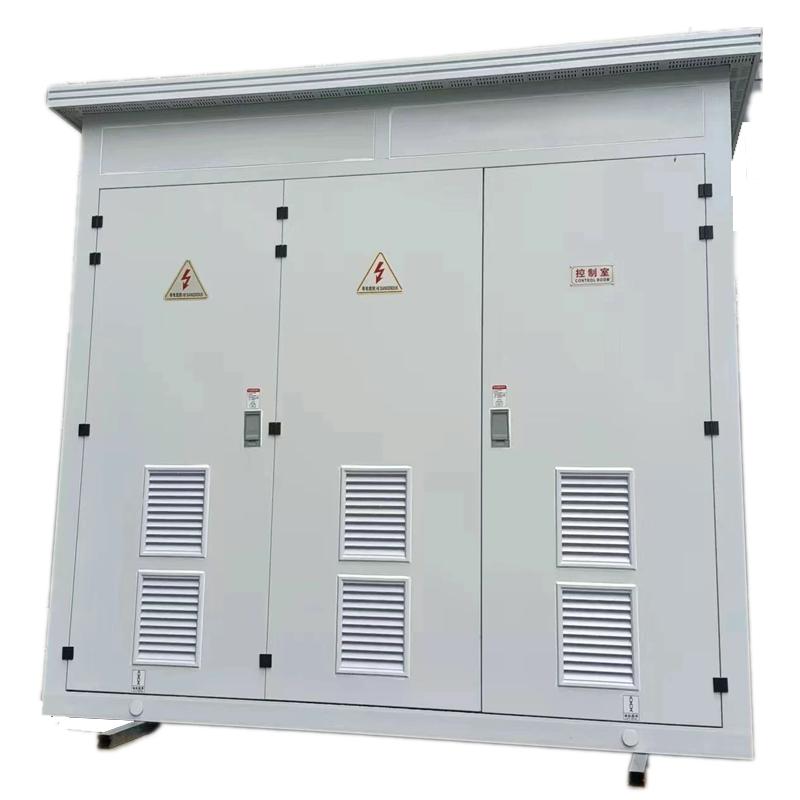
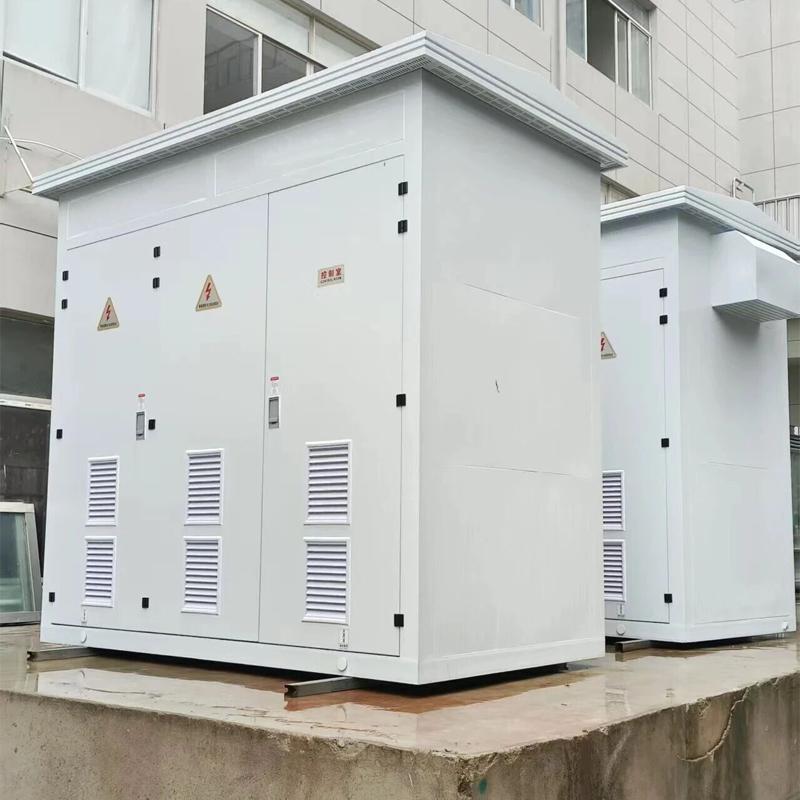
Key attributes
| Brand | RW Energy |
| Model NO. | 10kV Static Var Generator(SVG) for Power Quality |
| Rated voltage | 10kV |
| Cooling mode | Liquid cooling |
| Range of rated capacity | 1~15 Mvar |
| Series | RSVG |
Product descriptions from the supplier
Product overview
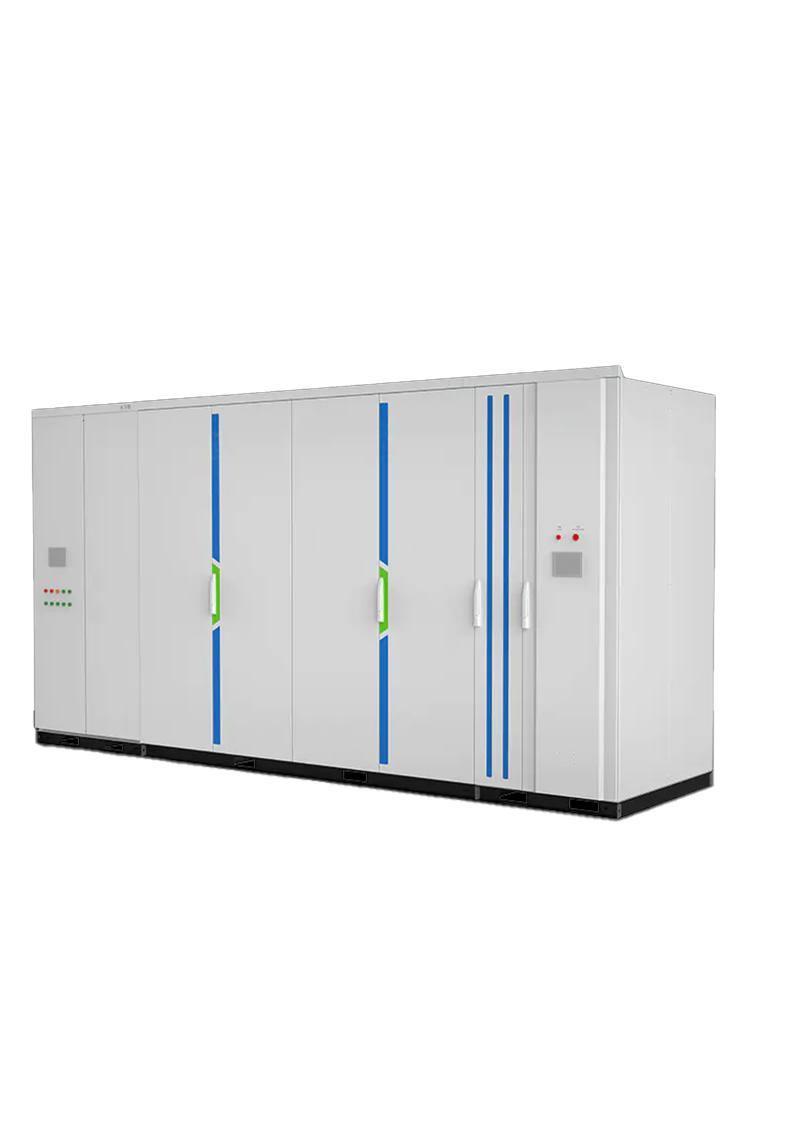
The 10kV direct-mounted high-voltage SVG (Static Var Generator) is an advanced reactive power compensation device for medium and high-voltage distribution networks. Its "direct-mounted" design means the equipment is connected directly to the 10kV grid through cascaded power units, eliminating the need for a step-up transformer. It serves as a key device for improving power quality and enhancing grid stability. The SVG boasts a response time of milliseconds, enabling instantaneous compensation. As a current-source type, its output is less affected by voltage, allowing it to provide robust reactive power support even under low-voltage conditions. The SVG generates almost no low-order harmonics, and the direct-mounted design eliminates transformers, resulting in a compact structure.
System Structure and Working Principles
Core structure: Power Unit Cabinet: Composed of dozens of 1700V-rated H-bridge IGBT modules connected in series, collectively withstanding 10kV high voltage. It integrates high-speed control (DSP+FPGA) and communicates with all power units via RS-485/CAN bus for state monitoring and command issuance. Grid-side Coupling Transformer: Functions to filter, limit current, and suppress current rate of change.
Working Principle:The controller continuously monitors the grid load current, instantaneously calculates the required reactive current compensation, and controls the switching of IGBTs via PWM technology. This generates a current synchronized with the grid voltage and phase-shifted by 90 degrees, precisely offsetting the load's reactive power. As a result, the grid side supplies only active power, achieving high power factor and voltage stability.
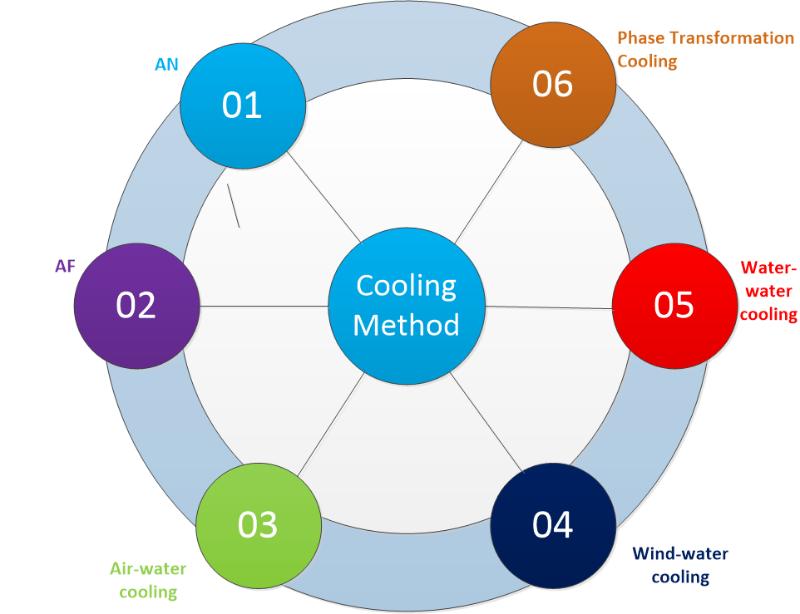
Heat dissipation mode
Mian feature
High Efficiency and Cost-Effectiveness: No transformer losses, system efficiency exceeds 98.5%, while saving on transformer costs and space.
Dynamic Precision: Millisecond-level response, stepless smooth compensation, effectively eliminating voltage flicker caused by impact loads (e.g., arc furnaces, rolling mills).
Stable and reliable: It can still provide robust reactive power support even when grid voltage fluctuates.
Environmentally friendly: It has extremely low harmonic output, causing minimal pollution to the power grid.
Technical Parameters
Name |
Specification |
Rated voltage |
6kV±10%~35kV±10% |
Assessment point voltage |
6kV±10%~35kV±10% |
Input voltage |
0.9~ 1.1pu; LVRT 0pu(150ms), 0.2pu(625ms) |
Frequency |
50/60Hz; Allow short-term fluctuations |
Output capacity |
±0.1Mvar~±200 Mvar |
Starting power |
±0.005Mvar |
Compensation current resolution |
0.5A |
Response time |
<5ms |
Overload capacity |
>120% 1min |
Power loss |
<0.8% |
THDi |
<3% |
Power supply |
Dual power supply |
Control power |
380VAC, 220VAC/220VDC |
Reactive power regulation mode |
Capacitive and inductive automatic continuous smooth adjustment |
Communication interface |
Ethernet, RS485, CAN, Optical fiber |
Communication protocol |
Modbus-RTU, Profibus, CDT91, IEC61850- 103/104 |
Running mode |
Constant device reactive power mode, constant assessment point reactive power mode, constant assessment point power factor mode, constant assessment point voltage mode and load compensation mode |
Parallel mode |
Multi machine parallel networking operation, multi bus comprehensive compensation and multi group FC comprehensive compensation control |
Protection |
Cell DC overvoltage, Cell DC undervoltage, SVG overcurrent, drive fault, power unit overvoltage, overcurrent, overtemperature and communication fault; Protection input interface, protection output interface, abnormal system power supply and other protection functions. |
Fault handling |
Adopt redundant design to meet N-2 operation |
Cooling mode |
Water cooling/Air cooling |
IP degree |
IP30(indoor); IP44(outdoor) |
Storage temperature |
-40℃~+70℃ |
Running temperature |
-35℃~ +40℃ |
Humidity |
<90% (25℃), no condensation |
Altitude |
<=2000m (above 2000m customized) |
Earthquake intensity |
Ⅷ degree |
Pollution level |
Grade IV |
Specifications and dimensions of 10kV outdoor products
Air cooling type
| Voltage class(kV) | Rated capacity(Mvar) | Dimension W*D*H(mm) |
Weight(kg) | Reactor type |
| 10 | 0.5~0.9 | 3200*2350*2591 | 3000 | Iron core reactor |
| 1.0~4.0 | 5500*2350*2800 | 6500~6950 | Iron core reactor | |
| 5.0~6.0 | 5500*2350*2800 | 6700~6950 | Iron core reactor | |
| 7.0~12.0 | 6700*2438*2560 | 6700~6950 | Air core reactor | |
| 13.0~21.0 | 9700*2438*2560 | 9000~9700 | Air core reactor |
Water cooling type
| Voltage class(kV) | Rated capacity(Mvar) | Dimension W*D*H(mm) |
Weight(kg) | Reactor type |
| 10 | 1.0~15.0 | 5800*2438*2591 | 8200~9200 | Air core reactor |
| 16.0~25.0 | 9300*2438*2591 | 13000~15000 | Air core reactor |
Note:
1. Capacity (Mvar) refers to the rated regulation capacity within the dynamic regulation range from inductive reactive power to capacitive reactive power.
2. The air core reactor is used for the equipment, and there is no cabinet, so the placement space needs to be planned separately.
3. The above dimensions are for reference only. The company reserves the right to upgrade and improve the products. The product dimensions are subject to change without notice.
Application Scenarios
New Energy Power Stations (Wind/Solar): Mitigate power fluctuations and ensure grid-connected voltage stability meets standards.
Heavy Industry (Steel/Mining/Port): Compensate for impact loads such as electric arc furnaces, large rolling mills, and hoists.
Electrified railways: Addressing negative sequence and reactive power issues in the traction power supply system.
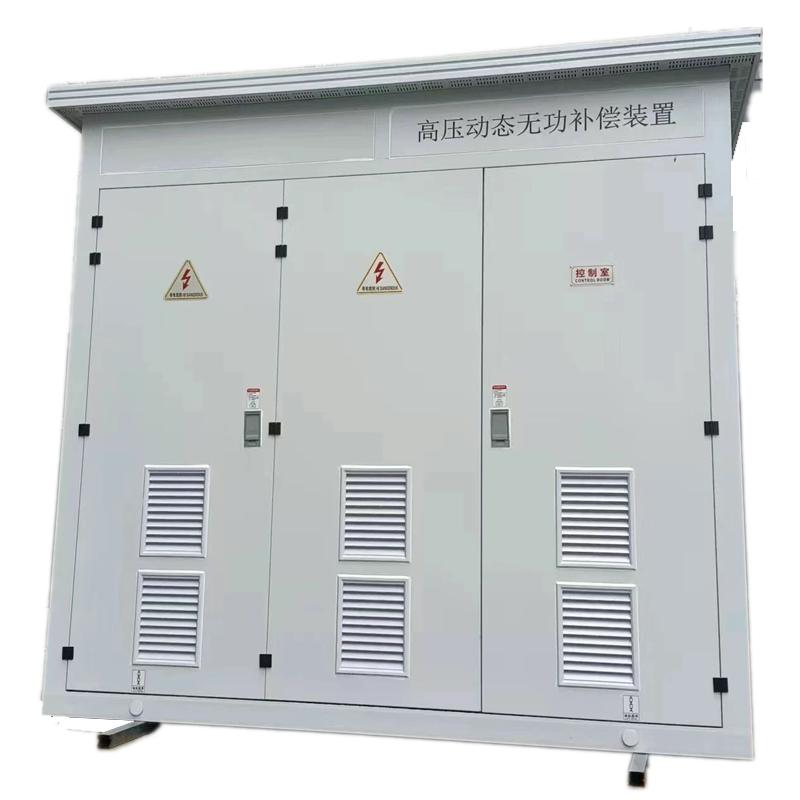
SVG capacity selection core: steady-state calculation & dynamic correction. Basic formula: Q ₙ=P × [√ (1/cos ² π₁ -1) - √ (1/cos ² π₂ -1)] (P is active power, power factor before compensation, target value of π₂, often requires ≥ 0.95). Load correction: impact/new energy load x 1.2-1.5, steady-state load x 1.0-1.1; High altitude/high temperature environment x 1.1-1.2. New energy projects must comply with standards such as IEC 61921 and ANSI 1547, with an additional 20% low-voltage ride through capacity reserved. It is recommended to leave 10% -20% expansion space for modular models to avoid compensation failure or compliance risks caused by insufficient capacity.
What are the differences between SVG, SVC, and capacitor cabinets?
The three are the mainstream solutions for reactive power compensation, with significant differences in technology and applicable scenarios:
Capacitor cabinet (passive): The lowest cost, graded switching (response 200-500ms), suitable for steady-state loads, requires additional filtering to prevent harmonics, suitable for budget limited small and medium-sized customers and entry-level scenarios in emerging markets, in compliance with IEC 60871.
SVC (Semi Controlled Hybrid): Medium cost, continuous regulation (response 20-40ms), suitable for moderate fluctuating loads, with a small amount of harmonics, suitable for traditional industrial transformation, in compliance with IEC 61921.
SVG (Fully Controlled Active): High cost but excellent performance, fast response (≤ 5ms), high-precision stepless compensation, strong low-voltage ride through capability, suitable for impact/new energy loads, low harmonic, compact design, in line with CE/UL/KEMA, is the preferred choice for high-end markets and new energy projects.
Selection core: Choose capacitor cabinet for steady-state load, SVC for moderate fluctuation, SVG for dynamic/high-end demand, all of which need to match international standards such as IEC.

Related Products


Related Knowledges
-
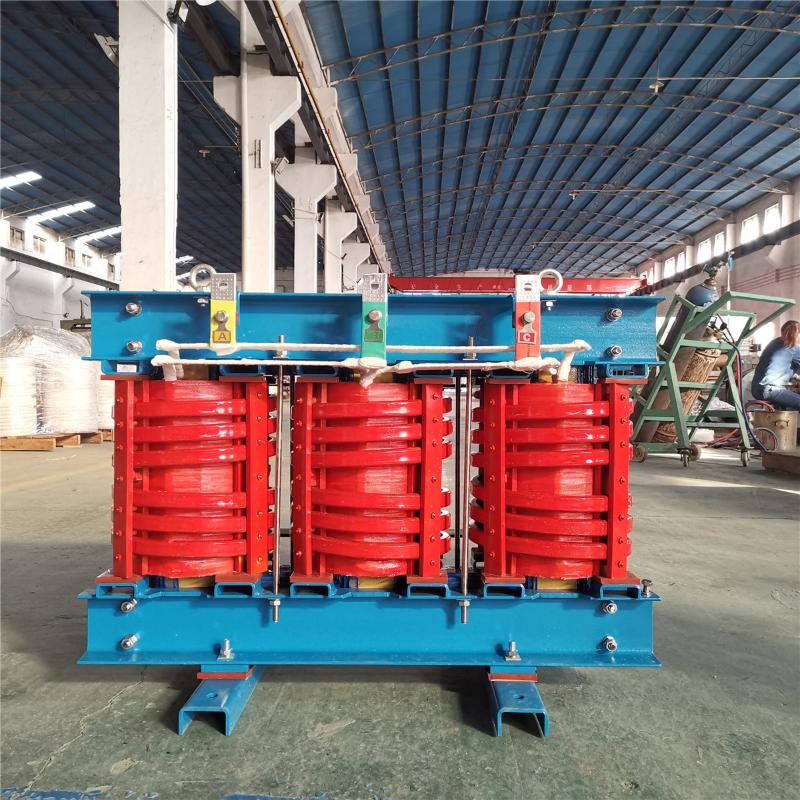 How to Implement Transformer Gap Protection & Standard Shutdown StepsHow to Implement Transformer Neutral Grounding Gap Protection Measures?In a certain power grid, when a single-phase ground fault occurs on a power supply line, both the transformer neutral grounding gap protection and the power supply line protection operate simultaneously, causing an outage of an otherwise healthy transformer. The main reason is that during a system single-phase ground fault, the zero-sequence overvoltage causes the transformer neutral grounding gap to break down. The resultingNoah12/05/2025
 -
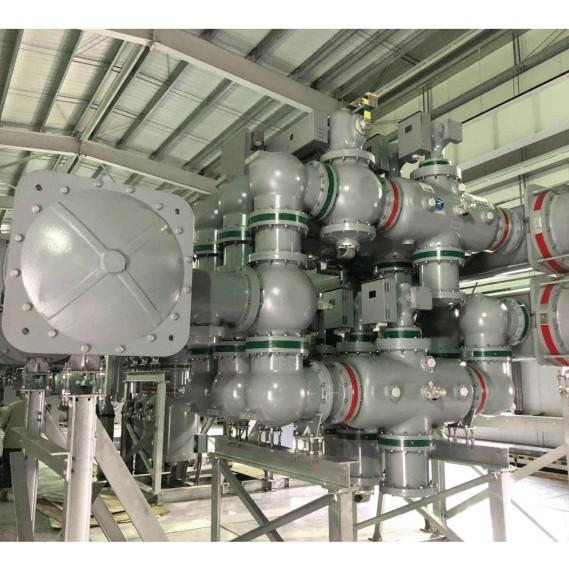 GIS Dual Grounding & Direct Grounding: State Grid 2018 Anti-Accident Measures1. Regarding GIS, how should the requirement in Clause 14.1.1.4 of the State Grid’s "Eighteen Anti-Accident Measures" (2018 Edition) be understood?14.1.1.4: The neutral point of a transformer shall be connected to two different sides of the main mesh of the grounding grid via two grounding down conductors, and each grounding down conductor shall meet the thermal stability verification requirements. Main equipment and equipment structures shall each have two grounding down conductors connected toEcho12/05/2025
 -
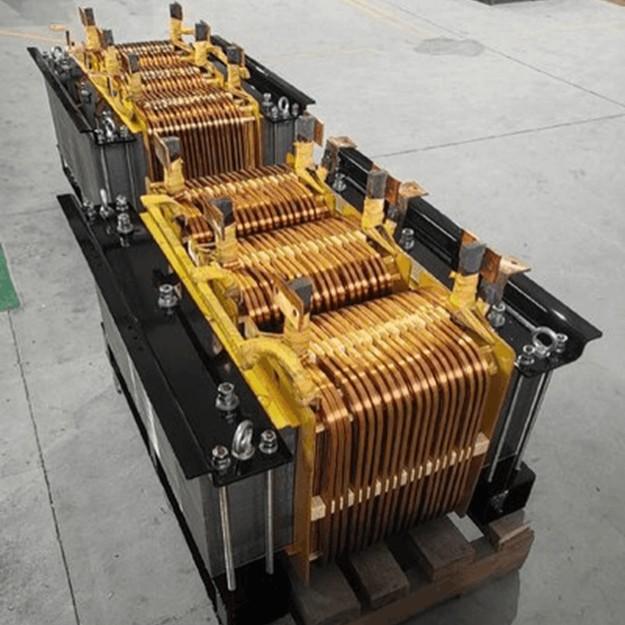 Innovative & Common Winding Structures for 10kV High-Voltage High-Frequency Transformers1.Innovative Winding Structures for 10 kV-Class High-Voltage High-Frequency Transformers1.1 Zoned and Partially Potted Ventilated Structure Two U-shaped ferrite cores are mated to form a magnetic core unit, or further assembled into series/series-parallel core modules. Primary and secondary bobbins are mounted on the left and right straight legs of the core, respectively, with the core mating plane serving as the boundary layer. Windings of the same type are grouped on the same side. Litz wire iNoah12/05/2025
 -
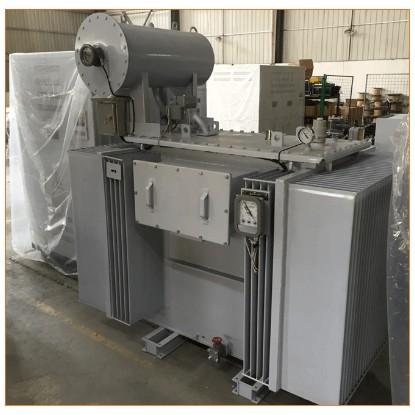 How to Increase Transformer Capacity? What Needs to Be Replaced for Transformer Capacity Upgrade?How to Increase Transformer Capacity? What Needs to Be Replaced for Transformer Capacity Upgrade?Transformer capacity upgrade refers to improving the capacity of a transformer without replacing the entire unit, through certain methods. In applications requiring high current or high power output, transformer capacity upgrades are often necessary to meet demand. This article introduces methods for transformer capacity upgrade and the components that need to be replaced.A transformer is a criticalEcho12/04/2025
 -
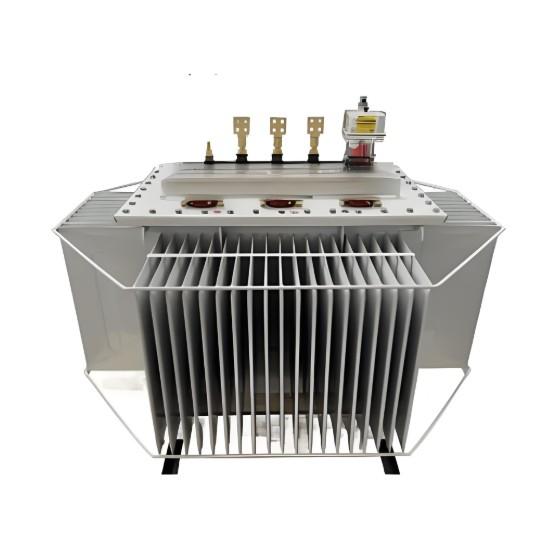 Causes of Transformer Differential Current and Hazards of Transformer Bias CurrentCauses of Transformer Differential Current and Hazards of Transformer Bias CurrentTransformer differential current is caused by factors such as incomplete symmetry of the magnetic circuit or insulation damage. Differential current occurs when the primary and secondary sides of the transformer are grounded or when the load is unbalanced.Firstly, transformer differential current leads to energy waste. Differential current causes additional power loss in the transformer, increasing the load on theEdwiin12/04/2025
 -
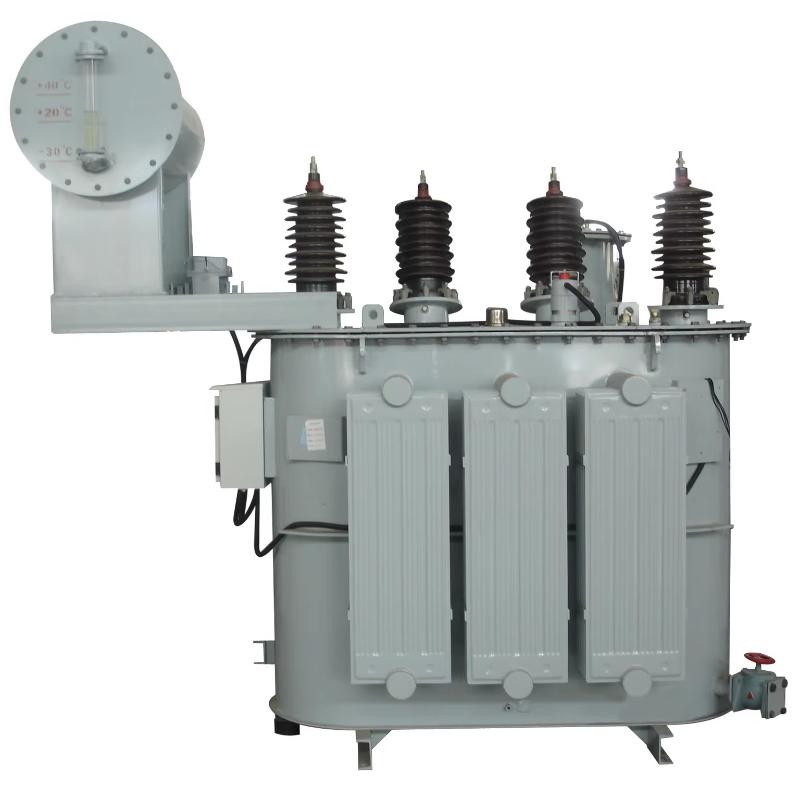 Protection Logic Improvement and Engineering Application of Grounding Transformers in Rail Transit Power Supply Systems1. System Configuration and Operating ConditionsThe main transformers at Zhengzhou Rail Transit’s Convention & Exhibition Center Main Substation and Municipal Stadium Main Substation adopt a star/delta winding connection with a non-grounded neutral point operation mode. On the 35 kV bus side, a Zigzag grounding transformer is used, connected to ground through a low-value resistor, and also supplies station service loads. When a single-phase ground short-circuit fault occurs on a line, a pathEcho12/04/2025
Related Solutions
-
 Distribution automation systems solutionsWhat are the difficulties in overhead line operation and maintenance?Difficulty one:Overhead lines of distribution network have wide coverage,complicatedterrain,many radiation branches and distributed power supply,resultingin "many line faults and difficulty in fault troubleshooting".Difficulty Two:Manual troubleshooting is time-consuming and laborious.Meanwhile,therunning current,voltage and switching state of the line cannot be graspedin real time,because of the lack of intelligent technical mRW Energy04/22/2025
 -
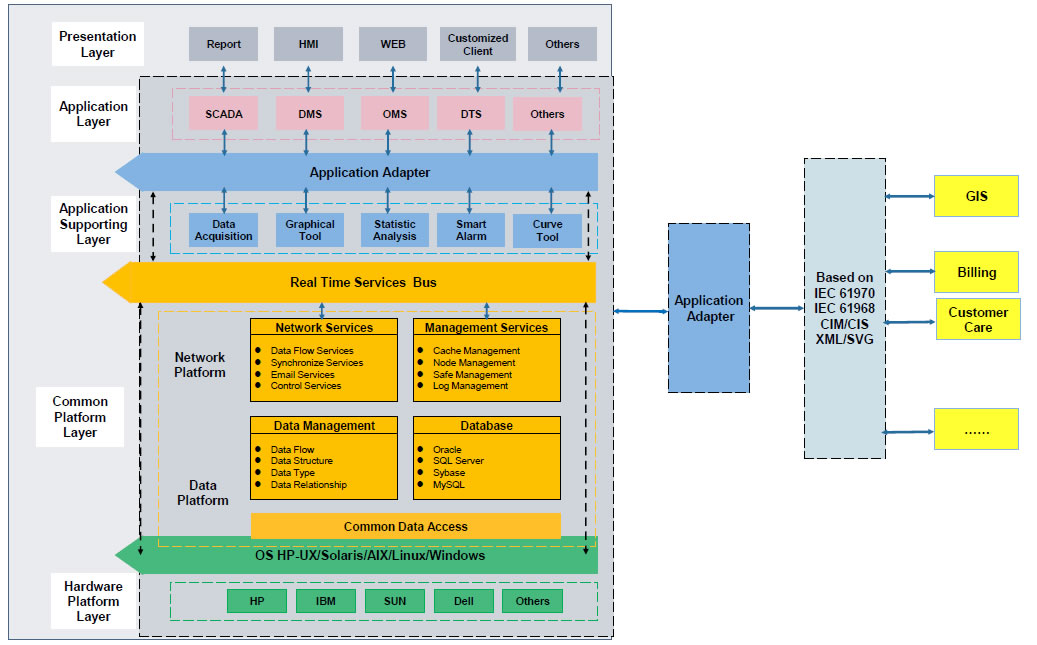 RW8000 DMS Distribution Management System SolutionsOverviewNowadays, the development trend of power grid is intellectualization. As an important part of power grid, the power distribution system is very close to the customers and it has to run properly. The distribution management system (DMS)played an important role in it.Introduction:RW8000 power distribution management system (DMS) is designed for the smart grids. It is based on real-time application, centered on distribution network operation and management, focusing on the business processRW Energy09/07/2023
 -
 High-Precision Electrical Parameter Monitoring System Solution1.IntroductionWith the increasingly stringent requirements for power supply quality in high-end facilities such as precision manufacturing, medical diagnosis, and data centers, traditional power monitoring systems, due to their low sampling accuracy and weak data analysis capabilities, can no longer meet the demand for deep insight and precise management of power quality. In response, we are introducing a new generation High-Precision Electrical Parameter Monitoring System. With millisecond-lRW Energy09/28/2025