The basic principle of voltage source series
Ideal voltage source
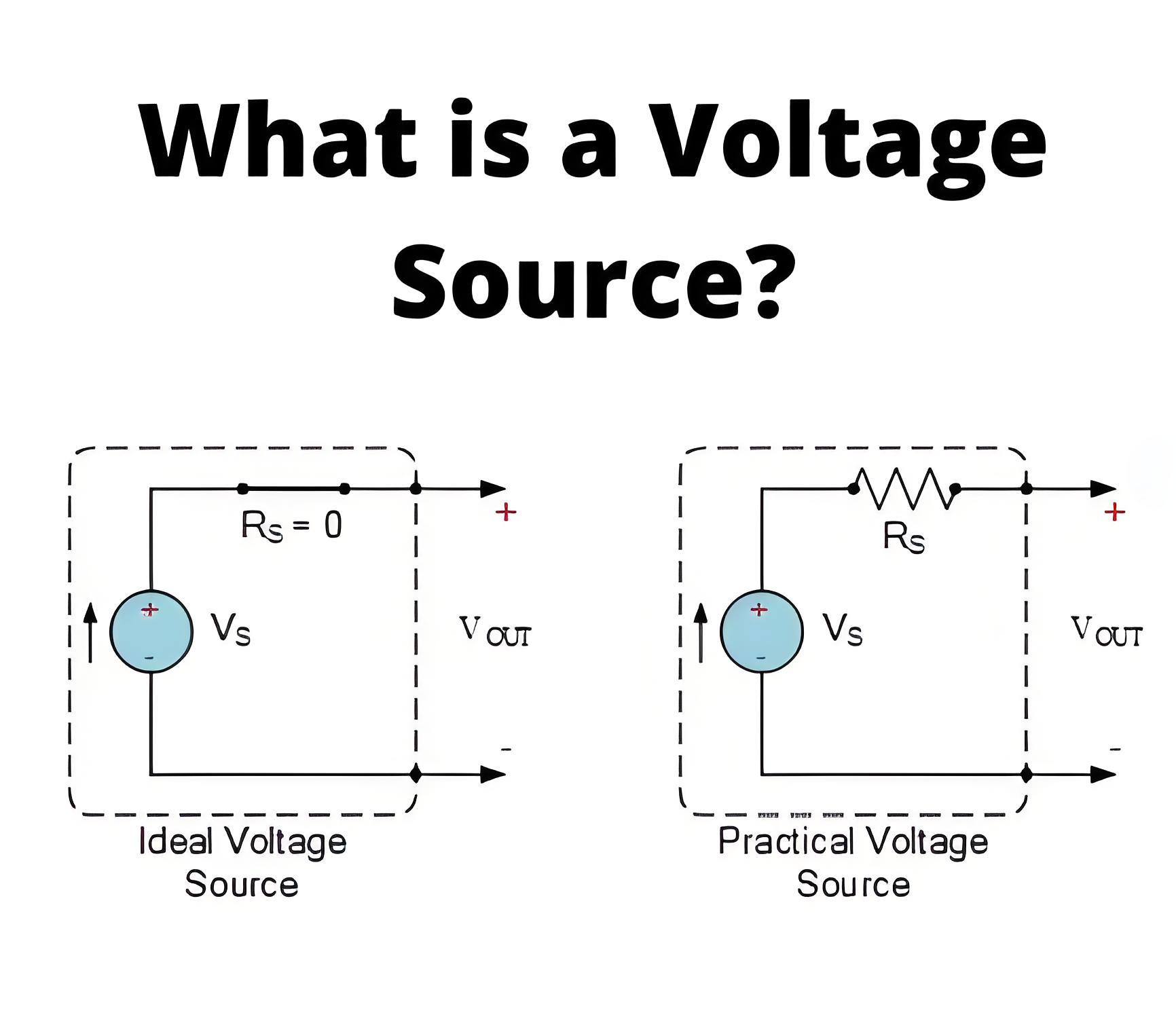
For an ideal voltage source, the terminal voltage is constant and independent of the current flowing through it. When two different ideal voltage source.
When U1 and U2 are in series, the total voltage U=U1+U2. For example, if a 5V ideal voltage source is connected to a 3V ideal voltage source in series, the total voltage is 5V+3V=8V.
Actual voltage source
The actual voltage source can be equivalent to a series combination of an ideal voltage source Us and an internal resistance r. Two actual voltage sources are set, the electromotive force is Us1, Us2, the internal resistance is r1, r2. According to Kirchhoff's voltage law (KVL), the total voltage U is: U=Us1−I×r1+U s2−I×r2=(Us1+Us2)−I×(r1+r2). When the current in the circuit I=0 (i.e. the open circuit case), the total voltage U=Us1+Us2, which is the same form as the result when the ideal voltage source is in series.
Matters needing attention
Voltage source polarity
When calculating the total voltage, the polarity of the voltage source must be taken into account. If the polarity of two voltage sources is in series (that is, the positive electrode of one voltage source is connected to the negative electrode of the other voltage source), the total voltage is the sum of the voltage values of the two voltage sources; If it is in reverse series (that is, the positive or negative terminals of the two voltage sources are connected), the total voltage is subtracted from the voltage values of the two voltage sources. For example,
The total voltage of the 5V and 3V voltage sources in forward series is 8V. If they are in reverse series, the total voltage is 5V−3V=2V (assuming that the absolute value of the voltage of the 5V voltage source is greater than that of the 3V voltage source).

 Login