I. Key Elements of Mechanical Structure Design
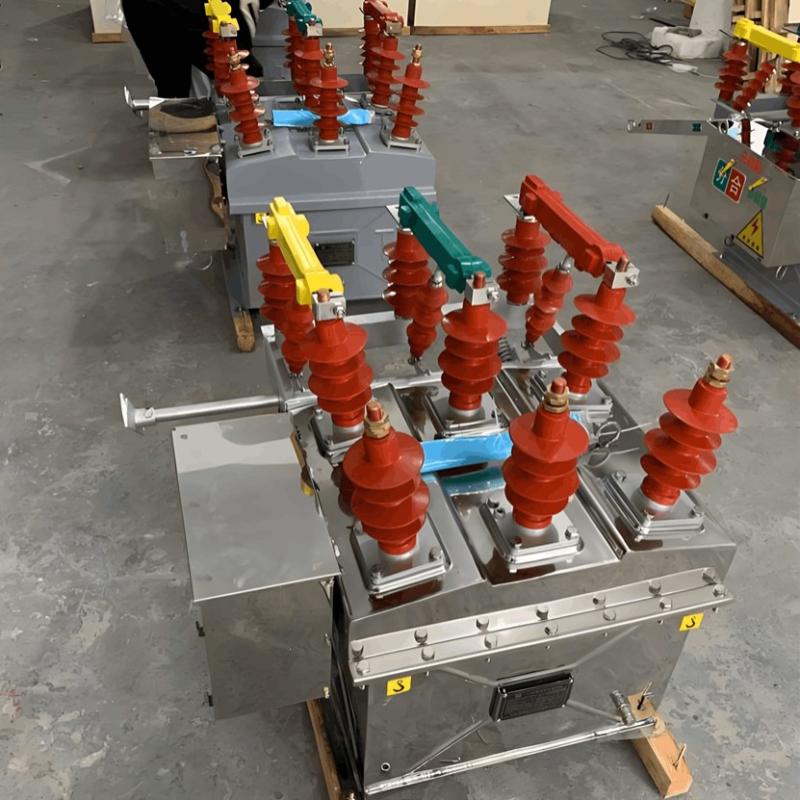
The mechanical structure design of AIS voltage transformers ensures long - term stable operation. For 66 kV outdoor AIS voltage transformers (pillar - type structure):
Pillar Material: Use epoxy resin casting + metal frame for mechanical strength, pollution/weather resistance. Special design needed for 66 kV (vs 35 kV & below). Dry - type insulation (porcelain/epoxy shell) requires sufficient bending/impact resistance for harsh outdoors.
Heat Dissipation: Rely on natural convection; ensure winding temperature rise ≤ 80 K. For electronic types, add forced air cooling/thermal materials (e.g., heat pipe modules control bus temp rise < 65 K at 40 °C, 14% below industry standards).
Anti - Vibration: Follow GB/T 20840.11 - 2025 (transport: 10 g vibration elements; post - transport checks). Use shock - absorbing brackets/damping materials (e.g., honeycomb cardboard + polyurethane foam; internal displacement < 1 mm under 3 g transport at 5000 m altitude).
II. Insulation Medium & Structure Design
Core to insulation performance, safety, and environmental - friendliness:
Sealing: Single - channel multi - seal groove (22% - 25% compression rate). EPDM “O” - rings, stainless steel welded tanks, double - layer O - rings ensure airtightness (annual leakage ≤ 0.5%). Comply with weld checks (X - ray, dye) and hydrostatic tests.
Insulation Structure: For electromagnetic types, use side - yoke cores or 3 - single - phase combinations. For capacitive types, optimize capacitor dividers/electromagnetic units. Meet electrical clearance/creepage (e.g., PD3: 12 kV system creepage ≥ 240 mm).

III. Environmental Adaptability Design
Ensures reliable outdoor operation:
Temperature: Operate at - 40 °C ~ + 55 °C (GB/T 4798.4). Use stable materials (silicone rubber/epoxy resin; 155 °C epoxy passes IEC 60216 - 1). Optimize heat dissipation (e.g., silver - plated copper bars pass 1000 - hour salt spray, contact resistance change ≤ 15%).
Anti - Pollution: Design per PD3 (high CTI epoxy, RTV coatings). E.g., polyurea coatings (≥ 1 mm) improve UV resistance 3x (QUV test: ΔE < 3 after 5000 h).
Anti - Aging: Verify via IEC tests (CTI, thermal aging, salt spray). Use tinned copper bars (≥ 15 μm; pass 56 - day damp - heat tests). Include protection (anti - aging/rust - resistant explosion - proof membranes; avoid water/frost heave).
IV. Safety Protection Design
Ensures system/equipment safety:
Fuses: Primary: RW10 - 35/0.5 (0.5 A, 1000 MVA breaking). Secondary: 3 - 5 A (protection), 1 - 2 A (metering); fusing time < protection action time.
Grounding: Follow “single - point grounding” (primary neutral, secondary at control room, tertiary open - delta). Comply with resistance standards (varies by type/scenario).
Explosion - Proof: Membrane bursting pressure = 2× rated (e.g., 66 kV: 0.8 MPa for 0.4 MPa rated). Use anti - aging/rust - resistant materials (polycarbonate/stainless steel); avoid water/frost heave.
VIII. Conclusions & Suggestions
AIS voltage transformer design requires comprehensive consideration of structure, insulation, environment, safety, and intelligence.
Design Tips: Pillar structure (epoxy + metal frame); heat dissipation (optimize convection, add cooling if needed); anti - vibration (shock - absorbing materials, test validation).
Safety: Fuses (matching specs), single - point grounding, explosion - proof membranes (2× rated pressure, anti - aging materials).
Future designs will focus on environmental - friendliness, intelligence, and digitization. Follow standards/specs to ensure stable operation.

 Login
Login