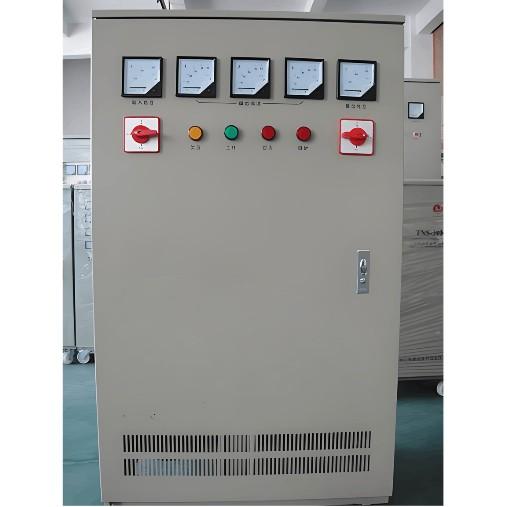
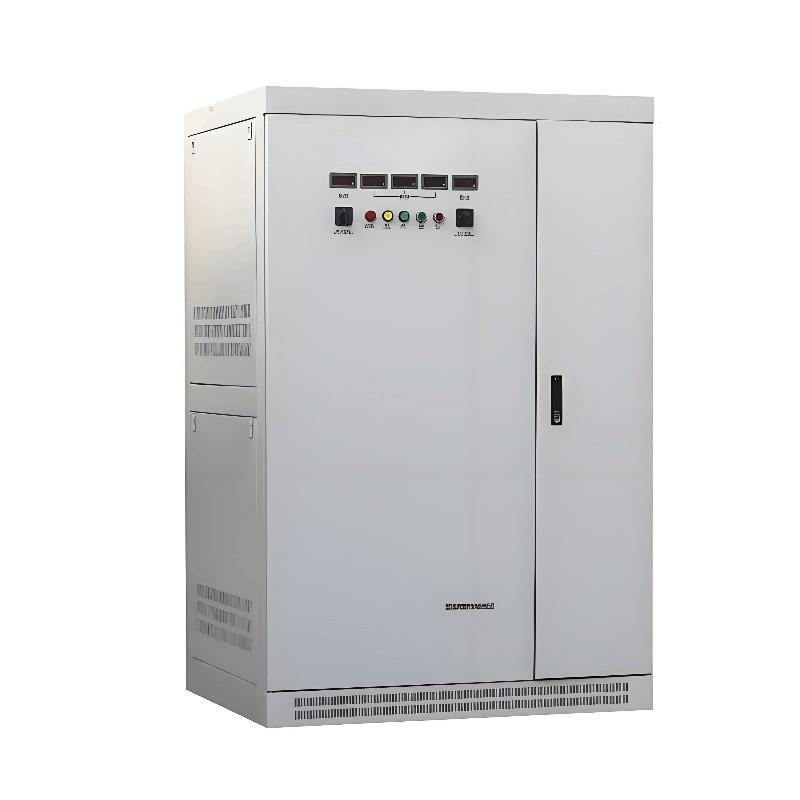
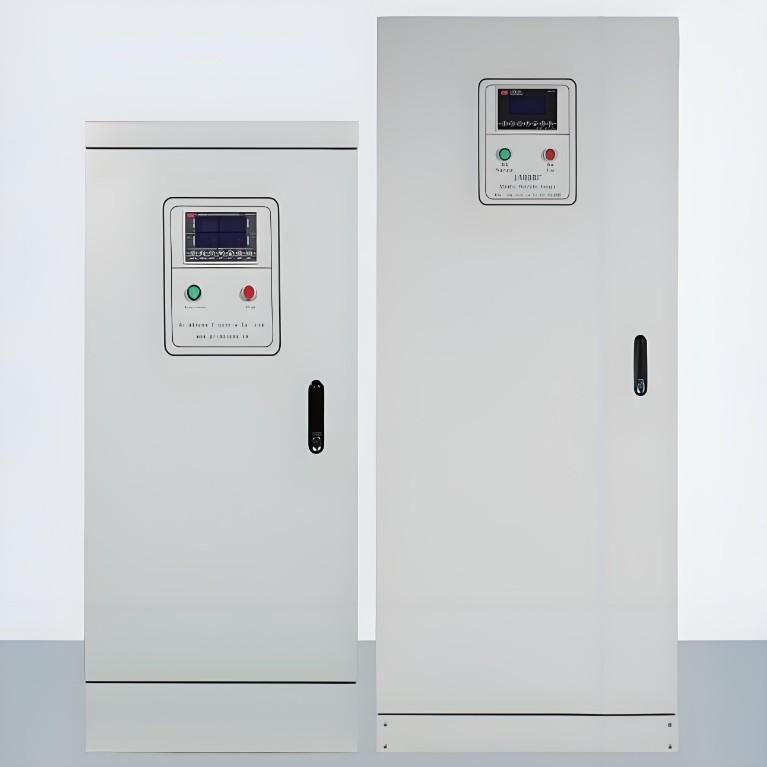
A medium-voltage automatic line regulator is a specialized transformer that must comply with standards such as IEEE C57.15-2017 or IEC 60214-1:2014. It operates continuously under live-line conditions and undergoes frequent tap-changing operations, imposing more stringent demands on operating noise, magnetic circuit stability, and long-term no-load losses than those of ordinary transformers. To address these challenges, Rockwill has specifically developed a dual-scheme core structure to meet customized requirements across different application scenarios.
Option 1: Step-lap Fully Mitered Core (Stacked Core)
This design addresses the mainstream needs of conventional substations and line-side applications. It employs high-quality, low-magnetostriction Hi-B silicon steel, rigorously annealed to relieve internal stresses. The stacked core structure ensures magnetic circuit symmetry under various tap-winding configurations, preventing localized overheating—a critical attribute for regulators. Meanwhile, by moderately reducing the operating flux density (to approximately 1.60–1.65 T), the regulator maintains extremely low noise and temperature rise under sustained live-load operation. This solution features mature manufacturing processes and is particularly well-suited for large-capacity installations where mechanical robustness and on-site maintenance convenience are priorities—for example, larger regulators installed on substation busbar sides.
Option 2: Rectangular Wound Core
For scenarios demanding extreme compactness and ultra-low losses, Rockwill offers the rectangular wound-core solution. The wound core has no overlapping joints, resulting in significantly lower no-load current and no-load losses compared to stacked cores, as well as reduced noise—advantages that are especially pronounced on lines with prolonged no-load operation. Combined with vacuum pressure impregnation (VPI), the wound core forms a solid, integrated structure with enhanced short-circuit withstand capability.
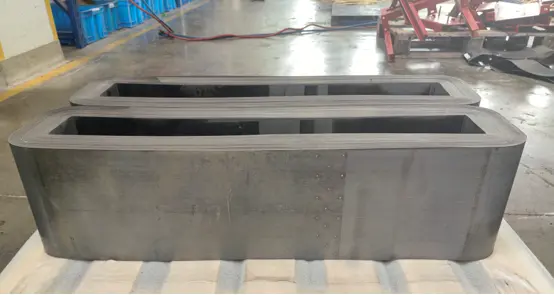
Rectangular Wound Core Physical Photo
This solution is ideal for pole-mounted installations, space-constrained sites, or line regulators subject to stringent energy-efficiency and loss-reduction targets. Moreover, owing to higher production efficiency and better material utilization, the wound-core scheme delivers superior cost-effectiveness for medium- and small-capacity regulators. For instance, for a 10 kV automatic regulator deployed at the end of a distribution line to mitigate low-voltage issues, where installation space is tight and noise sensitivity is high, the wound-core solution proves to be an optimal choice.
Material and Process Coordination Across Different Standards
Regardless of which core structure is selected, materials and processes must be precisely aligned with the applicable standards. To meet the temperature-rise and insulation requirements of both IEC 60214-1:2014 and IEEE C57.15-2017, Rockwill consistently uses high-permeability, low-loss Hi-B silicon steel and maintains independent core databases for operating frequencies (50 Hz or 60 Hz) to accurately calculate losses.
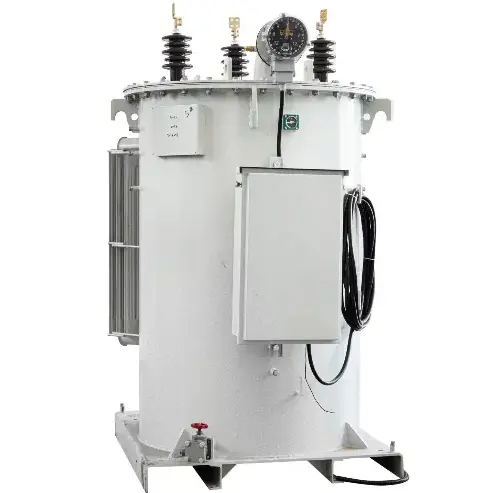
RVR Series Single Phase Automatic Voltage Regulator
For projects with strict noise limits, both stacked-core and wound-core solutions uniformly adopt low-flux-density designs (typically not exceeding 1.65 T) together with rigorous annealing processes. On lines with significant harmonic content, thinner silicon steel sheets (0.23 mm and below) are preferred, complemented by fiber-optic temperature monitoring to ensure reliability.
Decision-Making Workflow for Selecting the Dual-Scheme Core for Regulators
When approaching a medium-voltage automatic line regulator project, the decision-making path is clear and targeted:
- Define requirements based on the project standard (IEEE or IEC)—including no-load losses, noise limits, installation mode (pole-mounted or substation), and capacity rating.
- If the project involves large capacity, is installed in a substation, and prioritizes maintenance convenience, proceed with the stacked-core channel—design a fully mitered, step-lap joint structure and verify magnetic circuit symmetry and mechanical strength.
- If the project involves small-to-medium capacity, is pole-mounted or space-constrained, or imposes extremely stringent limits on long-term no-load losses and noise, proceed with the wound-core channel—design a rectangular wound core and plan VPI processing to enhance structural integrity and short-circuit robustness.
- After determining the core structure, regardless of the scheme, perform final verification of flux density and sheet thickness based on operating frequency, harmonic content, and other special conditions, followed by electromagnetic simulation optimization to finalize the design.
Conclusion
In the field of medium-voltage regulators, Rockwill's dual-scheme core design is not merely a set of alternatives; it reflects a profound understanding of the operational fundamentals of these products. The stacked-core solution emphasizes maintainability, process maturity, and structural stability for large capacities; the wound-core solution focuses on ultra-low losses, low noise, and compactness. By comprehensively considering standard requirements, installation environments, and total lifecycle costs, Rockwill delivers the most appropriate core solution tailored to each customer's needs.
Edited From:Edwiin

 Login
Login