

Search


Rockwill Load Switch RPS-T: Core Definition and Two-Position vs. Three-Position Differential Advantage Analysis

Rockwill RPS-T load switch: core definition and 2‑position vs 3‑position differential advantage analysis for RMU applications.

Rockwill
Field: Manufacturing
10Year<
China
Add us on Google
 

Core Definition: What Is a Three-Position SF6 Integrated Load Switch?

1. Three-Position Load Switch (Rockwill RPS-T Series)

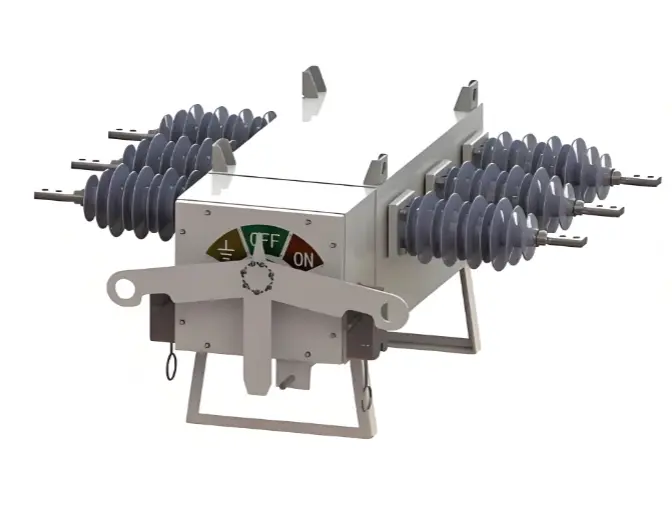
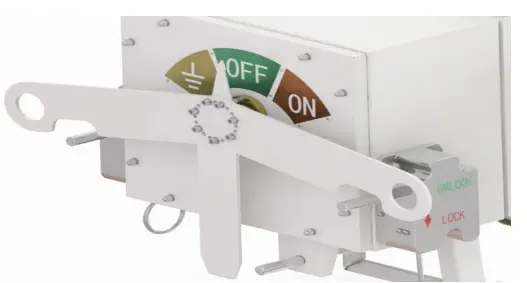
A three-position load switch is a highly integrated SF6 gas-insulated switching device. Adopting a single-unit integrated design driven by a common main shaft, it seamlessly integrates three distinct and stable positions — Closed (ON), Open (OFF), and Earth (EARTH). Both the main contacts and earthing contacts are fully sealed inside a stainless steel SF6 tank, with a single spring operating mechanism synchronously driving the switching between all three positions.

  • Closed Position (ON): The main circuit contacts are engaged, and the line is energized for normal power delivery.
  • Open Position (OFF): The main circuit is disconnected, forming a reliable isolating gap for line isolation and de-energization, without earthing.
  • Earth Position (EARTH): The main circuit is reliably connected to ground, releasing residual charge from the line and meeting maintenance safety conditions.

Core mechanism: All three positions are interlocked through a pure mechanical hard interlock — only one position can be active at any given time, inherently satisfying distribution network "five-prevention" safety regulations.

iee-business

2. Traditional Two-Position Load Switch

Contains only two working positions — "Closed" and "Open" — with no built-in earthing contacts. When the line is de-energized for maintenance, an additional external earthing switch or manual ground wire installation must be employed separately to achieve earthing protection. The earthing function is completely independent from the main switch.

II. Six Core Advantages of the Rockwill Three-Position Integrated Switch

(I) Safety: Structurally Eliminating Maloperation

  • Forced Mechanical Interlock Prevents "Energized Earthing Switch Closure": The three-position common-shaft linkage design physically locks the mechanism in the closed state, preventing switching to the earth position; when earthed, closing is impossible. This pure mechanical hard interlock is unaffected by power loss or electronic component failure, thoroughly eliminating high-frequency catastrophic short-circuit accidents in distribution networks.
  • Maintenance Earthing in One Step: After fault isolation, a single operation switches to the earth position, providing three-phase synchronous reliable earthing and releasing residual induced voltage. Compared with the two-position solution requiring manual transport of earthing rods and manual earthing connection (prone to missed or insecure connections), the three-position design substantially reduces the risk of human error during elevated work.
  • Fully Sealed Built-In Earthing with Superior Short-Circuit Withstand Capability: The earthing contacts are integrated inside the SF6 tank, with conductor cross-section and short-time withstand current matched through complete unit design. This eliminates the risk of external earthing switches suffering from corrosion-induced contact resistance rise and consequent protection failure under fault conditions.

iee-business

(II) Engineering Adaptability: Compact Design Substantially Reduces Installation Costs

  • Eliminates Additional Pole Mounting and Reinforcement: In retrofits of old urban areas and narrow-pole distribution networks, a two-position solution requires two sets of mounting brackets and double lifting space, often necessitating pole replacement due to insufficient load-bearing capacity. Rockwill's three-position integrated design requires only single-unit lifting and can be mounted on the original single pole, significantly reducing civil works and lifting costs.
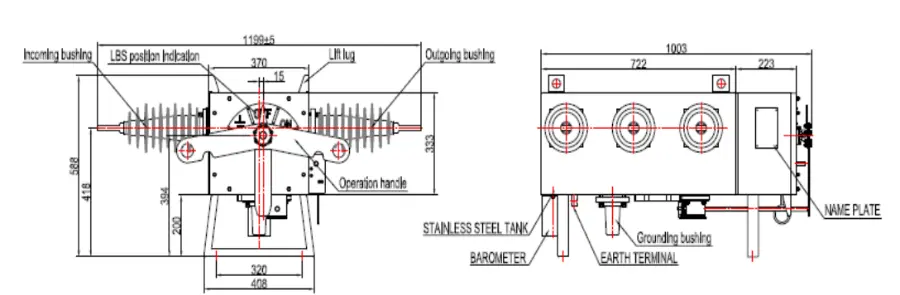
  • Compact Size Adapts to Confined Spaces: The RPS-T uses a 3mm SUS304L common-chamber sealed tank, with overall dimensions far smaller than a "two-position switch + external earthing switch" combination at the same voltage level, making it ideal for laneways, narrow greenbelts, and dense residential areas.
  • Simplified Primary Wiring Reduces Fault Points: Internal buses are integrated as a single unit, with only incoming and outgoing insulated bushings remaining external. Compared with the two-position solution requiring two additional exposed copper connections, the three-position design halves the number of external connections, significantly reducing the probability of line heating and leakage current.

(III) Maintenance Advantage: Fully Sealed and Maintenance-Free, Reducing Lifecycle Cost

  • Earthing Circuit Maintenance-Free: All main contacts and earthing contacts are immersed in non-toxic insulating SF6 gas, fully protected from rain, dust, and salt spray corrosion. This completely eliminates the annual elevated maintenance work required for two-position external earthing switches — rust removal, bolt retightening, conductive grease application, etc.
  • Unified Inspection Halves Workload: Inspection requires checking only one device's SF6 density, position indication, and locking mechanism — no need to inspect two separate units independently.
  • Modular Repair Reduces Outage Time: If the operating mechanism is damaged, the three-position design allows independent replacement of the mechanism module without venting SF6 gas. In contrast, any component failure in a two-position split arrangement requires two elevated disassembly/assembly operations, significantly extending outage duration.

(IV) Automation Compatibility: Perfectly Matching Smart Distribution Network Self-Healing

  • Complete Status Signals Eliminate Dispatching Blind Spots: Optional auxiliary position contacts simultaneously upload Closed, Open, and Earth position signals to the distribution master station. The dispatch center can intuitively determine whether the line is in a safe earthed maintenance state. Two-position switches can only upload open/close signals, creating blind spots in self-healing control logic.
  • Safer and More Efficient Fault Isolation: During overhead line fault sectionalization, the three-position switch can directly transition to the earth position after opening, fully isolating the faulted section. A two-position switch can only disconnect the line, leaving induced voltage on the faulted section and prolonging outage time.

(V) Operation and Standardization: Minimal Logic, International Compliance

  • Visual Position Indicator Prevents Confusion: A three-color mechanical position indicator on the front panel (green OFF, brown ON, earth symbol) allows visual confirmation of the actual status from ground level, eliminating the confusion risk associated with dual operating handles in two-position solutions.
  • Broad Standard Compatibility: Complies with IEC, ANSI, and GB 3804 unified distribution network design standards. In domestic smart distribution network construction, rural grid retrofits, and overseas export projects, the three-position integrated device offers stronger tender compatibility.

(VI) Comprehensive Economic Comparison

  • Equipment Procurement: Unit price of a single three-position switch < total cost of two-position switch + independent earthing switch.
  • Installation Cost: Eliminates the need for a second mounting bracket, lifting, and wiring labor — total installation cost reduced by over 30%.
  • Long-Term Maintenance: Maintenance-free cycle of 15-20 years, with no annual rust removal costs. The 20-year lifecycle cost is substantially lower than the split solution.

iee-business

III. Conclusion

Fundamental Difference: The three-position design integrates the main switch and earthing switch into a single sealed unit with one common-shaft mechanical linkage. The two-position design separates the main switch from the earthing function, with no built-in earth position.

Core Value Hierarchy: Safety (maloperation prevention) > Engineering installation cost savings > Distribution automation compatibility > Long-term maintenance cost reduction.

The Rockwill RPS-T three-position pole-mounted SF6 switch precisely addresses three industry pain points — narrow-pole retrofits in aging distribution networks, harsh coastal environments, and smart feeder automation — making it the upgraded mainstream alternative to traditional two-position split solutions.

Edited From:Garca

Give a tip and encourage the author!

Comments

Share your question or perspective
WhatsApp
Send inquiry
+86
Click to upload file
Download
Get the IEE Business Application
Use the IEE-Business app to find equipment, obtain solutions, connect with experts, and participate in industry collaboration anytime, anywhere—fully supporting the development of your power projects and business.
Login
or continue with
New here?
Register








