
• Product
  • Suppliers
  • Manufacturers
  • Solutions
  • Free tools
  • Knowledges
  • Experts
  • Communities
Search


Rockwill Circuit-Breaker Creepage Distance — Technical Analysis

Rockwill
Field: Manufacturing
10Year<
China
 

1. What Is Creepage Distance?

In Rockwill medium- and high-voltage switchgear design, creepage distance is defined as the shortest path between two conductive parts measured along the surface of an insulating material.

In Rockwill circuit-breakers and switchgear, this applies to:

  • Conductive part to earthed metal enclosure (phase-to-earth)
  • Phase-to-phase conductors

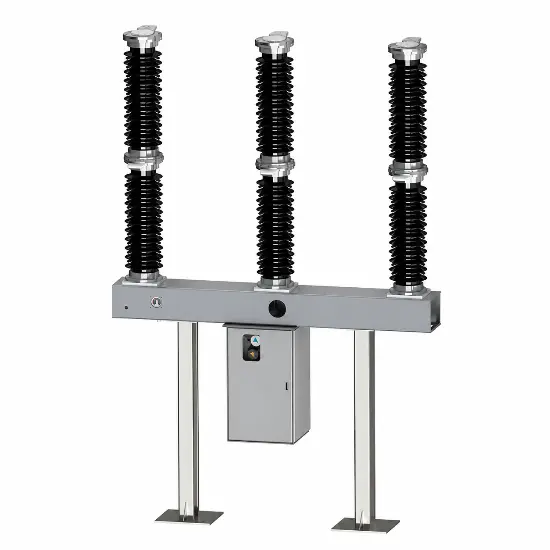
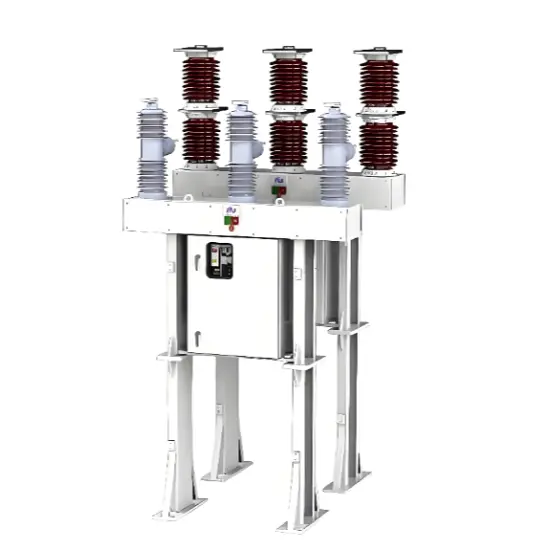
Outdoor Live tank SF6 gas circuit breaker 72.5kV

 Live tank circuit breaker

Distinction from Air Clearance (Rockwill Engineering Definition)

Parameter Definition Role in Rockwill Design
Air clearance Straight-line distance through air Prevents electrical breakdown
Creepage distance Path distance along insulating surface Prevents pollution flashover and surface discharge
 

In the Rockwill design system, both must be satisfied simultaneously, but creepage distance is the critical factor determining long-term operational reliability.

2. Engineering Significance of Creepage Distance — Rockwill Perspective

2.1 Core Design Parameter for Pollution Flashover Prevention

In Rockwill equipment operating environments, when the insulating surface is exposed to:

  • Industrial dust
  • Salt fog pollution
  • Moisture and condensation
  • Atmospheric chemical contamination

A conductive film forms on the surface, leading to:

Surface leakage current → Partial discharge → Flashover

2.2 Determines Long-Term Reliability of Outdoor Equipment

In the Rockwill product system:

  • Satisfying short-duration power-frequency withstand voltage alone is insufficient
  • Long-term environmental stability must be guaranteed
  • Creepage ratio is the core control parameter for long-term insulation reliability

2.3 Key Parameters in Rockwill High-Voltage Insulation Systems

Creepage ratio is widely applied in the following Rockwill products:

  • Vacuum circuit-breakers (VCB)
  • SF6 circuit-breakers
  • Medium-voltage switchgear (KYN / RMU)
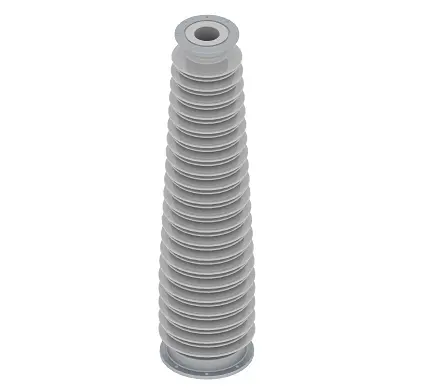
  • Bushings and support insulators
  • Busbar insulation systems

3. IEC Standards and Rockwill Pollution Class Design Principles

Rockwill creepage ratio design strictly follows the IEC 60815 standard:

Pollution Classes and Rockwill Design Standards

Pollution Class Application Environment (Rockwill Definition) Recommended Creepage Ratio (mm/kV)
I Indoor clean environment 16
II General industrial environment 20
III Heavy industry / coastal environment 25
IV Severe pollution / heavy salt fog environment 31+

 4. Factors Influencing Rockwill Creepage Distance Design

4.1 Insulation Material Selection — Rockwill Key Design Direction

Rockwill selects insulation materials according to the application:

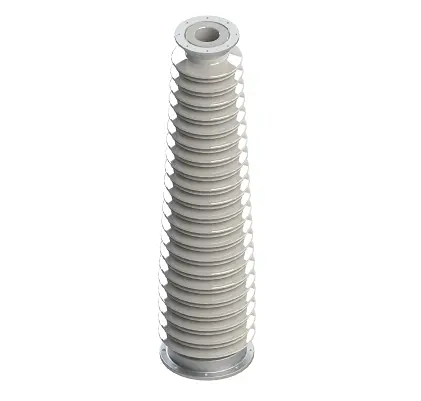
  • Porcelain insulators — High mechanical strength, excellent long-term stability

iee-business

  • Epoxy resin insulation — Compact structure design, suitable for internal medium-voltage switchgear use
  • Silicone rubber composite insulation — Excellent hydrophobicity, strong pollution flashover resistance (Rockwill's primary outdoor recommendation)

iee-business

4.3 Environmental Factors — Rockwill Engineering Boundary Conditions

Rockwill design fully considers operating environment effects:

  • High-humidity environments → continuous water film formation
  • Salt fog environments → significantly increased surface conductivity
  • Dust combined with moisture → high-risk combination for pollution flashover

4.4 Relationship Between Voltage Level and Insulation Level

In the Rockwill design system:

Higher voltage level → Stronger electric field stress → Creepage distance requirement increases non-linearly


5. Common Misconceptions in Rockwill Engineering Design

Misconception 1: Focusing Only on Air Clearance

Some designs only verify:

  • Phase-to-phase distance
  • Phase-to-earth clearance

However, Rockwill operational data shows:

The majority of insulation failures occur along the surface creepage path.

Misconception 2: Longer Creepage Distance Always Means Safer

Rockwill engineering practice demonstrates that excessive creepage leads to:

  • Increased structural dimensions
  • Higher cost
  • Reduced equipment compactness

The correct strategy is:

Co-optimised design of material + structure + distance.

Misconception 3: Ignoring Condensation Effects

Rockwill engineering experience shows that even in indoor equipment:

  • Temperature variations can still cause condensation
  • Insulation performance can drop instantaneously
 

6. Typical Applications in Rockwill Products

Rockwill Vacuum Circuit-Breaker (VCB)

  • Epoxy resin insulated support structure
  • Compact creepage path optimisation design
  • Emphasis on internal insulation coordination

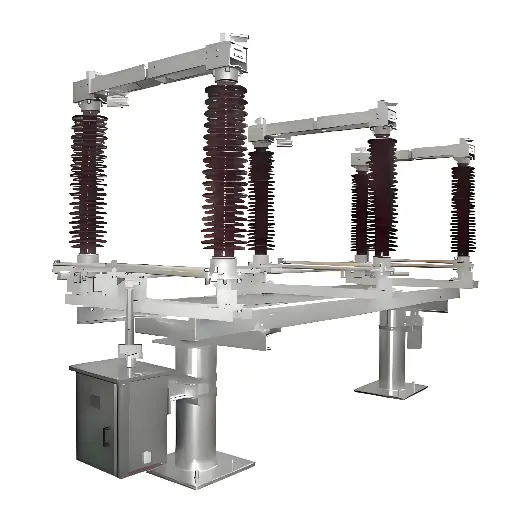
Outdoor live tank vacuum circuit breaker 24kV 36kV 40.5kV 52kV

Outdoor live tank vacuum circuit breaker

Rockwill SF6 Circuit-Breaker

  • Outdoor bushing creepage distance is a critical design point
  • Adaptable design for high pollution classes
  • Enhanced performance in salt fog and hot-humid tropical environments

Rockwill Medium-Voltage Switchgear (KYN / RMU)

  • Busbar support insulators as key control points
  • Focus on pollution flashover prevention at handcart contact areas
  • Multi-layer insulation coordination system

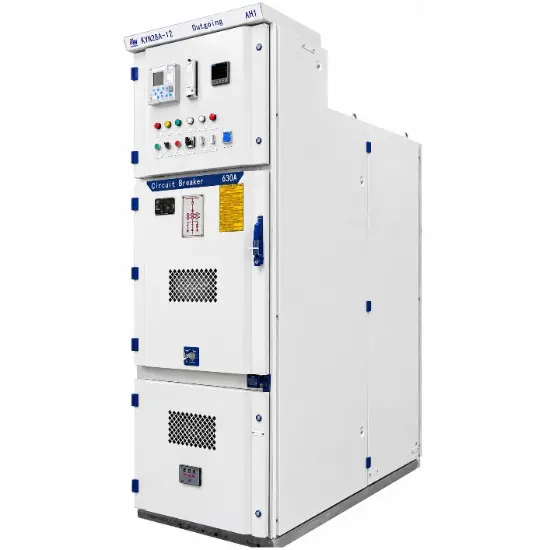
Indoor metal-clad air-insulated withdrawable switchgear 7.2kV-24kV

Indoor metal-clad air-insulated withdrawable switchgear 


7. Summary

In the Rockwill high-voltage switchgear design system, creepage ratio is not merely a structural dimension parameter — it is a core engineering indicator that measures equipment environmental adaptability and long-term insulation reliability.

It directly determines the long-term operational stability and safety of Rockwill equipment in environments subject to high humidity, salt fog, dust, and superimposed complex electric fields.

Edited From:Garca

Give a tip and encourage the author!
Topics:

Comments

Share your question or perspective
WhatsApp
Send inquiry
+86
Click to upload file
Download
Get the IEE Business Application
Use the IEE-Business app to find equipment, obtain solutions, connect with experts, and participate in industry collaboration anytime, anywhere—fully supporting the development of your power projects and business.
Login
or continue with
New here?
Register