How Does Oil Loss Affect SF6 Relay Performance?

1.SF6 Electrical Equipment and the Common Problem of Oil Leakage in SF6 Density Relays
SF6 electrical equipment is now widely used in power utilities and industrial enterprises, significantly advancing the development of the power industry. The arc-quenching and insulating medium in such equipment is sulfur hexafluoride (SF6) gas, which must not leak. Any leakage compromises the reliable and safe operation of the equipment, making it essential to monitor the SF6 gas density. Currently, mechanical pointer-type density relays are commonly used for this purpose. These relays can trigger alarm and lockout signals when gas leakage occurs and also provide on-site density indication. To enhance vibration resistance, these relays are typically filled with silicone oil.
However, in practice, oil leakage from SF6 gas density relays is a common issue. This problem is widespread—every power supply bureau across the country has encountered it. Some relays develop oil leaks within less than a year of operation. In short, oil leakage in oil-filled density relays is a prevalent and persistent problem.
2. Hazards of Oil Leakage in Density Relays
As is well known, SF6 density relays generally use a spring-type electrical contact, enhanced with a magnetic assist mechanism to ensure reliable contact closure. However, the contact force (for alarm or lockout) relies primarily on the weak force of the spring. Even with magnetic assistance, the force remains very small, making the contacts highly sensitive to vibration. To improve vibration resistance, silicone oil is typically filled into the relay. If oil leakage occurs, it poses potential safety risks to the SF6 electrical equipment.
Hazard 1: Once the anti-vibration oil completely leaks out, the damping effect is lost, drastically reducing the relay’s vibration resistance. After strong mechanical shocks during circuit breaker switching operations, the pointer may become stuck, contacts may fail permanently (either not actuating or remaining actuated), or measurement deviations may exceed acceptable limits.
Hazard 2: Since the relay contacts are magnetically assisted with inherently low contact force, prolonged exposure can lead to oxidation of the contact surfaces. For relays that have lost all oil, the magnetically assisted contacts are directly exposed to air, making them prone to oxidation or dust accumulation, resulting in poor contact or complete failure.
According to reports: Over a three-year period during which one utility intensified its testing of SF6 density relays, 196 units were inspected, and 6 (about 3%) were found to have unreliable contact conduction. All of these faulty relays had completely lost their damping oil. If a density relay suffers from a stuck pointer, failed contacts, or unreliable conduction, it can severely compromise grid safety. Consider the scenario where an SF6 circuit breaker leaks gas and loses its insulating medium, but the density relay fails to trigger an alarm due to a stuck pointer or faulty contact. If the breaker then attempts to interrupt a fault current, the consequences could be catastrophic.
Additionally, leaked oil can contaminate other components of the switchgear, attracting dust and further endangering safe operation. Some units resort to wrapping the leaking relay in plastic bags to prevent oil from spreading and causing dust buildup. Moreover, modern substations are designed to be oil-free; thus, oil leakage is considered a defect that must be rectified.
3. Root Cause Analysis of Oil Leakage
The primary leakage points in density relays are the seals between the terminal block and the case, the glass window and the case, and cracks in the glass itself. Through disassembling numerous leaking relays, we have determined that the main cause of oil leakage is seal failure at the terminal block-to-case and glass-to-case interfaces. The following are the preliminary identified reasons for seal failure.
3.1 Rubber Seal Aging
Currently, most density relays use nitrile rubber (NBR) for the oil-sealing O-rings. NBR is a copolymer of butadiene (CH₂=CH–CH=CH₂) and acrylonitrile (CH₂=CH–CN), produced via emulsion polymerization. It is an unsaturated carbon-chain rubber. The acrylonitrile content significantly affects NBR properties: higher content improves oil, solvent, and chemical resistance, increases strength, hardness, wear resistance, and heat resistance, but reduces cold flexibility, elasticity, and air permeability.
Rubber degrades during processing, storage, and use due to various factors, exhibiting discoloration, stickiness, hardening, and cracking—phenomena collectively known as rubber aging.
Factors contributing to NBR seal aging include internal and external causes.
3.2 Internal Causes
Molecular Structure of NBR:
NBR contains unsaturated double bonds in its polymer chain. Under heat and mechanical stress, oxygen reacts at these double bonds, forming peroxides that decompose into oxidative products, causing chain scission and cross-linking. This increases cross-link density, making the rubber harder and more brittle. Higher double bond content accelerates aging. Additionally, electron-donating substituents (e.g., –CH₃) in the molecular structure are easily oxidized.Effect of Rubber Compounding Agents:
The choice of vulcanization system is critical. Higher sulfur content increases polysulfide cross-link concentration but accelerates aging.
3.3 External Causes
Oxygen and Ozone:
Oxygen is a primary aging factor, promoting chain scission and re-cross-linking. Ozone is even more reactive; it forms ozonides at double bonds, which decompose and break polymer chains. The seal is directly exposed to air, and trace amounts of oxygen and ozone dissolve into the oil, accelerating rubber aging.Heat:
Heat accelerates oxidation—typically, a 10°C rise doubles the oxidation rate. It also accelerates reactions between rubber and additives or causes volatile components to evaporate, degrading performance and shortening service life.Mechanical Fatigue:
Under constant stress (compression, torsion), rubber undergoes mechanical oxidation, accelerated by heat. Over time, elasticity diminishes—this is mechanical fatigue aging.
Aging of the rubber seal leads to seal failure, loss of sealing capability, and ultimately oil leakage.
3.4 Insufficient Initial Compression of the Seal
Rubber seals rely on compression deformation during installation to tightly fit against sealing surfaces and block leakage paths. Insufficient initial compression can lead to leaks. This can occur due to:
Design issues: undersized seal cross-section or oversized groove;
Installation issues: improper tightening of the cover (most relays rely on manual feel, making precise control difficult).
Additionally, rubber has a cold-shrink coefficient over ten times that of metal. At low temperatures, the seal shrinks and hardens, further reducing compression.
3. Excessive Compression Rate
While compression is necessary for sealing, excessive compression is harmful. It may cause permanent deformation during installation or generate high von Mises stress, leading to material failure and reduced lifespan. Again, manual tightening often results in over-compression.
4. Surface Defects on Sealing Surfaces
Scratches, burrs, low surface roughness, or improper machining textures on sealing surfaces can create leakage paths.
5. Temperature Effects
At high temperatures, rubber softens and expands, potentially extruding and breaking the seal. At low temperatures, shrinkage and hardening can also cause leaks.
6. Improper Hardness Selection
If the rubber seal is too soft or too hard, it may fail to seal properly.
7. Rough Installation
Careless installation can damage the seal. For example, sharp edges or burrs may scratch the O-ring, creating invisible defects that lead to seal failure and oil leakage.Additionally, glass cracking can also cause oil leakage.
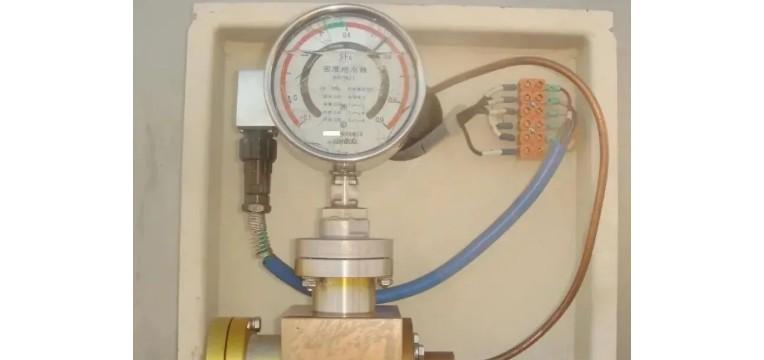
Causes include:
A) Uneven stress during installation, exacerbated by sudden changes in temperature or pressure;
B) Thermal shock causing the glass itself to crack. Cracks form leakage paths, resulting in oil loss.
Conclusion
In SF6 electrical equipment, SF6 gas serves as the primary insulating and arc-quenching medium. Its dielectric strength and arc-interrupting capability depend directly on gas density—higher density generally means better performance. However, due to manufacturing, operation, or maintenance issues, gas leakage is inevitable. A drop in density leads to two main risks: reduced dielectric strength and decreased circuit breaker interrupting capacity. Therefore, monitoring SF6 gas density is crucial for safe and reliable operation. This is typically achieved using SF6 density relays, which provide two-stage warnings—alarm and lockout signals—when density drops, enabling timely intervention.
Hence, on-site SF6 density relays must be reliable. Based on the above analysis, we conclude:
Density relays exhibiting oil leakage must be promptly monitored and replaced.
Newly installed relays should preferably be oil-free types with superior vibration resistance or improved gas-sealed designs.