1. Nova Materialo kaj Ekipaĵo & Aktivaĵadministrado
1.1 R&D de Novaj Materialoj kaj Komponantoj
Variagaj novaj materialoj servas kiel direktaĵ transportiloj por energi-konverto, elektra transmeto, kaj operacikontrolo en nova tipo de distribu- kaj konsum-sistemoj, direktante operaceffekton, sekurecon, fidindon, kaj sistekostojn. Ekzemple:
Novaj konduktmaterialoj povas malpliigi energian konsumon, solvante problemojn kiel energidefekto kaj mediozempo.
Progresitaj elektramagnetmaterialoj aplikataj en inteligentgrid-sensoroj helpas plibonorigi la fidindecon de sistemejo.
Novaj izolmaterialoj kaj izolstrukturoj povas solvi pli ofte okazantajn proksimtempajn impulsan suprapresion kaŭzitan de integriĝo de elektronikekipaĵoj.
Nekstgeneracio mikroonda radiofrekvenco-dispozitivoj kaj elektronika dispozitivoj bazitaj sur tria generacia semikondukmaterialoj (reprezentitaj per nitridgallio (GaN) kaj karbido silicio (SiC)) povas provizi teknikan subtenon por energi-konservo kaj konsum-redukto en komunikado kaj elektrono-kampo.
1.2 R&D de Nova Elektra Ekipaĵo kaj Elektrokonsuma Instalaĵo
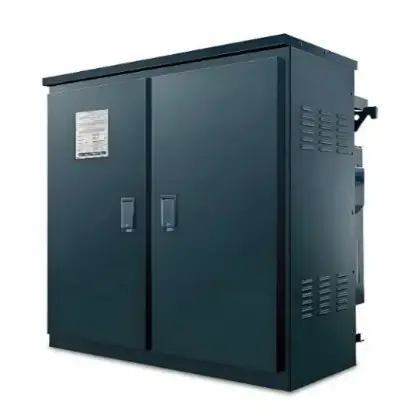
Je specifaj novaj produktoj, enterprizoj disvolvas novajn elektronika ekipaĵon—especialte mola normalmalferma ŝaltaro. Per kontrolo de aktiva kaj reaktiva potenfluoj sur konektitaj alimentlinioj, tiuj aparatoj atingas funkciojn kiel potenequilibrado, voltagmelioro, lastomigro, kaj defektpotenlimigo.
En la ondo de Energia Interreto, integriĝo de novaj teknologioj realigas "funkcio + monitorejo + elektronigo + digitaligo + artefarinta inteligento", donante enterprizojn pasi de malalta imitadproduktado al alta manufaktado, ekspandi de unua produkto al kompleksa solvo, kaj transformi de fabrikfacilajoj al inovaciidriveblaj facilajoj. Tio permesas nivela elektra ekipaĵmanufaktado kaj inovacio kontribui al malcarbonado, digitaligo, kaj sustenebla disvolvo.
1.3 Tuta Ciklo Aktivaĵadministrada Teknologio por Elektra Ekipaĵo
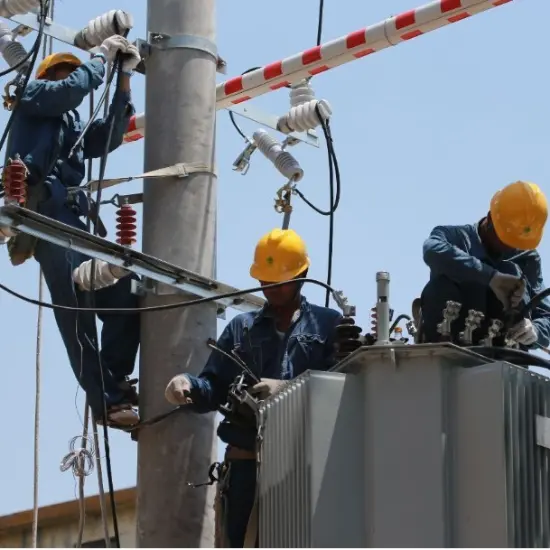
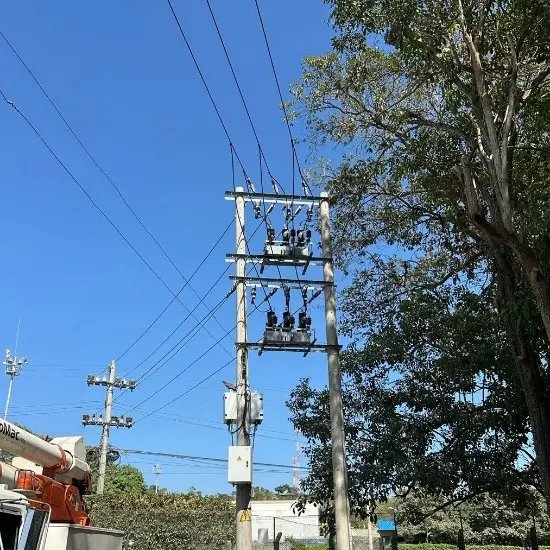
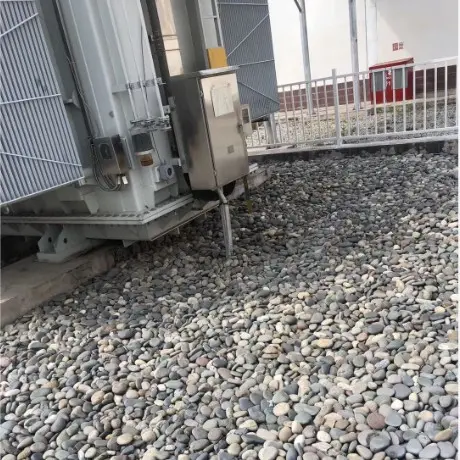
Nova tipo de distribu- kaj konsum-sistemoj enkluzivas variegitan novajn elektra ekipaĵon kaj elektronkonsumaĵojn, farante tutciklan administradon kaj ekologia dizajno de distribuekipaĵo tre grava. Necese estas certigi la securan funkciigon de ĉiuj ekipaĵoj dum atingi ekonomiecon.
Tutcikla operaco kaj manteno kovras la akirpetfazon, ekipaĵakceptfazon, produkc-operacfazon, kaj demetfazon. En aktivaĵadministrado, integrala dizajno devus esti efektivigita por garantii datumsharadon kaj optimuman administradon. Tecnologioj kiel "Interreto +" devus esti integritaj por vastigi la administradarejon kaj plibonori administradeffekton.
2. Distribuita Generado kaj Mikrogrids Teknologio
2.1 Distribuita Nova Energiogenerado Teknologio
2.1.1 Efika kaj Ekonoma Nova Energiorenovabla Energidevelopa Teknologio
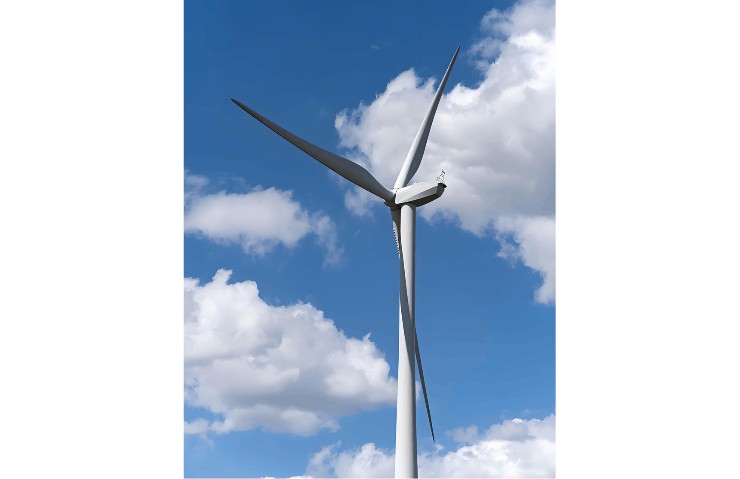
Kun progresitaj renovabla energidevelopa teknologioj, iuj renovablaj energifontoj (ekz. vetra kaj suna energio) atingis altan aplikan nivelon nuntempe dominas en distribusistemoj. Sed ankoraŭ gravas disvolvi novajn materialojn kaj integratitajn fotovoltaikpanel-teknologiojn kun pli malaltaj kostoj kaj pli alta efikeco.
Samtempe, disvolvi aliaj energifontoj—kiel hidrogena energio, geotermia energio, kaj biomasa energio—bezonas plu promocii. Ekzemple hidrogen-prod-stok-transteknologioj, mult-etapa geotermutiligotehnologioj, kaj biofuelteknologioj.
Krome, koordinata disvolvo de centralizita kaj distribuita nova energia povas redukti transmetoperdojn, plibonorigi nova energia uzefekton, kaj fortiĝi la gridan kapablon absorbi nova energio, do liveri pli bonajn socialajn kaj ekonomiajn beneficojn.
2.2 Planado Teknologio por Distribuita Energi
La klavo por solvi la planadon kaj optimigon de distribuita energiposedeco kuŝas en rompi informkomunikbariero kaj dispaĉkoordinadobariero inter diversaj entitetoj.
Teknike parolante, pli da teknikrestriktoj devus esti konsiderataj dum la planadfazo, inkluzive voltagnivel, mallongkuranta correntnivel, kaj potenqualito (flamero, harmonio).
Matematike parolante, planadmetodoj kiuj implikas multiobjektivan kaj multiincertecan kombinacionoptimigon estas altkompleksaj. Do, multiobjektiva optimiga planado kiuj integritas resursojn kaj operacojn estas esenca.
Plu, atenton devus pagi: farado de retanalizo kaj evaluo por sistemoj kun distribuita energio; esploro de la integriĝo kaj optimala planado de potendistribusistemoj kaj komunikretaj sistemoj; kaj disvolvado de modeloj kaj simuliloj por kompleksa fiabla, riska, kaj ekonomia analizo.
2.3 Aktiva Subtena Teknologio por Distribuita Nova Energiogenerado
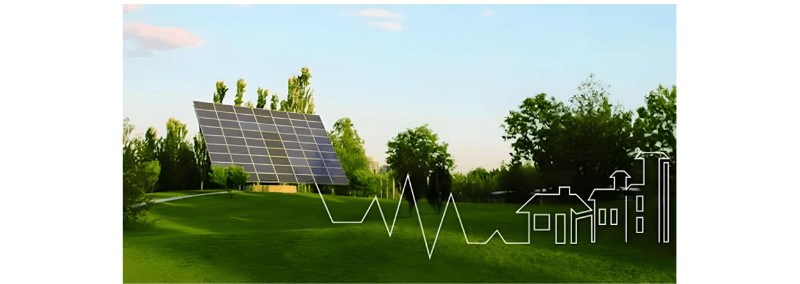
Distribuita generado (DG) ne nur bezonas regi frekvenc kaj voltagon en certa rango, sed ankaŭ suprimi rapidajn ŝanĝojn de frekvenco kaj voltago.
Aktuale, kelkaj savantuloj proponis "inerteco-rigidkompensatoron", kiu permesas DG provizi momentan frekvenc kaj voltagsubtenon kiam sistemo spertas potenmanko. La frekvenco-inerteca subtenkapablo de DG kvantite esprimas uzante la aktivan potenkompencon provizitan dum potenpaŝŝanĝoj, donante bazon por formuladi postecon interlignormojn.
2.4 Elputprognoztechnologio por Distribuita Nova Energiogenerado
Distribuita nova energigenerado havas larĝan spacon, kompleksajn ĉirkaŭajn mikrometeorologiĉaraktrojn, kaj signifan influon de konstruoj kaj homaj aktivadoj, facila elputprognozo estas malfacila.
Aktuala esploro pri distribuita nova energigenerado elputfoke uzas veterprognozojn kaj klimatkonstatojn por potengeneroprognozo, superemphasize naturaj kondiĉoj influas nova energielput. Ili mankas konsideron pri la spaca distribucaraktro de DG kaj faktoroj rilatitaj al homsocia aktivado.
2.5 Klusterkontrola Teknologio por Distribuita Nova Energiogenerado
Distribuita kontrolado estas ideal klusterkontrolmetodo por DG en potendistribusistemoj kun alta nova energia penetrigado.
Aktuale, esploro pri klusterkontrola teknologio por distribuita nova energigenerado ankoraŭ estas en infancperiodo. Relevaj sukcesoj fokusas sur la kontrolado de unua potengenerilo, kun malmulte konsideras koordinataj kontrolstrategioj por pluraj nova energigeneriloj konektitaj al sistemo per gridinterligitaj inversoriloj.
Ĉefaj problemoj restas ne solvita: mekanismo de malbalancita potendistribado inter pluraj inversoriloj dum potenpaŝŝanĝoj; interago mekanismo de multi-tempo-skala kontrolstrategioj por pluraj inversoriloj; kaj malkapableco de tradicia pendolo-kontrolo (bazita sur aktiva poten-frekvenco kaj reaktiva poten-voltago karakterkurboj) kiam la rezisto de potendistriblinioj estas negligebla, kio prezentas DG ne partopreni en primara frekvenco kaj voltagregulado.
2.6 Distribuita Energiakonservado Teknologio
Energipere, statikaj kaj dinamikaj problemoj de nova tipo de potendistribusistemoj estas esence potenimbalanceblemoj en diversaj tempuskaloj:
Sur relativ longa tempuskalo de peakload-periodo, potenimbalance inter la generada kaj la lasta flanko kondukas al statikaj problemoj kiel peak-valley diferencoj.
Sur relativ mallonga tempuskalo de potenpaŝŝanĝoj al la aktiveco de primara frekvenco/voltagregulado, elektronika ekipaĵo mankas la rotorinertcon de sinkronaj generatoroj kaj ne povas subteni la sistemon kontraŭ potenimbalance, rezultigante malpli stabilecon de la sistemo kaj malbonigitan potenkaliton.
Distribuita energikonservadteknologio provizas praktikeblan solvon por solvi statikajn kaj dinamikajn problemojn kaŭzitajn de potenimbalance en diversaj tempuskaloj.
2.6.1 Peak Shaving and Frequency Regulation Technology for Energy Storage
Energy-type energy storage—represented by distributed pumped storage, flow batteries, lithium-ion batteries, and cold/heat storage technologies—can eliminate load peaks, shave peaks and fill valleys, smooth fluctuations, and operate in conjunction with charging piles to mitigate charging power impacts, thereby improving the utilization rate of power distribution equipment.
Peak shaving and frequency regulation technology for energy storage imposes high requirements on energy storage systems in terms of capacity, response speed, cost, safety, and power/energy density. A single energy storage type cannot meet these requirements, so research on hybrid energy storage technologies with comprehensive advantages is necessary.
2.6.2 Stability and Power Quality Enhancement Technology
Distributed energy storage technology provides a feasible solution to improve the stability and power quality of new-type power distribution systems.
Some scholars have proposed a method that coordinates energy storage systems with grid-connected inverter control strategies to enable DG to provide dynamic stability support to the system. With the large-scale integration of power electronic equipment reducing system inertia, grid-connected inverters combined with energy storage will become an important means to enhance system dynamic stability.
In addition, power-type energy storage—represented by supercapacitors—features fast response capabilities and plays a key role in improving the power quality of power distribution systems. Currently, large-capacity, safe, and economical energy storage devices for distributed energy storage technology have not yet been maturely applied, failing to fully meet the peak shaving needs of large-scale integration of incremental loads.
2.6.3 Microgrid Technology
Considering the coordinated control of various distributed resources at the microgrid level and equating the microgrid to a voltage/current source externally can reduce the complexity of frequency and voltage stability control in power distribution systems.
Considering power mutual assistance and dispatch optimization at the microgrid cluster level can leverage the complementary characteristics of new energy and loads in different regions to address economic dispatch issues such as DG output fluctuations and peak-valley differences.
2.6.4 Frequency and Voltage Dynamic Stability Technology for New Energy Microgrids
As a relatively independent and autonomous region, new energy microgrids face dynamic stability issues similar to those of power distribution systems.
Some scholars have proposed a voltage-source virtual synchronous generator (VSG) control strategy. VSG is a common control method to improve the dynamic frequency and voltage support capabilities of DG. Its core idea is to control grid-connected inverters to simulate the external characteristics (active power-frequency and reactive power-voltage) of synchronous generators.
The virtual inertia and damping of synchronous generators simulated by traditional VSG technology are generally fixed. Under different types of power disturbances, fixed inertia parameters cannot meet the stability and rapidity requirements of microgrid frequency dynamic regulation.
Based on the above considerations, some scholars have proposed adaptive virtual inertia control technology. Additionally, other scholars have proposed generalized droop control technology by improving traditional droop control—incorporating secondary frequency control into traditional droop control to simulate inertia and damping characteristics.
2.6.5 Macro-Control Technology for Microgrid Clusters
Key issues in the operation and control of microgrid clusters include how to achieve unified regulation of multiple microgrids and how to realize power mutual assistance and optimized operation.
Some scholars have proposed a four-level control structure for microgrid clusters, including the power distribution layer, microgrid cluster layer, microgrid layer, and unit layer.
Two main strategies are used at the microgrid cluster layer: master-slave control and peer-to-peer control.
Master-slave control requires high communication between microgrids and imposes significant pressure on the master control unit for voltage and frequency regulation.
Peer-to-peer control overcomes these shortcomings: each microgrid unit performs autonomous peer-to-peer control based on pre-set droop curves, without the need for communication or upper-level control.
Some scholars have proposed a control strategy for hybrid microgrid clusters composed of AC and DC microgrids. This strategy standardizes the active power-frequency characteristics of AC microgrids and the active power-voltage characteristics of DC microgrids to obtain a unified control scale, enabling peer-to-peer control of hybrid microgrid clusters.
To address the challenges of real-time dispatch optimization for microgrid clusters, some scholars have proposed a modeling method for the coordinated optimization of microgrid clusters based on a partially observable Markov decision process (POMDP) under a decentralized structure. This method enables optimization modeling based on partially observed information even under weak communication conditions and uses Lagrange multipliers to decouple the objective function, reducing solution complexity. This research provides important guidance for realizing real-time dispatch optimization of microgrid clusters with complex variables and peer-to-peer control.
3. Source-Load Interaction Technology
Flexible Load Utilization and Load Management Technology
Flexible load utilization is a key link in the future development of smart energy use and energy conservation, contributing to the development of an energy-saving society.
Research on flexible load regulation technology includes:
Classifying and modeling flexible loads based on their characteristics to fully tap into load elasticity potential.
Actively improving flexible load mechanisms and advancing the construction of demonstration projects.
Using intelligent technologies to conduct differentiated analysis of user behavior and improve regulation accuracy.
Effective load management can alleviate the supply-demand imbalance in new energy systems caused by the instability of new energy and uncertainties on the load side. Currently, power load management technology already has functions such as electricity fee management, power loss management, anti-stealing electricity analysis, and data sharing.
With the development of data-driven technologies, virtual power plants, and 5G communication, power load management systems will be significantly enhanced in terms of load data prediction, load coordination control technology, and management effectiveness. This will strongly support the coordinated operation of various components (e.g., distributed generation, electric vehicles, and energy storage systems) and improve the rational utilization of resources.
3.1 Power Flow Calculation Methods Considering Source-Load Uncertainties
Power flow calculation is an important foundation for power distribution system planning and dispatch operation.
At present, some scholars have proposed power flow calculation methods that consider the uncertainties of photovoltaic and wind power output. In addition, other scholars have proposed power flow calculation methods that consider load uncertainties and uncertainties in load response to peak shaving demands.
Overall, existing research has extensively considered uncertainties in various links of source-load interaction and proposed power flow calculation methods for individual uncertainties. However, there is a lack of integrated analysis of multiple uncertainties and their coupling effects, which limits the accuracy of power flow calculation in complex new-type power distribution systems.
3.2 Multi-Objective Optimal Dispatch Technology for Power Distribution Systems Under Source-Load Interaction Mode
Under the source-load interaction mode, dispatch decisions largely affect the safety and reliability of system operation.
Currently, some scholars have proposed multi-objective power flow optimization solutions using second-order cone optimization and particle swarm optimization algorithms. These solutions use Pareto optimal solution sets to conduct multi-dimensional evaluations of potential optimal solutions, providing dispatchers with more flexible decision-making options and facilitating the realization of safe, stable, and economical dispatch under the source-load interaction mode.
3.3 Economic Operation Technology in the Power Market Environment
Guiding multiple entities to participate in power market transactions through various incentive methods is an important means to promote source-load interaction. Specific technical forms include demand response (DR) and virtual power plants (VPPs).
Currently, relevant research focuses on using price incentive mechanisms to stimulate users’ enthusiasm for participation. To fully tap into and mobilize adjustable resources in the system, some scholars have conducted research on: overall situational awareness of source-grid-load; real-time quantitative evaluation of response capabilities; implementation of response strategies from group to individual; source-grid-load coordinated control technology; and multi-time-scale characteristics of loads. This research provides ideas for the development of system dynamic power balance technology based on demand response.
Research on source-load interaction mainly focuses on two aspects: power flow analysis and optimization technology, and market guidance mechanisms.
In terms of power flow analysis and optimization technology, existing technologies ignore the spatiotemporal coupling characteristics and temperature correlation characteristics caused by source-load aggregation in power distribution systems, making it difficult to improve the power flow control accuracy of new-type power distribution systems and achieve peak-valley difference smoothing on short time scales.
In terms of market guidance mechanisms, considering the inevitable time delay of load response, demand response cannot perfectly solve the peak-valley difference problem of power distribution systems. It is necessary to integrate deep flexible load control technology to enable load energy consumption curves to track new energy generation curves in real time, thereby achieving real-time source-load balance, fundamentally solving the peak-valley difference problem, and improving the utilization rate of power distribution equipment.
4. DC Power Distribution Technology
Currently, research on DC power distribution technology mainly focuses on the following aspects:
4.1 Voltage Sequence and Standardization
There is currently no unified international standard for DC power distribution voltage level sequences.
Scholars at home and abroad have proposed various DC voltage level sequence selection schemes based on factors such as power supply capacity, investment costs, DC equipment manufacturing levels, power quality requirements, power distribution economics, and load demand characteristics of various typical power distribution scenarios.
China issued the GB/T 35727—2017 Guidelines for Medium and Low Voltage DC Power Distribution Voltages in December 2017. Currently, relevant standards focus on the planning of voltage levels for medium and low voltage public DC power distribution systems, while there is a lack of detailed standards for DC voltage level sequence planning in specific scenarios such as communication systems, building power supply, ship power supply, and urban rail transit.
4.2 Fault Protection Technology for DC Power Distribution Systems
Fault protection technology is a key means to ensure the safe operation of DC power distribution networks.
The emergence of new power distribution equipment (represented by two-level voltage source converters and modular multilevel converters) and ring network topologies has profoundly changed the fault characteristics of power distribution networks.
Some scholars have proposed protection strategies based on current direction comparison, extreme value comparison, direction prediction, and "single-branch real-time memory, multi-branch short-time location," which have improved the speed of fault type identification and the reliability of fault isolation.
4.3 Coordinated Control and Dispatch Optimization Technology for DC Power Distribution Systems
Currently, the voltage control strategies for DC power distribution networks mainly include three methods: master-slave control, droop control, and voltage margin control.
Based on the experience of DC power distribution network demonstration projects, master-slave control is the most widely used voltage control method for DC power distribution networks at this stage.
Some scholars have proposed improved voltage control strategies, such as a DC voltage deviation slope control strategy that combines droop control and deviation control. This strategy overcomes the slow response speed of deviation control and the steady-state error of droop control.
With the large-scale integration of distributed generation, energy storage, and flexible loads, microgrids will become an important way to achieve friendly integration and efficient absorption of new energy in power distribution systems. The coordinated control technology of AC/DC microgrid clusters combined with DC power distribution technology is a research direction worthy of attention in the future.
5. Digital Power Distribution Network Technology
5.1 Intelligent Technology for Electrical Equipment
The foundation of digital management technology lies in electrical equipment having data collection, computing, and communication capabilities.