Transformer noise is primarily generated by core magnetostriction (no-load noise) and winding electrodynamic forces (load noise). These vibrations are transmitted through the insulating oil and solid structural connections to the tank, causing the tank walls to undergo forced vibration and radiate acoustic waves into the air.
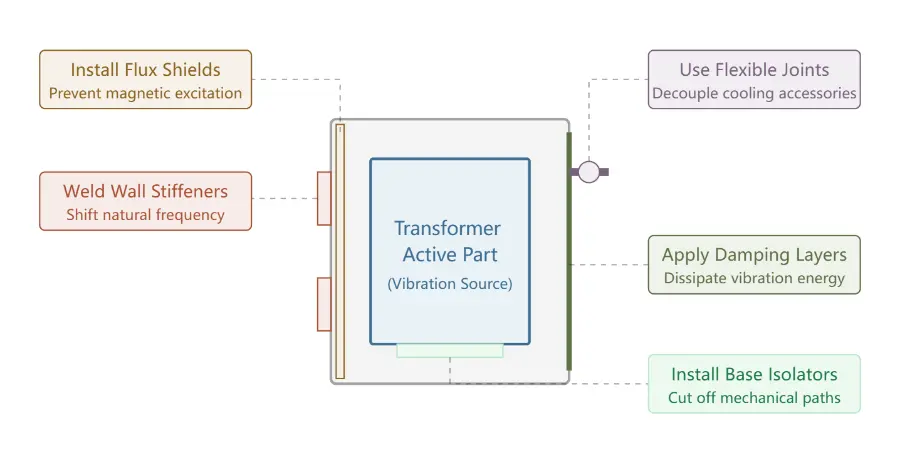
Therefore, the core logic for reducing transformer noise from the tank's perspective is to isolate vibration paths, suppress wall resonance, dissipate vibration energy, and shield stray flux.
This can be achieved through the following four structural and process design dimensions:
1. Optimize Tank Stiffness to Suppress Resonance
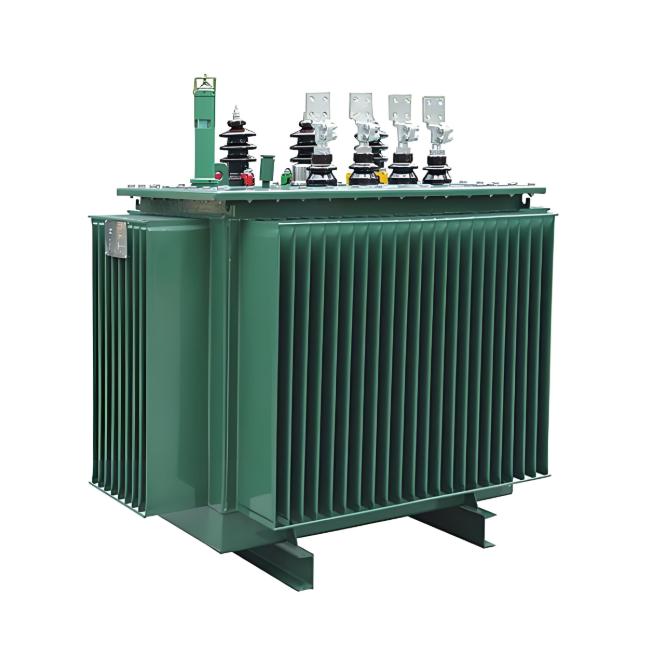
- Weld Wall Stiffeners: The fundamental frequency of the core is typically 100Hz and its harmonics. Welding stiffeners onto the external tank walls alters the geometric shape and distributed stiffness of the plates. This shifts the natural frequency of the tank walls away from the excitation frequencies, preventing resonance amplification.
- Optimize Tank Profile: Utilizing folded, corrugated, or semi-cylindrical tank panels increases geometric stiffness. These designs reduce the low-frequency vibration amplitude of large flat surfaces, resulting in a lower acoustic radiation efficiency compared to traditional flat-panel tanks.
2. Isolate Solid Vibration Transmission Paths
- Install Base Isolators: Installing oil-resistant rubber pads or specific polymer vibration isolators between the active part (core and windings) and the tank's internal positioning supports significantly reduces the mechanical vibrations transmitted directly to the tank wall via metal-to-metal contact.
- Use Flexible Joints for Accessories: External components like oil conservators, coolers, and radiators feature large surface areas. Using flexible bellows joints at the flange connections interrupts the vibration propagation from the main tank to the cooling system, preventing the radiators from acting as acoustic amplifiers.
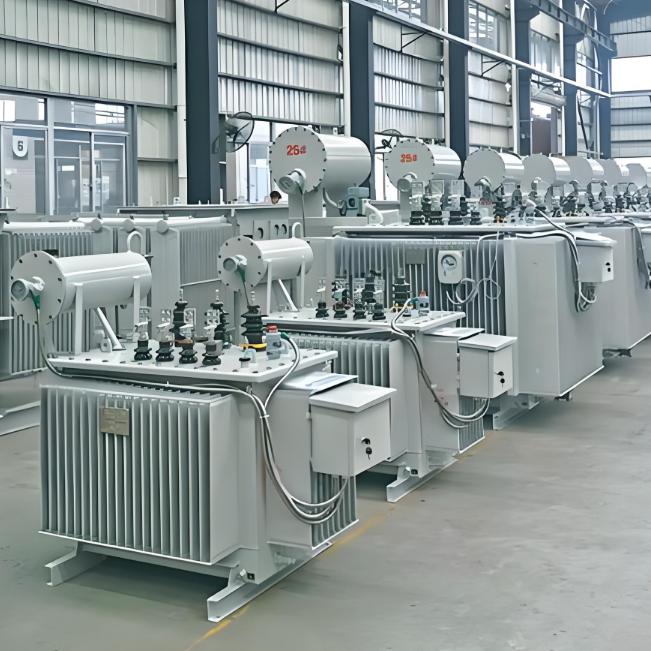
Rockwill Series Oil-Immersed Power Transformer
3. Dissipate Forced Vibration Energy via Damping
- Apply Damping Layers: Applying high-polymer damping materials (such as nitrile rubber damping plates or damping compounds) extensively over the inner or outer tank walls leverages their viscoelastic properties. When the tank walls undergo forced bending vibrations, internal friction within the material converts mechanical vibration energy into heat, thereby reducing vibration amplitude and the radiated sound power.
4. Shield Stray Flux to Eliminate Electromagnetic Excitation
- Prevent Eddy Current Excitation: In large-capacity transformers, stray magnetic flux generated by high-current windings can perpendicularly penetrate the ferromagnetic tank walls. This not only causes localized overheating but also generates powerful eddy current electrodynamic forces, inducing severe localized vibrations. Installing magnetic shields (stacked silicon steel sheets to guide the flux) or electric shields (copper/aluminum plates to generate opposing magnetic fields) on the inner tank walls effectively eliminates this stray flux-induced vibration.
In summary, Rockwill Transformer has deeply integrated four core technologies — structural vibration resistance, path vibration isolation, damping energy dissipation, and magnetic circuit shielding — into a systematic low-noise solution. While ensuring mechanical reliability and thermal safety, this solution achieves silent operation performance that far exceeds standard requirements. It is particularly well-suited for noise-sensitive applications such as urban substations, residential areas, and offshore wind power projects.
Edited From:Echo

 Login
Login