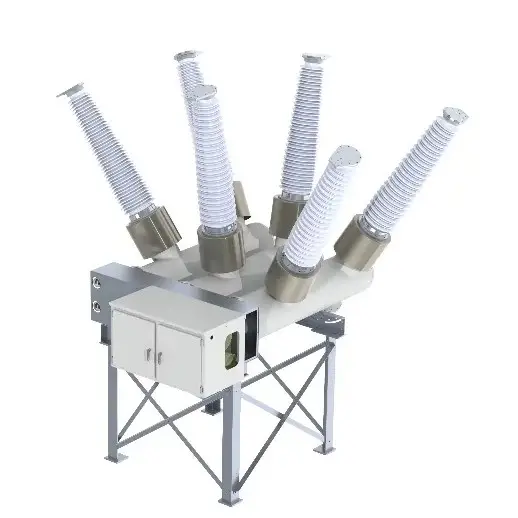
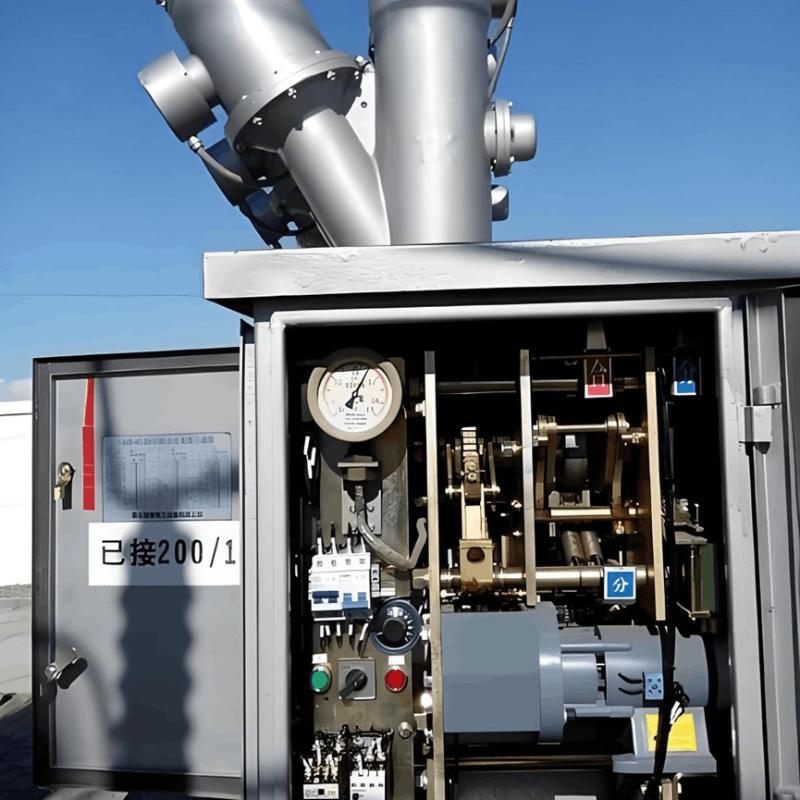
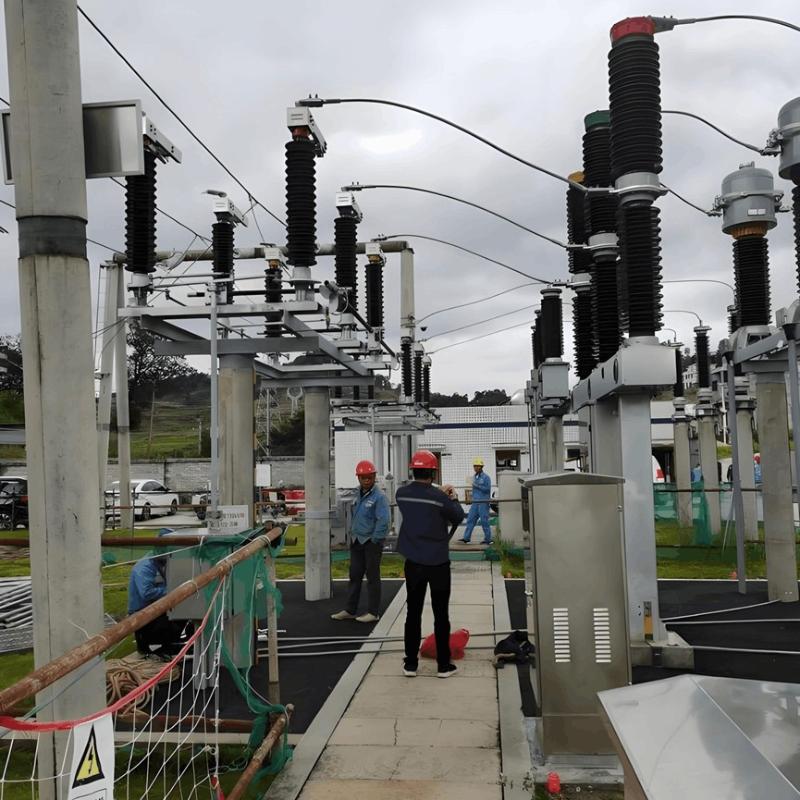
At higher voltage levels (typically 72.5 kV and above, especially at 110 kV, 220 kV, and UHV levels), SF6 (sulfur hexafluoride) circuit breakers dominate, while vacuum circuit breakers (VCBs) are less commonly used. This is primarily determined by the physical insulation characteristics and arc-quenching mechanisms of vacuum versus SF6 gas under very high voltages.
The core reasons can be summarized as follows:
1. Single-Break Withstand Voltage Limit and "Insulation Saturation Effect"
-
Limitation of Vacuum Circuit Breakers: In a vacuum, the insulation strength is extremely high when the contact gap is small. However, when the contact gap is increased to withstand higher voltages, the breakdown voltage no longer increases linearly, resulting in a "saturation effect." If the gap becomes too large, the microscopic high electric field on the contact surface induces field emission, leading directly to breakdown and potentially generating harmful X-rays. Consequently, the commercial practical limit for a single vacuum interrupter typically remains around 72.5 kV to 145 kV.
-
Advantage of SF6: SF6 gas has strong electronegativity, quickly capturing free electrons in the arc to form heavy negative ions, allowing the arc gap to recover its insulation strength very rapidly after current zero. As gas pressure increases, the withstand voltage capability of SF6 increases almost linearly. Modern SF6 circuit breakers can easily achieve a single-break withstand voltage of 252 kV or even 550 kV.
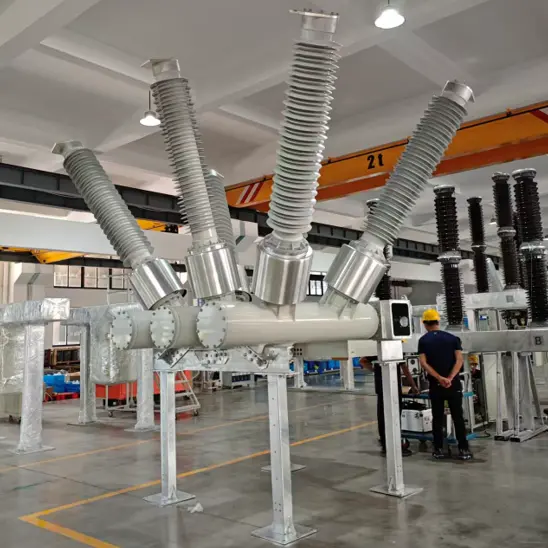
Rockwill RHD Series 170kV Dead-Tank SF6 Circuit Breaker
2. Mechanical Complexity and Operational Reliability
To apply vacuum circuit breakers at 220 kV or higher voltages, multiple vacuum interrupters must be connected in series. This requires not only parallel grading capacitors to prevent any single gap from taking excessive voltage but also an extremely precise mechanical transmission mechanism to ensure "absolute synchronization" of opening and closing across all series-connected gaps. More mechanical components lead to a higher risk of jamming or asynchronous operation.
In contrast, SF6 circuit breakers at 220 kV or even 500 kV often require only a single-break or double-break design, significantly simplifying the transmission mechanism and substantially improving overall equipment reliability.
3. Threat of Chopping Overvoltage
Vacuum circuit breakers extinguish arcs too "aggressively." When interrupting small inductive currents (e.g., for no-load transformers or reactors), the arc is often forced to extinguish before the current naturally reaches zero. This phenomenon is called current chopping. Chopping can induce extremely high switching overvoltages in high-voltage grids, posing a serious threat to system insulation.
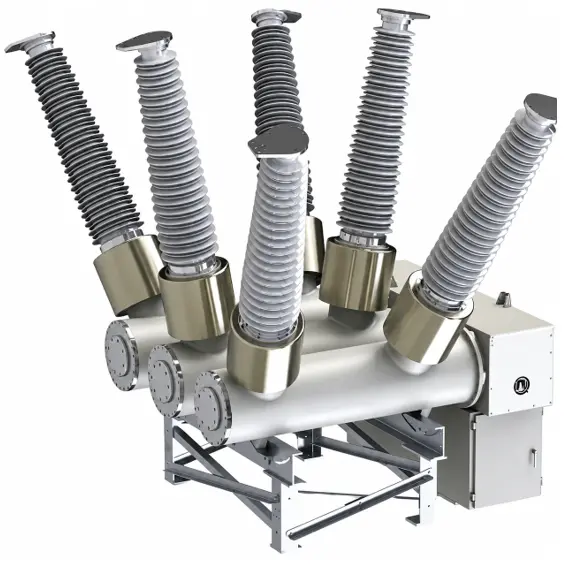
Rockwill RVD Series 72.5kV Dead-Tank Vacuum Circuit Breaker
SF6 circuit breakers have a relatively softer arc-quenching characteristic, typically extinguishing the arc precisely at current zero, resulting in very low chopping levels and effectively suppressing switching overvoltages in high-voltage systems.
4. Heat Dissipation and Temperature Rise Control
High-voltage systems often carry very high rated currents. Inside a vacuum circuit breaker's interrupter, the vacuum environment has almost no convection, so heat can only be conducted away through the contact conductive rods, making temperature rise control under high currents very difficult.
SF6 gas has a high molecular weight and high thermal conductivity. Its strong convection very effectively cools the heat-generating contacts, easily handling sustained high currents of several thousand amperes.
5. Overall Economics and Size
At medium and low voltages (10 kV – 35 kV), single-break vacuum circuit breakers are simple, maintenance-free, and low-cost, giving them an absolute advantage.
However, at high voltages, the need for multiple series-connected gaps makes high-voltage vacuum circuit breakers bulky and expensive. SF6 circuit breakers, with their simpler single-break or double-break configurations, have overwhelming advantages in both size control and manufacturing cost.
Rockwill Solution: Leveraging Mature R&D Strength to Lead a New Era of Eco-Friendly High Voltage
In response to the urgent global demand for energy conservation and emission reduction in modern power systems, Rockwill, backed by deep R&D expertise, proudly launches the RVD-145 SF₆-free high-voltage circuit breaker. This device utilizes g3 eco-friendly gas mixture, successfully overcoming the insulation and arc-quenching challenges at high voltage levels. While making zero compromise on electrical performance, it achieves up to 99% carbon footprint reduction. With a compact, structurally analogous design, the product enables drop-in substation replacement, universal operation and maintenance, and total cost of ownership parity over its lifecycle. Rockwill delivers a highly economically viable "seamless upgrade" solution for the green decarbonization of high-voltage power grids.
Edited From:Garca

 Login