• Product
  • Suppliers
  • Manufacturers
  • Solutions
  • Free tools
  • Knowledges
  • Experts
  • Communities
Search


What is the Tensile Test of Conductors?

Encyclopedia
Encyclopedia
Field: Encyclopedia
0
China


What is the Tensile Test of Conductors?


Tensile Test Definition


A tensile test measures the strength of a material by pulling it apart until it breaks.


Purpose of Tensile Test for Conductors


This test ensures that cable conductors, such as aluminium wires, are strong enough to handle the pulling forces they experience during installation and use.


Apparatus for Tensile Test


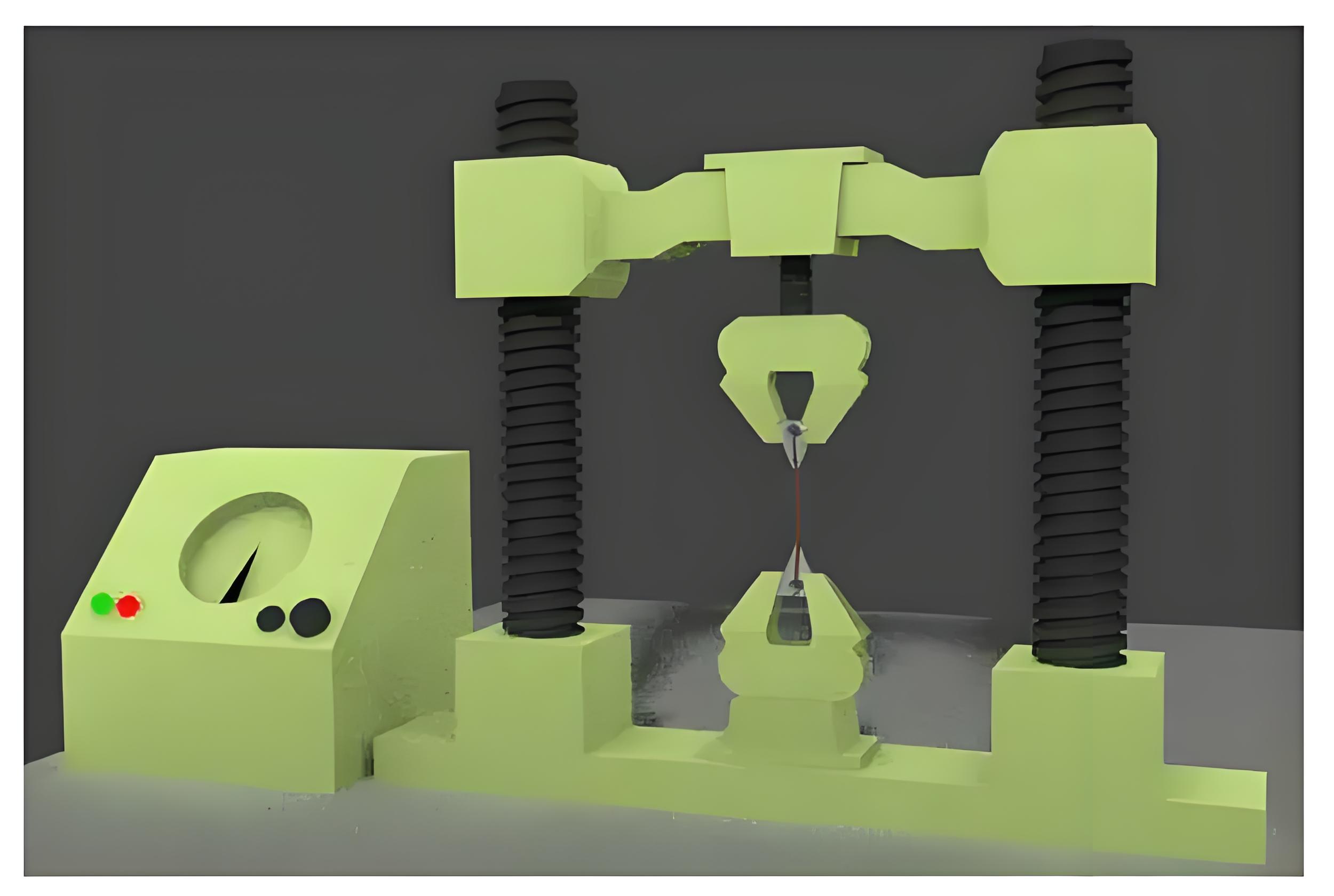
  • Tensile Testing Machine: An automatic machine, with two end grips properly designed to hold the conductor with sufficient strength so that the conductor cannot slid by any means during the test. The machine should have sufficient capacity to apply required tension during test.


  • Plane Faced Micrometer which can able to measure accurately even 0.01 mm variation. This is used to measure the diameter of the specimen conductor.


  • Suitable Scale with least scale division 1 mm to measure length of the specimen conductor.


  • Weighing Balance with sensitivity of 0.01g to measure mass of the specimen.
 

8857d2ca82fc9dae37bad09208a14eb7.jpeg

Method of Tensile Test of Conductors


A conductor specimen slightly longer than the gauge length (the length on which the test is done) is selected. Ensure the specimen has extra length at both ends for gripping by the tensile testing machine. No pre-conditioning of the specimen is needed.


Procedure of Tensile Test


The conductor specimen is fixed in the machine, and tension is applied gradually until the specimen fractures, noting the breaking load to calculate tensile strength.


Cable Tensile Test


This specific tensile test for cable conductors checks if the material meets the necessary tensile strength requirements for safe and effective use.


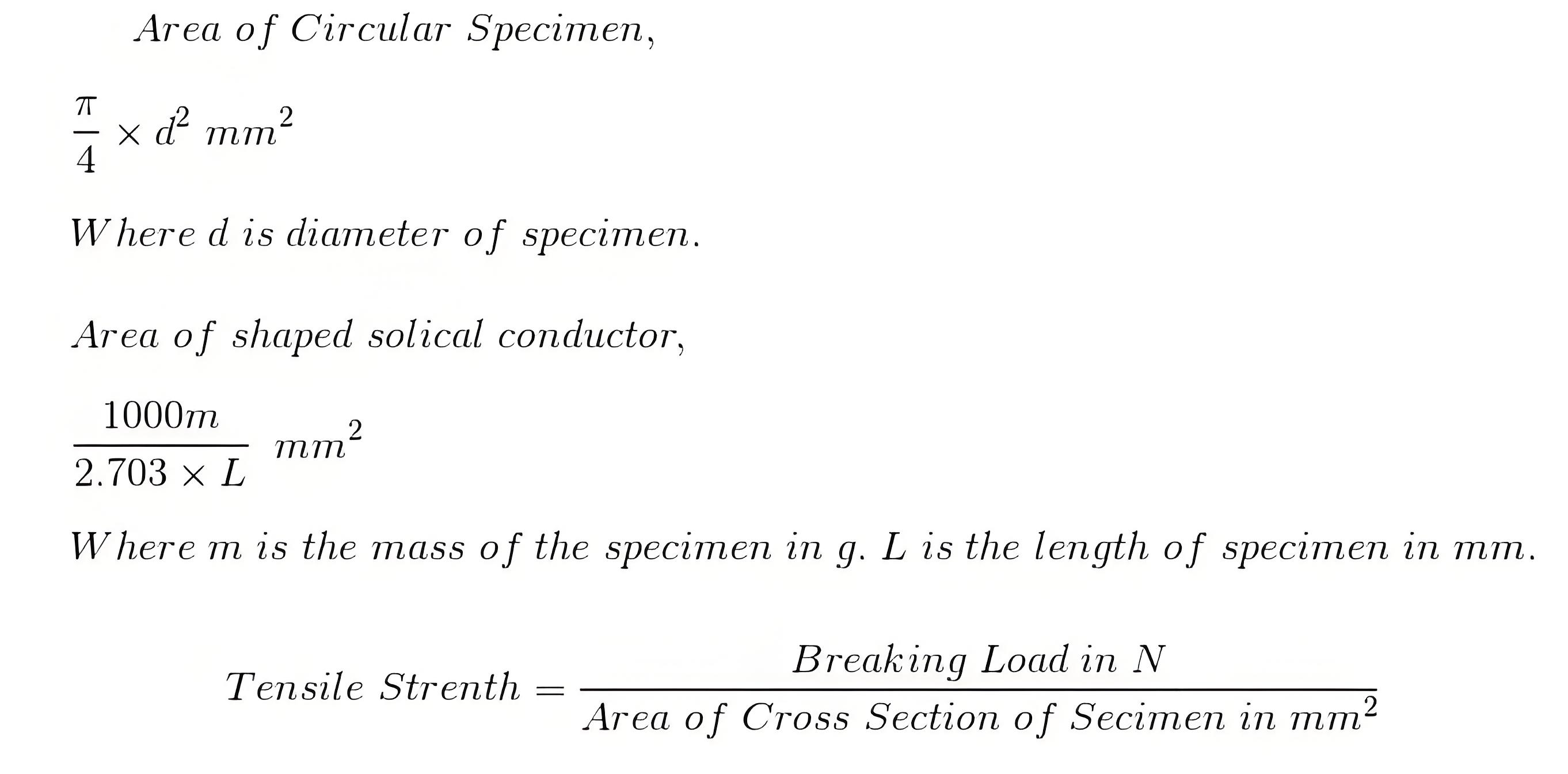
Calculation

7888691bb40442844d9b805b3df202c3.jpeg


Give a tip and encourage the author!
Recommended
Three-Phase SPD: Types, Wiring & Maintenance Guide
1. What Is a Three-Phase Power Surge Protective Device (SPD)?A three-phase power surge protective device (SPD), also known as a three-phase lightning arrester, is specifically designed for three-phase AC power systems. Its primary function is to limit transient overvoltages caused by lightning strikes or switching operations in the power grid, thereby protecting downstream electrical equipment from damage. The SPD operates based on energy absorption and dissipation: when an overvoltage event occ
James
12/02/2025
Railway 10kV Power Through Lines: Design & Operation Requirements
The Daquan Line has a large power load, with numerous and scattered load points along the section. Each load point has a small capacity, with an average of one load point every 2-3 km, so two 10 kV power through lines should be adopted for power supply. High-speed railways use two lines for power supply: primary through line and comprehensive through line. The power sources of the two through lines are taken from the dedicated bus sections fed by the voltage regulators installed in each power di
Edwiin
11/26/2025
Neutral Grounding Methods for Conventional-Speed Railway Power Systems
Railway power systems primarily consist of automatic block signaling lines, through-feeder power lines, railway substations and distribution stations, and incoming power supply lines. They provide electricity to critical railway operations—including signaling, communications, rolling stock systems, station passenger handling, and maintenance facilities. As an integral part of the national power grid, railway power systems exhibit distinct characteristics of both electrical power engineering and
Echo
11/26/2025
Application of Condition Monitoring Technology in UHV Transmission Lines
1. Application of Condition Monitoring Technology in UHV Transmission LinesAt present, the main characteristics of UHV (Ultra-High Voltage) transmission line condition monitoring technology in China are reflected in the following aspects: Comprehensiveness: In general, during the implementation of monitoring technology, supporting facilities and integrated systems are required to ensure effective monitoring performance; High value: UHV transmission line condition monitoring technology is a criti
Echo
11/20/2025
Send inquiry
Download
Get the IEE Business Application
Use the IEE-Business app to find equipment, obtain solutions, connect with experts, and participate in industry collaboration anytime, anywhere—fully supporting the development of your power projects and business.