• Product
  • Suppliers
  • Manufacturers
  • Solutions
  • Free tools
  • Knowledges
  • Experts
  • Communities
Search


Determination of strand size

Encyclopedia
Encyclopedia
Field: Encyclopedia
0
China

The number and diameter of strands in a cable depend on the specific purpose of the cable, rated current, operating voltage, environmental conditions, and safety requirements.


Method for determining the size of stranded wire


Calculate current carrying capacity


  • Current density: First determine the maximum current that the cable needs to carry. The required cross-sectional area is then calculated based on the material of the cable (such as copper or aluminum) and the allowable current density.


  • Formula: A= I/ J where A is the required cross-sectional area (mm²), I is the maximum current (A), and J is the allowable current density (A/mm²).


Voltage level considered


Different voltage levels have different insulation requirements for cables, which will also affect the size selection of the stranded wire. Higher voltage levels require thicker insulation and larger sizes of stranded wires to ensure electrical safety.


Environmental considerations


The use of the cable environment will also affect the size of the twisted wire selection. If the cable will be used in harsh environments such as high temperature, humidity, and corrosion, it is necessary to choose a cable with better heat, moisture, and corrosion resistance, and the size and material of the twisted wire may also need to be adjusted accordingly.


Consider mounting method


The installation method of the cable also affects the size selection of the stranded cable. If the cable needs to be laid through the pipe, aerial installation or buried laying, different installation methods have different requirements for the mechanical strength and flexibility of the cable, which affects the size and number of twisted wires.


Sum up


Determining the appropriate size of the strand for a specific application requires a comprehensive consideration of current carrying capacity, environmental conditions, safety requirements and other factors, and reference to relevant standards and manufacturer data.
Give a tip and encourage the author!
Recommended
Voltage Imbalance: Ground Fault, Open Line, or Resonance?
Single-phase grounding, line break (open-phase), and resonance can all cause three-phase voltage unbalance. Correctly distinguishing among them is essential for rapid troubleshooting.Single-Phase GroundingAlthough single-phase grounding causes three-phase voltage unbalance, the line-to-line voltage magnitude remains unchanged. It can be classified into two types: metallic grounding and non-metallic grounding. Inmetallic grounding, the faulted phase voltage drops to zero, while the other two phas
Echo
11/08/2025
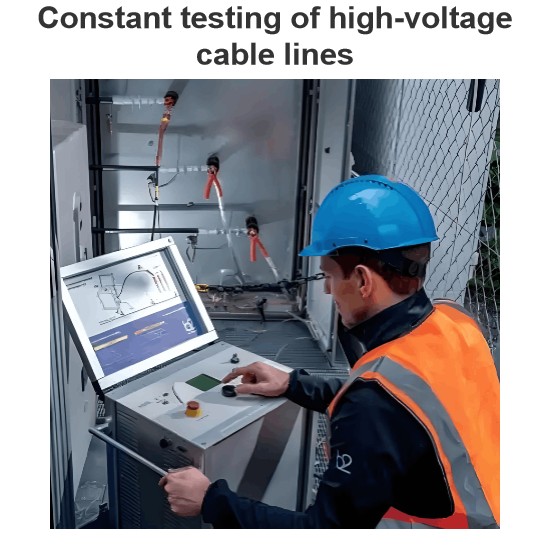
Constant testing of high-voltage cable lines
1. Definition of High-Voltage Cable Line Constant TestingHigh-voltage cable line constant testing refers to the systematic measurement, using specialized instruments, of electrical parameters such as resistance, inductance, capacitance, and conductance before a cable line is commissioned or after major maintenance. The aim is to obtain fundamental data characterizing the electromagnetic properties of the cable, serving as a critical testing phase that provides accurate parameter support for powe
Oliver Watts
09/03/2025
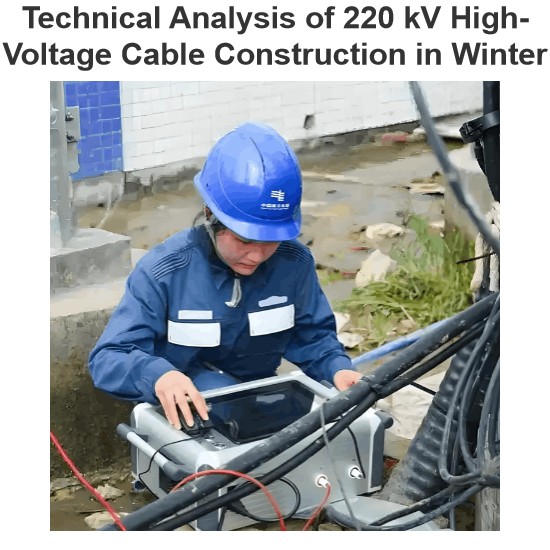
Technical Analysis of 220 kV High-Voltage Cable Construction in Winter
1.Work Environment Requirements and Safeguard MeasuresBased on technical requirements for cable equipment storage, laying, transportation, laying, transposition, testing, and cable terminations, the project owner and construction units have conducted extensive trials and implemented protective measures regarding ambient temperature, humidity, bending radius, traction control, and route optimization. These measures ensure high-voltage cable quality and on-site safety under harsh winter conditions
James
09/03/2025
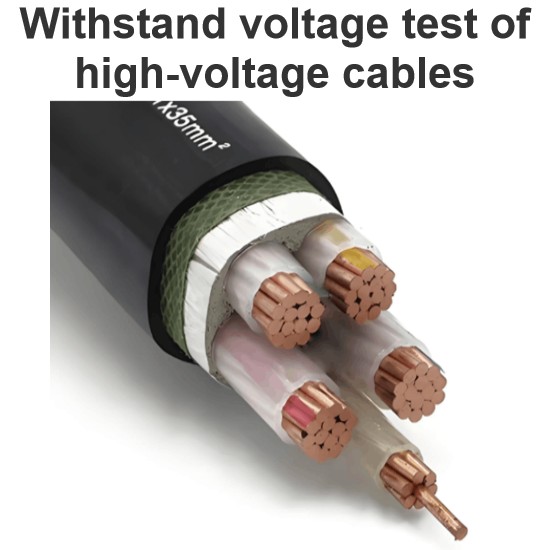
Withstand voltage test of high-voltage cables
Withstand voltage test is an insulation test, but it is a destructive test that can reveal insulation defects difficult to detect in non-destructive testing.The test cycle for high-voltage cables is three years, and it must be conducted after non-destructive tests. In other words, the withstand voltage test is performed only after all non-destructive tests have been passed.Most high-voltage cables used today are cross-linked polyethylene (XLPE) cables, which can have large cross-sections and cov
Oliver Watts
09/03/2025
Send inquiry
Download
Get the IEE Business Application
Use the IEE-Business app to find equipment, obtain solutions, connect with experts, and participate in industry collaboration anytime, anywhere—fully supporting the development of your power projects and business.