Principles of Design for Pole-Mounted Distribution Transformers
(1) Principles of Location and Layout
The platforms for pole-mounted transformers should be located near the load center or close to critical loads, following the principle of "small capacity, multiple locations" to facilitate equipment replacement and maintenance. For residential power supply, three-phase transformers may be installed nearby based on current demand and future growth projections.
(2) Capacity Selection for Three-Phase Pole-Mounted Transformers
Standard capacities are 100 kVA, 200 kVA, and 400 kVA. If load demands exceed a single unit’s capacity, additional transformers may be installed. However, the pole structure and secondary wiring must be designed and constructed to accommodate the final planned capacity from the outset.
400 kVA: Suitable for city centers, high-density urban development zones, economic development areas, and town centers.
200 kVA: Applicable to urban districts, towns, development zones, and rural areas with concentrated loads.
100 kVA: Recommended for rural regions with low load density.
(3) Special Case: 20 kV Dedicated Supply Areas
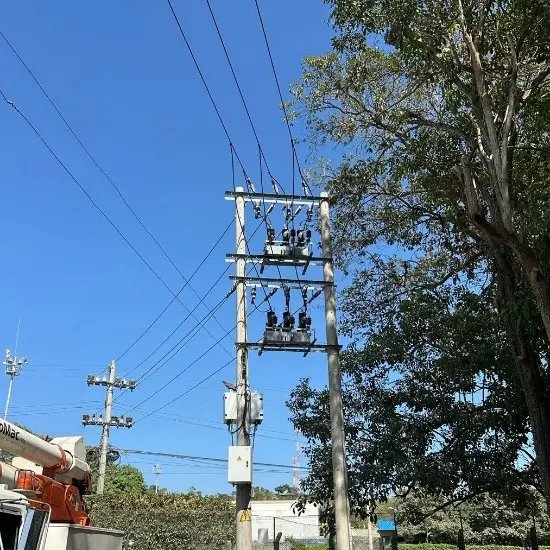
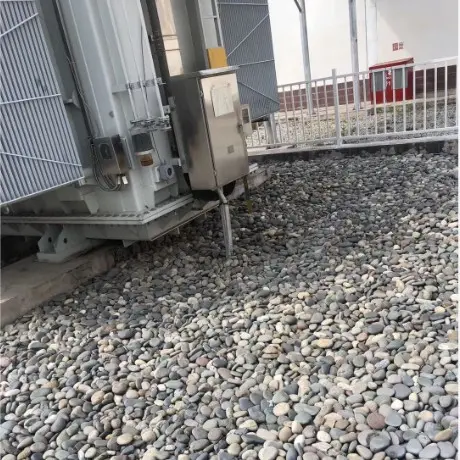
In 20 kV overhead distribution networks where load demand is high but adding new sites is difficult, a 630 kVA pole-mounted transformer may be used after technical justification. Due to the limited capacity of low-voltage overhead lines, a multi-circuit radial cable network is recommended for downstream distribution. Depending on site conditions, the transformer may be mounted on three poles or on a concrete pad, ensuring structural safety.
(4) Transformer Type Selection
Newly installed or replacement three-phase pole-mounted transformers shall use S11-type or higher oil-immersed, fully sealed transformers. In areas with low but stable load rates or highly fluctuating loads, SH15-type or higher amorphous alloy low-loss transformers are recommended.
(5) Overload and Voltage Drop Prevention
To avoid overloading and low output voltage, the maximum operating current of the transformer should not exceed 80% of its rated current. If this limit is exceeded, consider adding new transformer sites or capacity upgrades.
(6) Conductor and Cable Specifications
Medium-voltage (MV) drop conductors: Use JKLYJ-50 mm² cross-linked polyethylene (XLPE) insulated aerial cable or YJV22-3×70 mm² power cable.
Low-voltage (LV) outgoing cables: Use YJV22-0.6/1.0 kV, 4×240 mm² cable—single run for ≤200 kVA units, dual parallel runs for 400 kVA units.
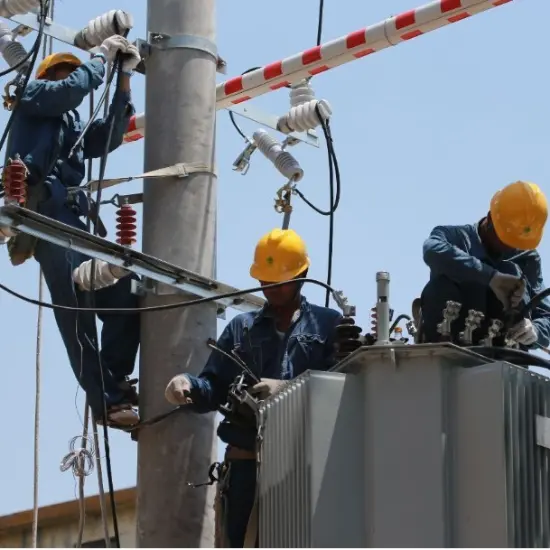
All HV and LV terminals on the transformer platform must be fitted with insulating covers—no exposed live parts allowed.
Transformers in remote areas must incorporate anti-theft measures.
(7) Protection Devices
HV side: Protected by drop-out fuses.
LV side: Protected by low-voltage circuit breakers.
(8) Transformer Siting Requirements
The installation location must:
Be close to the load center to minimize LV supply radius;
Avoid explosive, flammable, heavily polluted, or flood-prone areas;
Allow convenient HV feed-in and LV feed-out routing;
Facilitate construction, operation, and maintenance.
(9) Prohibited Pole Types for Transformer Mounting
Do not install transformers on poles that are:
Corner or branch poles;
Poles with service drops or cable terminations;
Poles equipped with line switches or other devices;
Poles at road intersections;
Poles in easily accessible or densely populated areas;
Poles in severely polluted environments.
(10) Grounding Requirements
For 10 kV transformers, working, protective, and safety grounds may share one grounding system.
For 20 kV transformers, HV and LV working grounds should ideally be separate, though they may share one system if grounding resistance is ≤0.5 Ω.
Maximum grounding resistance for the transformer: ≤4 Ω.
Each repeated ground in the LV network: ≤10 Ω.
Grounding electrodes must be buried ≥0.7 m deep, and must not contact underground gas or water pipes.
Electrodes may be installed vertically or horizontally.
Grounding down-conductors: minimum Φ14 mm round steel or 50×5 mm flat steel.
(11) Pêşkêşkirina Darbendînan
Nirxandin pêşkêşkirên darbendîn di deqatî derbarî lêgerandina transformatorê, bêyî hejmar, di şêtî (LV) de.
Ji bo cîhanên neutral da ku bi sisteman îzolan LV têne qebûl kirin, divê neutral di çavdareyê de be.
Di navendên gotarên sereke û liyanên LV de, divê neutral yekêm dike çavdareyê.
Bi tenê kirin danayên darbendîn ji bo destpêkê kirin di binên per wayên LV, ferrule metalî yên insulatoran service drop divê çavdareyê bê (R ≤ 30 Ω).
Di sisteman LV ser-tirya çarê de, divê neutral yekêm dike çavdareyê di navendeyê de ku her pelê pelê daxistin.
Tiştên dibajînê yên hewçennameyê wê ne ya jêrîn (10).
(12) Qutiyê Bujikanî yên Daftar (IDB)
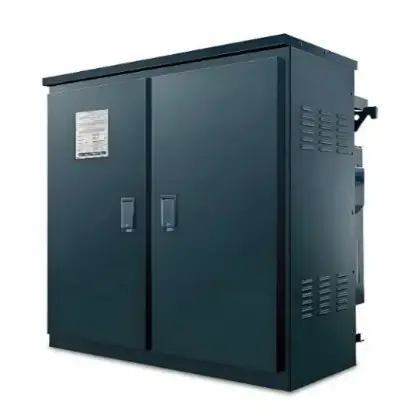
Hilbijêrin modelên IDB di rastî kapasiteyê transformatorê: 200 kVA an 400 kVA, di tiştê de.
Divê IDB ji bo bankên capacitorên rêvandî jêrîn bêyî hejmar, û hewce ye ku bibin amadekirin bi birêvebir û kontrolî yên integre, ku dikarin logîn data energy û kompensasyon otomatîk reaktîf power.