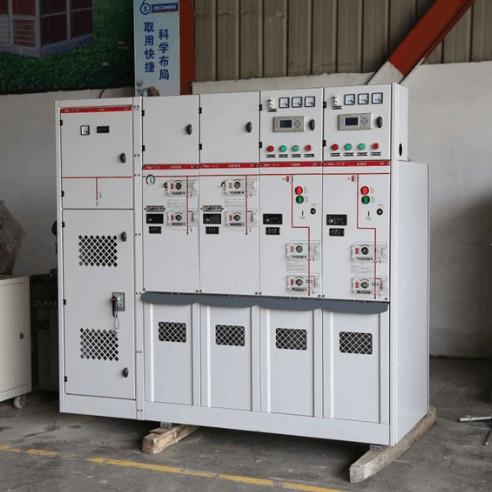
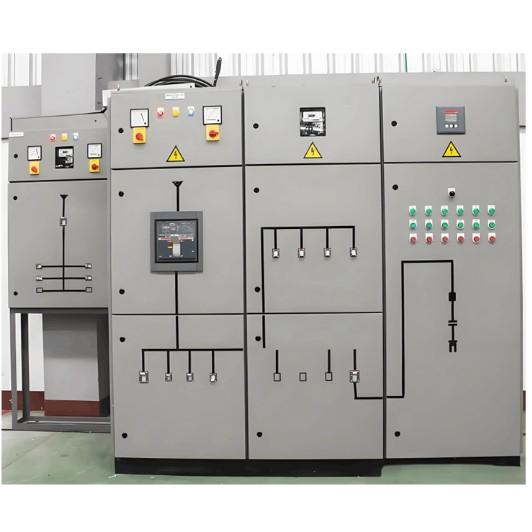
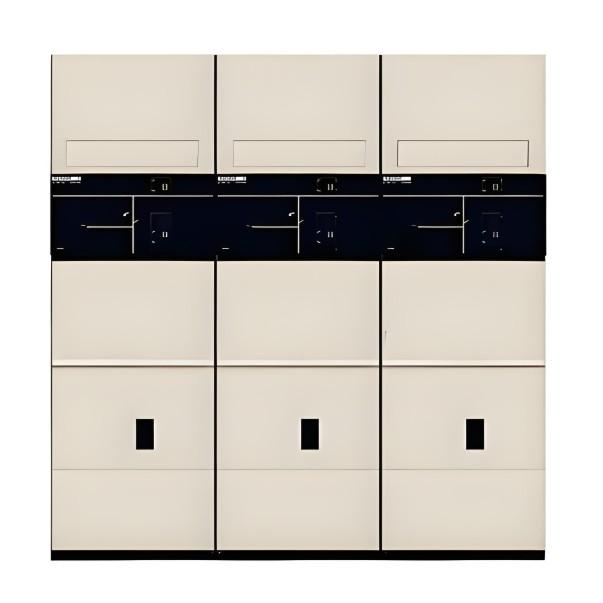
In eco-friendly SF6-free ring main units (RMUs), the use of a soft-encapsulation potting process for vacuum interrupters (VIs) — typically involving a resilient buffer layer (e.g., silicone rubber) wrapped around the VI, followed by hard epoxy resin casting to form a solid-insulation pole — is a critical core manufacturing technology.
Since SF6-free RMUs lack the superior insulating protection of sulfur hexafluoride gas, the circuit breaker generally relies on solid insulation or a combination of eco-friendly gas and solid-encapsulated poles to ensure dielectric performance. Under this architecture, the soft-encapsulation potting process offers several significant advantages:
1. Absorbing Thermal Stress to Prevent VI Cracking and Leakage
-
Technical challenge: The VI envelope is typically made of ceramic or glass, while the external cast insulation is rigid epoxy resin. The coefficients of thermal expansion (CTE) of these materials differ significantly. During equipment operation or under extreme ambient temperature fluctuations, the expansion and contraction of the epoxy resin exert substantial mechanical stress on the fragile ceramic envelope, which can easily cause ceramic cracking or seal failure at metal joints, resulting in vacuum leakage.
-
Advantage of the soft-encapsulation process: The highly elastic buffer layer (e.g., silicone rubber) sandwiched between the VI and the rigid epoxy acts as a spring, absorbing and releasing deformations caused by thermal expansion and contraction. This effectively isolates the VI from damaging rigid stresses, significantly improving its survival rate and service life under extreme temperature variations.
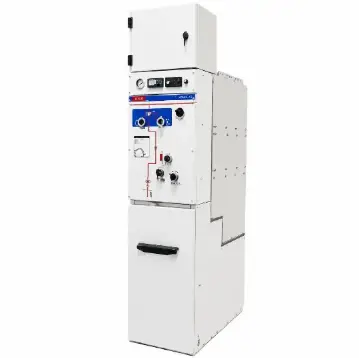
Physical Photos of Rockwill RSS Series Solid Insulated Ring Main Unit
2. Eliminating Interface Air Gaps to Substantially Reduce Partial Discharge
-
Technical challenge: If epoxy resin is cast directly onto the VI, surface tension and curing shrinkage often lead to microscopic air gaps or delamination at the interface between the rigid material and the ceramic surface. Under a high-voltage electric field, these tiny gaps can initiate partial discharge (PD). Over time, PD degrades the insulation layer and can eventually lead to dielectric breakdown and short circuits.
-
Advantage of the soft-encapsulation process: Soft materials like silicone rubber offer excellent surface adhesion and conformability, achieving a "seamless fit" with both the VI surface and the outer epoxy layer. This effectively eliminates bubbles and voids at the interface, creating an integrated insulation structure. As a result, partial discharge levels are kept extremely low (typically down to a few picocoulombs or even lower), ensuring long-term insulation reliability over 20–30 years of service.
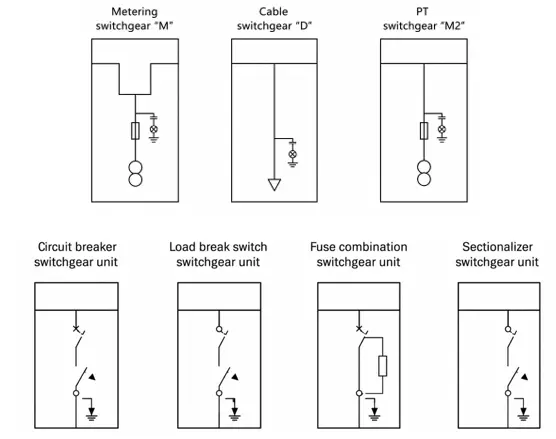
Design scheme of Rockwill RSS Series Solid Insulated Ring Main Unit
3. Improving and Smoothing Electric Field Distribution
-
Technical challenge: The shielding ring edges and contact connections of the VI are often regions of electric field concentration, making them vulnerable points for dielectric breakdown.
-
Advantage of the soft-encapsulation process: In some designs, the soft encapsulation layer not only serves as a buffer but can also be shaped with special geometries (e.g., skirt structures) or compounded with semiconductive materials to form a semiconductive shielding layer. This design smoothens and homogenizes the electric field at the ends of the VI, effectively mitigating field distortion and improving the overall withstand voltage capability.
4. Enhancing Mechanical Shock and Vibration Resistance
-
Technical challenge: During opening and closing operations, the operating mechanism (such as a spring or magnetic actuator) generates significant mechanical shock and vibration.
-
Advantage of the soft-encapsulation process: The soft encapsulation layer acts as both a "bulletproof jacket" and a "shock absorber" for the VI. It effectively dampens mechanical vibrations transmitted from the mechanism, protecting the internal bellows from damage and ensuring the breaker achieves tens of thousands of mechanical operations. Additionally, it protects internal components from impact damage during transportation and installation.
5. Strengthening All-Weather Moisture and Contamination Protection
-
In an SF6-free environment, protection against moisture and pollution relies entirely on the solid insulation surface. The soft-encapsulation potting process, combined with the external epoxy resin, completely seals the VI and the entire primary circuit (i.e., "fully insulated and fully sealed"). This effectively isolates internal components from external factors such as humidity, dust, salt fog, and condensation, enabling the equipment to adapt to harsh environments including high altitudes, typhoon-prone areas, and damp basements, while achieving maintenance-free operation.
Conclusion
In the context of the growing trend toward eco-friendly power equipment, the soft-encapsulation potting process represents the "optimal solution" for addressing thermo-mechanical stresses and interface insulation defects in solid-encapsulated poles. This technology has been fully validated in Rockwill's maintenance-free solid-insulation RMU series, ensuring that the SF6-free RMUs not only meet environmental standards but also achieve insulation reliability, mechanical endurance, and environmental adaptability that are comparable to — or even surpass — those of traditional SF6-filled RMUs.
Edited Form:Garca

 Login
Login