• Product
  • Suppliers
  • Manufacturers
  • Solutions
  • Free tools
  • Knowledges
  • Experts
  • Communities
Search


Free Expert Guides on Power Systems, Circuit Design & Electrical Troubleshooting

Access free engineering resources from IEE Business—covering power design, circuit layout, equipment selection, and troubleshooting. Expert-developed guides help engineers, procurement, and project teams make better decisions. Stay ahead on smart grids, renewables, efficiency, and AI tools. Improve reliability, reduce downtime, and enhance outcomes with real-world solutions. Explore our knowledge hub today.
Radiance and Luminance
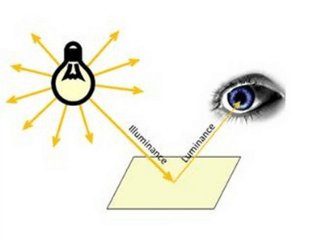
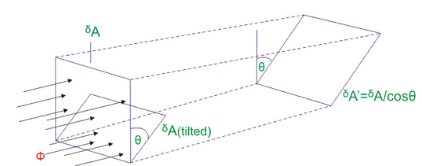
The radiant flux emitted from a point source in a certain direction per unit solid angle per unit projected area perpendicular to the specified direction is called radiance.Radiance is denoted by Le,λ and it is equal to the double derivative of radiant flux with respect to projected surface area As and Solid angle ωs.where, ÆŸ is the angle between normal to the elemental and the given direction.dAs is the elemental area and dωs is the elemental solid angle containing the given direction.The unit
03/16/2024
Consult
Tip
Consult
Tip
Irradiance and Illuminance
Irradiance is the radiant flux received by the detector area. The unit of irradiance is W/m2. Irradiance is denoted by Ee,λ,φs is the received radiant flux on the detector surface and AD is the detector area or surface.Irradiance always follows the Inverse Square Law. Suppose from a point source the radiant flux is being received by two surfaces of A1 and A2 where they are equal surface area. They are placed at r1 and r2 distance.Now the flux received by the surfaceAnd the flux received by the s
03/16/2024
Consult
Tip
Consult
Tip
Laws of Illumination
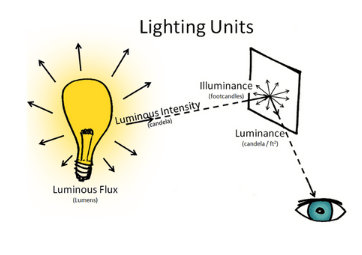
The Inverse Square Law of IlluminanceThis law states that the Illuminance (E) at any point on a plane perpendicular to the line joining the point and source is inversely proportional to the square of the distance between the source and plane.Where, I is the luminous intensity in a given direction.Suppose a source is present with luminous intensity I in any direction. From this source two distances are taken as the radius making this source as centre.As per the above figure, the two radiuses are
03/16/2024
Consult
Tip
Consult
Tip
Tristimulus Values and Chromaticity Coordinates
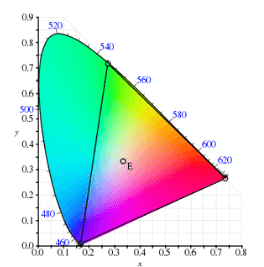
Tristimulus ValuesFundamentally there are three colors. They are Red (R), Green (G) and Blue (B). Any color that stimulates human eyes is the mixture of R, G, and B in a certain proportion. Let us consider C is the color of an object as the test color. We have taken three sources of R, G, and B color to take an experiment.The screen is taken to match the color of the test light and the source lights. The upper half of the full screen is taken as Screen 1 and next half is taken as Screen 2. Now t
03/16/2024
Consult
Tip
Consult
Tip
Lamp Performance Parameters: Luminous Efficacy Correlated Colour Temperature Colour Rendering Index
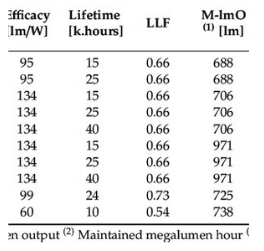
Luminous EfficacyLuminous efficacy is the amount of luminous flux in lumens that a particular lamp gives per unit consumption of electric power. The unit of luminous efficacy is in lumens/watt. Luminous efficacy is the measure of the energy efficiency of a lamp – and it varies based on the type of lamp.The luminous efficiency of the incandescent lamp is around 10 – 20 lumens/watt whereas a fluorescent lamp is around 60 – 100 lumens/watt. This difference is due to fluorescent lamps being more ene
03/16/2024
Consult
Tip
Consult
Tip
Transmittance (Formula & Transmittance to Absorbance Calculation)
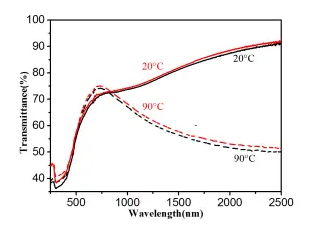
What is Transmittance?The transmittance of a surface or material is defined as the part of the light that moves through the other side of the surface. When light passes through any surface or material, it can be transmitted, reflected, or absorbed. Transmittance and reflectance are closely related concepts.Transmittance is defined as a ratio of the intensity of incident light (I0) to the amount of intensity passes through the object (I). The transmittance is denoted as T.As shown in the above fi
03/16/2024
Consult
Tip
Consult
Tip
Reflectance, Reflectivity, and the Solar Reflectance Index
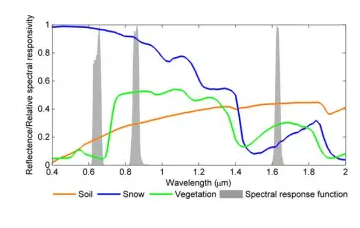
What is ReflectanceReflectance is defined as the ratio of the radiant flux reflected from the surface or body of a material (фr) to the incident radiant flux (фi). Reflectance is denoted by ρ (or p).The reflectance is a ratio of radiant flux. Therefore, it is unitless. The reflectance varies as per the wavelength distribution of the incident radiation. Reflectance and transmittance are closely related concepts.Reflectance can be categorized into two types. One is specular reflectance (ρs) and th
03/16/2024
Consult
Tip
Consult
Tip
Radiometry: What is it?
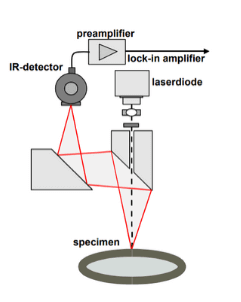
What is Radiometry?Radiometry is a technique to measure electromagnetic radiation for any wavelength. Photometry is similar to radiometry, but photometry is related to visible light signals only, while radiometry includes signals of any wavelength – like ultraviolet, infrared, and visible light.Radiometry is a method of detecting the radiation of material body and substance. According to Planck’s law, all material and substance radiate energy in the form of electromagnetic waves. Radiometry is u
03/16/2024
Consult
Tip
Consult
Tip
Fresnel Equations: What are they? (Derivation & Explanation)
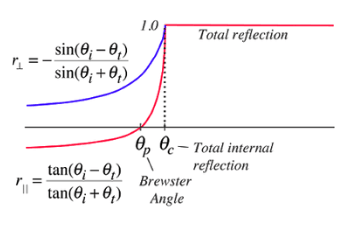
What are the Fresnel Equations?The Fresnel Equations (also known as the Fresnel coefficients) are defined as the ratio of the electric field of a reflected and transmitted wave to the electric field of the incident wave. This ratio is complex and hence, it describes relative amplitude as well as phase shifts between the waves.The Fresnel Equations (Fresnel coefficients) describe the reflection and transmission of light when it is incident on an interface between two different mediums. The Fresne
03/15/2024
Consult
Tip
Consult
Tip
Stroboscopic Motion: What is it?
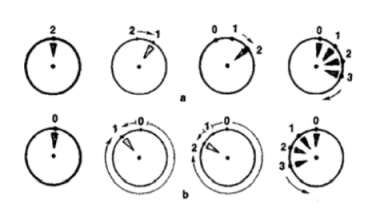
What is Stroboscopic Motion?Stroboscopic motion (also known as the Stroboscopic Effect) is defined as a visual phenomenon that occurs when continuous rotational motion is represented by a series of short samples (as opposed to a continuous view) at a sampling rate close to the period of the motion.An example of stroboscopic motion is the wheel of a car. When a car is running forward, it seems like the wheel of a car is moving backward if you observe the wheel in film. Stroboscopic Motion Example
03/15/2024
Consult
Tip
Consult
Tip
Send inquiry
+86
Click to upload file
Download
Get the IEE Business Application
Use the IEE-Business app to find equipment, obtain solutions, connect with experts, and participate in industry collaboration anytime, anywhere—fully supporting the development of your power projects and business.