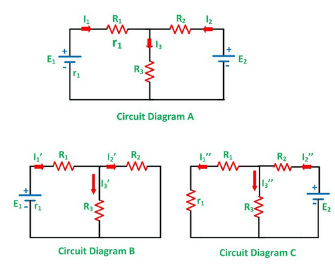
If there are several sources acting simultaneously in an electrical circuit, then the current through any branch of the circuit is summation of currents which would flow through the branch for each source keeping all other sources dead.Let us understand the statement.Here, two 1.5 Volt batteries present in the circuit. At this condition, the current through 1 ohm resistance is 1.2 ampere.The ammeter indicates this value in the above picture.Now, we replace the left side battery by a short circui
03/12/2024
Consult
Tip
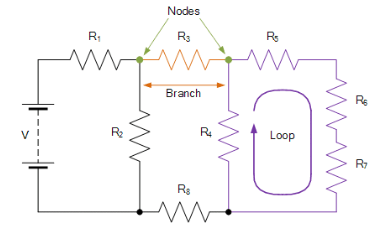
There are some simple relationships between currents and voltages of different branches of an electrical circuit. These relationships are determined by some basic laws that are known as Kirchhoff laws or more specifically Kirchhoff Current and Voltage laws. These laws are very helpful in determining the equivalent electrical resistance or impedance (in case of AC) of a complex network and the currents flowing in the various branches of the network. These laws are first derived by Guatov Robert K
03/12/2024
Consult
Tip
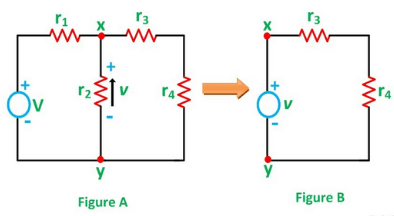
As name implies, the main concept of this theorem which is based upon substitution of one element by another equivalent element. Substitution theorem gives us some special insights in circuit behavior. This theorem is also used to prove several other theorems.Statement of Substitution TheoremSubstitution theorem states that if an element in a network is replaced by a voltage source whose voltage at any instant of time is equals to the voltage across the element in the previous network then the i
03/12/2024
Consult
Tip
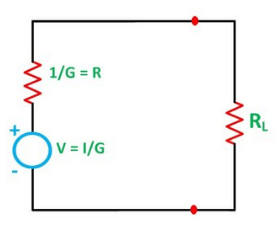
Millman’s theorem was named after famous electrical engineering professor JACOB MILLMAN who proposed the idea of this theorem. Millman’s theorem acts as a very strong tool in case of simplifying the special type of complex electrical circuit. This theorem is nothing but a combination of Thevenin’s Theorem and Norton’s Theorem. It is very useful theorem to find out voltage across the load and current through the load.This theorem is also called as PARALLEL GENERATOR THEOREM.Millman’s theorem is a
03/12/2024
Consult
Tip
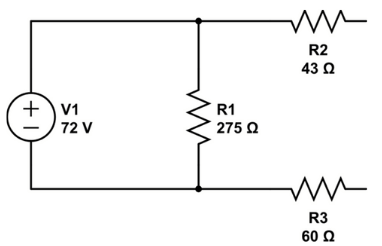
What is Thevenin’s Theorem (Thevenin Equivalent)?Thevenin theorem (also known as the Helmholtz–Thévenin theorem) states that any linear circuit containing only voltage sources, current sources, and resistances can be replaced by an equivalent combination of a voltage source (VTh) in series with a single resistance (RTh) connected across the load. This simplified circuit is known as the Thevenin Equivalent Circuit.Thevenin’s theorem was invented by a French engineer Léon Charles Thévenin (hence t
03/12/2024
Consult
Tip

1). What is the termunder-voltage protection?It protects the breaker from being accidentally closed, or the generator from coming on load during theparallel operation.It also protects against voltage loss when machinery is connected toswitchboard.2). What makes steering gear overload safety unique?Short circuit protection and, when applicable, single-phase protection are installed. Furthermore, instead of overcurrent protection, an Overload alarm is installed, which is programmed to activate at
03/12/2024
Consult
Tip
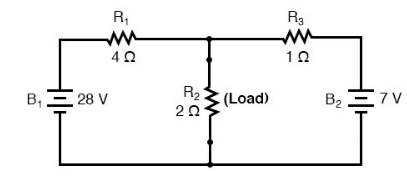
What is Norton Theorem? (Norton’s Equivalent Circuit)Norton’s Theorem (also known as the Mayer–Norton theorem) states that it is possible to simplify any linear circuit to an equivalent circuit with a single current source and equivalent parallel resistance connected to a load. The simplified circuit is known as the Norton Equivalent Circuit.More formally, Norton’s theorem can be stated as: “A circuit having any linear bilateral elements and active sources can be replaced by a simple two-termina
03/12/2024
Consult
Tip

1). Whatis a Transformer?Atransformeris a static device that converts electrical power from one circuit to another without affecting the frequency by stepping up (or)stepping down the voltage.2). What is the theory behind the transformer’s operation principle?The theory of mutual induction explains the operation of a transformer. A commonmagnetic flux connects two electrical circuits.3). What ismeant by a transformer’s rating?A transformer’s rating is the maximum power that may be extracted from
03/12/2024
Consult
Tip

1. What is a synchronous motor, &how is it different from other types?Asynchronous motoris an AC motor that runs at a constant speed specified by the power supply frequency and the number of poles. Synchronous motors, unlike induction motors, operate at synchronous speed with no slip.2. What are the most common uses for synchronous motors?Synchronous motors are used in a variety of applications, including Industrial drives, Power generation Power factor correction synchronous condensers, and
03/12/2024
Consult
Tip
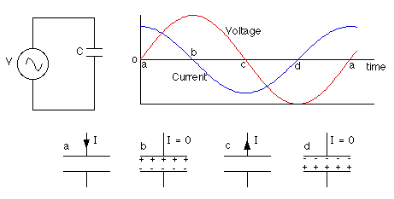
Bridge circuit is nothing but the electrical circuit configuration which is used to measure unknown values of the resistance, impedance, induction, and capacitance. Many bridges like Wheatstone bridge, Maxwell Bridge, Kelvin Bridge, and many more are very useful to measure quantities with accuracy and working on the same principle. Here is a brief description of functioning of some of the bridges given below:Wheatstone BridgeA Wheatstone bridge is an electrical circuit developed by Charles Wheat
03/12/2024
Consult
Tip






