RVB Type China Outdoor Vacuum Circuit Breaker
Operating Instruction · ROCKWILL

RVB Type China Outdoor Vacuum Circuit Breaker

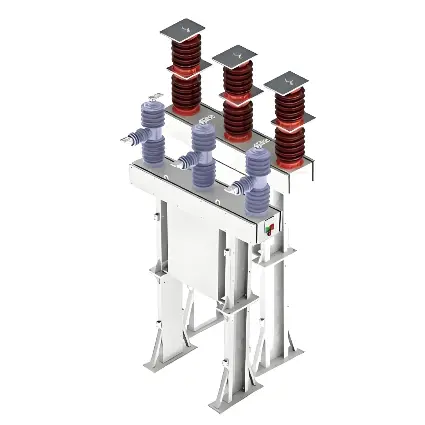
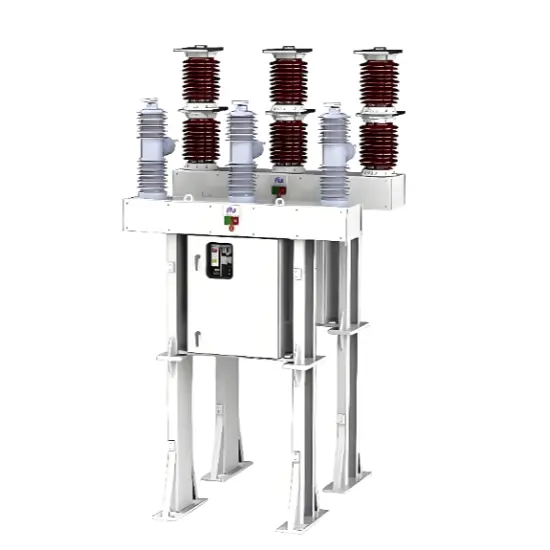
Outdoor live‑tank vacuum circuit‑breaker, max 40.5kV rated voltage, rated current up to 2500A, 31.5kA short‑circuit breaking. Spring operating mechanism, ‑40℃~+55℃ operating, 50/60Hz, C2‑class capacitor‑switching capability.

Add us on Google
Updated2026.10
LanguageEnglish
FilePDF · 4.1 MB
live‑tank vacuum circuit‑breakerOutdoor live‑tank circuit‑breakerChina live‑tank vacuum circuit‑breaker

Document description

This document describes outdoor live‑tank vacuum circuit‑breaker complying with IEC 62271‑100, together with IEC 60068‑2‑series environmental tests and IEC 61000‑series EMC requirements. It adopts vacuum arc‑extinguishing technology without SF6 gas for eco‑friendly low‑maintenance operation.

Equipped with spring‑charged operating mechanism supporting both motor‑driven and manual energy‑charging, with mechanical anti‑slow‑opening protection. Composite insulating bushings meet pollution class III. Complete unit consists of breaker main body, steel support base and local electric‑control cabinet; external current transformers are optional.

The manual covers packaging & transportation, unpacking acceptance, foundation work, hoisting‑installation, primary/secondary wiring and commissioning test items. It defines check‑items for insulation resistance, mechanical operation and local‑remote mode switching.

Periodic inspection & maintenance schedules are specified, distinguishing replaceable user‑serviceable parts from components requiring manufacturer intervention. It also provides troubleshooting for typical faults, safety warnings, hoisting specifications, spare‑part ordering and after‑sales guidance, for outdoor substation distribution applications.


Related Products

Frequently asked questions

It uses vacuum interrupter and requires zero SF6 gas, avoiding greenhouse‑gas leakage and gas‑recovery work with lower maintenance burden. The sealed vacuum interrupter cannot be disassembled; periodic insulation tests are required during service.

Operate manual charging handle back‑and‑forth; free‑wheeling handle indicates full energy storage. Do not recharge when already charged. Before maintenance, release spring energy and cut motor power supply to prevent unintended mechanism actuation and personal injury.

User‑replaceable items include thermostat, anti‑condensation heater, travel limit switches and anti‑pumping relay. Key components such as interrupter pole, complete operating mechanism, charging /opening springs shall not be disassembled or replaced by users; manufacturer qualified personnel are mandatory.

Typical causes: spring mechanism not fully charged; breaker already closed; excessive over‑travel of linkage; mechanical jamming. Always de‑energize primary circuit before troubleshooting. Verify energy‑charging status first and never force the mechanism.

Comments

Share your question or perspective
WhatsApp
Send inquiry
+86
Click to upload file
Download
Get the IEE Business Application
Use the IEE-Business app to find equipment, obtain solutions, connect with experts, and participate in industry collaboration anytime, anywhere—fully supporting the development of your power projects and business.
Login
or continue with
New here?
Register