Seria HV610 specjalny przekształtnik częstotliwościowy do podnoszenia

Kluczowe atrybuty
| Marka | RW Energy |
| Numer modelu | Seria HV610 specjalny przekształtnik częstotliwościowy do podnoszenia |
| Częstotliwość znamionowa | 50/60Hz |
| Serie | HV |
Opisy produktów od dostawcy
Przegląd
Aby lepiej zaspokoić potrzeby klientów w branży podnośników, produkt został zaprojektowany z perspektywy zastosowań podnośnikowych, integrując kontrolę antykołysania, ochronę przed luźnym liniem, ochronę haków, kontrolę hamulców, ograniczenie dekeleracji, prędkość z obciążeniem, makroparametry i inne specjalne funkcje, gwarantując niezawodne, efektywne, bezpieczne i stabilne działanie sprzętu do podnoszenia.
Charakterystyka wydajności
Specjalizacja w charakterystykach
Kontrola antykołysania, tłumienie drgań rozpraszacza i efektywne działanie
Dostosowywanie prędkości działania w czasie rzeczywistym w zależności od zmian obciążenia z obciążeniem • Ochrona haków, detekcja hamulca, kontrola zawieszenia wyjścia silnika
Łatwe pozycjonowanie dzięki współpracy ograniczenia dekeleracji i limitu zatrzymania
Ochrona przed luźnym liniem, podnoszenie z stałą prędkością, powolne przyspieszanie i płynne podnoszenie przy wykryciu ciężaru
Możliwość wyboru odpowiedniego mechanizmu podnoszenia w oparciu o makro ustawienia parametrów podnoszenia
Przełączanie wielu silników, obsługiwane są cztery zestawy parametrów silników wewnętrznie.
Wysoka niezawodność
Niezależny projekt kanału wentylacyjnego całego urządzenia, skutecznie zapobiegający wprowadzaniu pyłów i zanieczyszczeń • Skuteczna i precyzyjna oprogramowana platforma symulacji termicznej
Zaawansowane technologie i urządzenia testowe termiczne do skutecznego zweryfikowania teoretycznych wyników projektu termicznego
Rigorousne procedury testowe pełnego obciążenia i nadmiernego obciążenia
Produkty były starzone w wysokiej temperaturze i obciążeniu, skutecznie zapewniając jakość fabryczną
Wzmocniony projekt ochrony płytek cyfrowych, odporny na korozję, wilgotność, kurz itp.
Wysoka adaptacja
Szeroki zakres napięcia, trójfazowe 380V~480V (-15%~+10%)
Wbudowany filtr C3, skutecznie tłumiący wysokoczęstotliwościowe harmoniki generowane przez konwerter częstotliwości
Prosty i przyjazny projekt przewodu uziemienia EMC, który może skutecznie zmniejszyć przeciek prądu do podłogi
Projekt typu książka, który zmniejsza objętość tradycyjnego modelu o około 40%
Całe urządzenie można montować obok siebie, oszczędzając miejsce na montaż.
Wyjątkowa kontrola wydajności
Obsługa sterowania napędem silników asynchronicznych trójfazowych i silników synchronicznych z magnesem trwałym
Obsługa sterowania V/F, otwartą wektorową, zamkniętą wektorową
Duże początkowe moment obrotowy, OLVC: 0.5Hz/150%, CLVC: 0Hz/200%
Wysoka zdolność do przeładowania, 150% nominalnego prądu 60s, 180% nominalnego prądu 10s
Udogodnienia i łatwa obsługa
Standardowe urządzenia 132kW i większe wyposażone są w klawiaturę LED, która może obsługiwać zewnętrzne wprowadzanie danych
Urządzenia 110kW i mniejsze mogą być wyposażone w niezależną klawiaturę LED
Podczas uruchamiania i zatrzymywania konwertera częstotliwościowego, silnik może być kontrolowany przez utrzymanie hamulca • Funkcja wieloprędkości, która umożliwia 16-stopniowe działanie poprzez terminal sterujący
Funkcja serwomechanizmu zero, silnik
Losowa głębokość PWM do poprawy surowości silnika
Tryb redundantnego działania kodera, który automatycznie przełącza się na działanie OLVC w przypadku awarii kodera
Rozszerzanie różnorodności
Obsługa różnych kart interfejsu kodera, wsparcie dla kart rozszerzenia terminali I/O
Obsługa komunikacji Profibus-DP, Profinet IO, CANopen, Modbus-TCP/IP, EtherNet IP, Ethercat i innych
Samodzielne i szybkie wprowadzanie do eksploatacji
Obsługa połączenia z oprogramowaniem tła, co ułatwia debugowanie i konserwację
Obsługa rejestrowania zdarzeń i błędów
Główne parametry
project |
Specifications and technical data |
|
Power input and output |
Input voltage |
380V(-15%)~480V(+10%) three-phase |
Input power frequency |
50Hz/60Hz ±5% |
|
Input voltage imbalance |
≤3% |
|
Output voltage |
0V~input voltage |
|
Output frequency |
0~600Hz |
|
Mainly control performance |
Motor type |
Asynchronous motor, synchronous motor |
Control mode |
V/F, OLVC (Open-Loop Vector Control), CLVC (Closed-Loop Vector Control) |
|
speed regulation range |
1:10 V/F; 1:100 OLVC; 1:1000 CLVC |
|
Start torque |
OLVC:150%(0.5Hz);CLVC:200%(0Hz) |
|
Torque accuracy |
≤±5%, under vector control mode |
|
Torque pulsation |
≤±5%, under vector control mode |
|
Steady speed accuracy |
OLVC: 0.2%; CLVC :0.01% |
|
Torque response |
≤5ms, under vector control |
|
acceleration and deceleration time |
0.0s~3200.0s;0.0min~3200.0min |
|
Torque increase |
0.0%~30.0% |
|
Overload capacity |
150%1min/5min、180%10s/5min |
|
VF curve |
Straight type, multi-point type |
|
Input frequency resolution |
Digital setting 0.01Hz; Analog setting: Maximum frequency ×0.025% |
|
Dedicated features |
Anti-shake function |
Prevents accidents caused by large swings of the load during acceleration or deceleration |
Anti-loose rope protection |
Accelerate slowly and rise smoothly according to whether the weight is lifted |
|
Hook protection |
After holding the gate, it detects whether the heavy object is hooked, and an alarm is issued, and the motor hovers |
|
Holding the brake control |
Control the brake holding device and loosening the brake through the judgment of frequency, current, etc., to avoid accidents such as slipping |
|
Joystick zeroing detection |
Determine whether the joystick is in neutral or not |
|
Command reverse control |
When the brake control is effective, it supports holding the brake to stop during the forward and reverse switching process, or running directly to the reversal frequency without holding the brake |
|
Accelerate and deceleration switching |
Support 3 frequency switching points to switch acceleration and deceleration time |
|
Deceleration limit |
Realize simple positioning function, automatic optimization of deceleration time |
|
Voltage suppression |
Automatically change the frequency to stabilize the bus voltage to prevent fault reporting |
|
Overload protection |
Prevents excessive loads from damaging the equipment |
|
Low-speed operation protection |
The main application is not suitable for machines that run at low speed for a long time |
|
Load as you go |
Automatically adjust the operating speed according to load changes to improve work efficiency |
|
Macro parameters |
According to the on-site application scenario, different lifting mechanisms choose different lifting macros |
|
Basic features: |
acceleration and deceleration curves |
Straight line, S-curve |
Simple PLC, multi-terminal speed |
16 speed operation is achieved through the control terminal |
|
Master-slave control |
It can realize the master-slave synchronous control function of two or more motors |
|
Automatic voltage adjustment |
When the grid voltage changes within a certain range, it can automatically keep the output voltage constant |
|
Multi-motor switching |
Four sets of motor parameters, which can realize the switching control of four motors |
|
Overvoltage and overcurrent stall control |
Automatic current and voltage limit during operation to prevent frequent overcurrent and overvoltage tripping |
|
Power outage and restart |
After the frequency converter is powered off, when it is powered on again, it will automatically run after the set time is reached |
|
Fast current throttling |
Avoid frequent overcurrent failures of the frequency converter |
|
Power input and output |
Frequency setting method |
Operation panel given, UP/DOWN terminal, multi-speed give, terminal pulse given, communication |
Analog input terminals |
AI1、AI2:0V~10V/ 0 (4)mA~20mA |
|
Digital input terminals |
DI1-DI5, 5 programmable digital inputs, optocoupler-isolated, drain/source compatible inputs |
|
The DI5 supports high-speed pulse input with a maximum input frequency of 100kHz |
||
Digital output terminals |
open-circuit collector output; Output Voltage Range: 0V~24V; Current load capacity: 50mA |
|
DO1 supports high-speed pulse output, maximum output frequency: 100kHz |
||
Analog output terminals |
1 way 0V~10V/0(4)mA~20mA |
|
Relay output |
1 contact type: FormC normally open + normally closed |
|
communication |
Communication protocol |
Modbus RTU (standard); Profibus-DP, Profinet IO, CANopen, Modbus TCP/IP, Ethercat, EtherNet/IP (optional) |
Usage environment |
altitude |
no derating is required within 1000 meters above sea level; At an altitude of 1000 meters ~ 3000 meters, the current must be reduced by 1% for every 100 meters of elevation |
Ambient temperature |
-25°C~+40°C (40°C to 55°C derating is allowed) |
|
humidity |
15%~95%, no condensation |
|
vibration |
0.75~110kW is the 3M3 standard, 2Hz≤f<9Hz, displacement 1.5mm, 9Hz≤f<200Hz, acceleration 5m/s2 |
|
132kW~400kW is the 3M5 standard, 2Hz≤f<9Hz, displacement 3mm, 9Hz≤f<200Hz, acceleration 10m/s2 |
||
Storage temperature |
−40°C~+70°C |
|
Place of use |
Indoors, there is no direct sunlight, no flammable and corrosive gases, liquids and conductive particles |
|
Options: |
code disk card, communication expansion card, I/O terminal expansion card |
|
Protection function |
Short circuit, overcurrent, overload, overvoltage, undervoltage, phase loss, overheating, external faults, etc |
|
Installation method: |
Loading machines and containers |
|
Protection level |
IP20 |
|
Cooling method |
Air cooling |
|

Powiązane produkty
-
RWV-300 Wysokowydajny napęd przemienny

-
RWS-7000 wbudowany przełącznik obiegu pomijającego do miękkiego uruchamiania silników

-
RWS-6800 Online inteligentny miękki starter silników/szafa
-
Nadzwyczajnie szybki ogranicznik prądu
-
Serie HV510 wysokowydajnych przekształtników częstotliwości

-
Serie HD8000 średniego napięcia częstotliwościowego przekształtnika przemysłowego

-
Seria HD2000 Niskonapięciowy Inżynieryjny Przetwornik Częstotliwości (chłodzony powietrzem)

Powiązane wiadomości
-
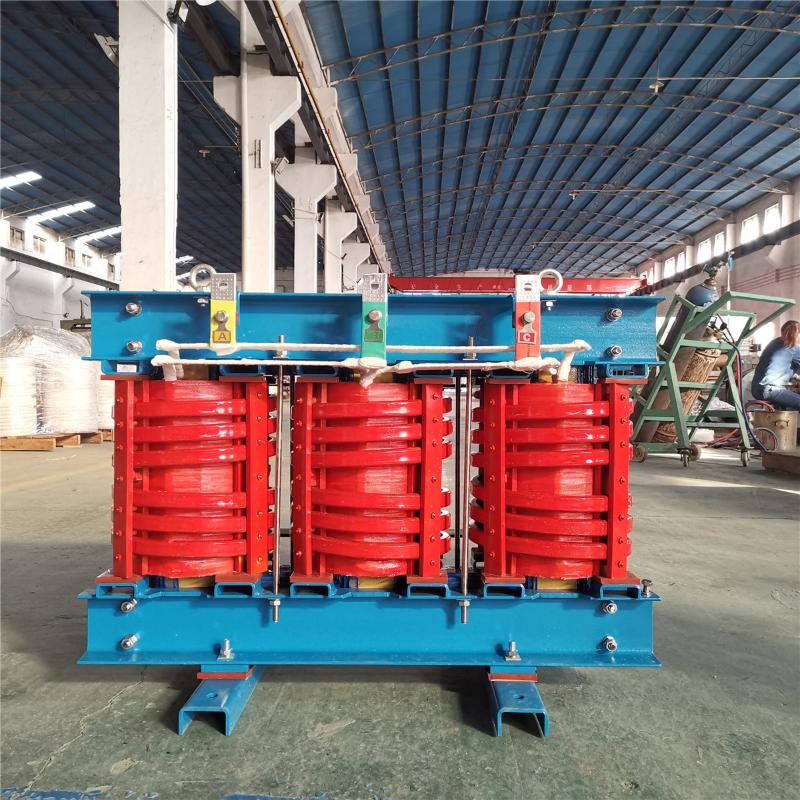 Jak zaimplementować ochronę przekładnika i standardowe kroki wyłączaniaJak wdrożyć środki ochrony przed przepustką ziemską transformatora?W pewnej sieci energetycznej, gdy na linii zasilającej wystąpi awaria jednofazowego zwarcia na ziem, jednocześnie działają ochrona przepustki ziemskiej transformatora i ochrona linii zasilającej, powodując wyłączenie inaczej zdrowego transformatora. Głównym powodem jest to, że podczas jednofazowego zwarcia na ziem w systemie, nadnapięcie zerowej sekwencji powoduje przebicie przepustki ziemskiej transformatora. Powstający prąd zerNoah12/05/2025
 -
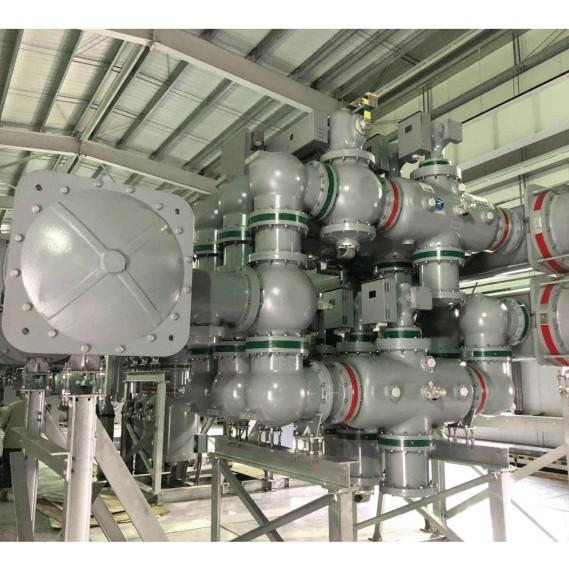 GIS Dualne Uziemienie i Bezpośrednie Uziemienie: Mierzenie Antywypadkowe Państwowej Sieci 20181. Jak należy rozumieć wymagania zawarte w punkcie 14.1.1.4 Państwowej Sieci Energetycznej "Osiemnaście Przeciwwypadkowych Miar" (wydanie z 2018 roku) w odniesieniu do GIS?14.1.1.4: Punkt neutralny transformatora powinien być połączony z dwiema różnymi stronami głównego siatki uziemienia za pomocą dwóch przewodników uziemiających, a każdy z nich powinien spełniać wymagania dotyczące sprawdzenia stabilności termicznej. Główny sprzęt i konstrukcje sprzętu powinny mieć połączone dwa przewodniki uziEcho12/05/2025
 -
 Innowacyjne i powszechne struktury cewek dla 10kV wysokonapięciowych, wysokoczęstotliwościowych transformatorów1.Innowacyjne struktury cewek dla transformatorów wysokiej częstotliwości klasy 10 kV1.1 Zonowane i częściowo zalane wentylowane konstrukcje Dwa U-kształtne rdzenie ferromagnetyczne są połączone, tworząc jednostkę magnetyczną, lub dalej zmontowane w moduły rdzeniowe szeregowe/paralelne. Bobiny pierwotnej i wtórnej są montowane odpowiednio na lewej i prawej prostej nodze rdzenia, przy czym płaszczyzna połączenia rdzenia służy jako warstwa graniczna. Cewki tego samego typu są grupowane po tej sameNoah12/05/2025
 -
 Jak zwiększyć pojemność transformatora? Co należy wymienić w celu modernizacji pojemności transformatora?Jak zwiększyć pojemność transformatora? Co należy zastąpić, aby dokonać modernizacji pojemności transformatora?Modernizacja pojemności transformatora oznacza zwiększenie jego zdolności bez wymiany całego urządzenia poprzez pewne metody. W aplikacjach wymagających wysokich prądów lub dużej mocy wyjściowej, modernizacja pojemności transformatora jest często konieczna, aby zaspokoić popyt. W tym artykule przedstawiono metody modernizacji pojemności transformatora oraz komponenty, które wymagają wymEcho12/04/2025
 -
 Przyczyny różnicowego prądu transformatora i zagrożenia związane z prądem obciążenia transformatoraPrzyczyny różnicowego prądu transformatora i zagrożenia związane z prądem obciążenia transformatoraRóżnicowy prąd transformatora powstaje z powodu czynników takich jak niekompletna symetria obwodu magnetycznego lub uszkodzenie izolacji. Różnicowy prąd występuje, gdy strony pierwotna i wtórna transformatora są zazemblowane lub gdy obciążenie jest nierównomierne.Po pierwsze, różnicowy prąd transformatora prowadzi do marnowania energii. Różnicowy prąd powoduje dodatkowe straty mocy w transformatorzEdwiin12/04/2025
 -
 Poprawa logiki ochrony i inżynieryjne zastosowanie transformatorów ziemnych w systemach zasilania kolei miejskiej1. Konfiguracja systemu i warunki pracyGłówny transformator w głównych stacjach przekształtniczych Zhengzhou Rail Transit – Centrum Wystawiennicze i Stadion Miejski – wykorzystuje połączenie gwiazdowe/deltoidowe z trybem pracy neutralnego punktu niezazemionego. Na stronie szyny 35 kV stosowany jest transformator zazemieniający typu Zigzag, podłączony do ziemi przez rezystor o niskiej wartości, który również zasila obciążenia stacji. Gdy wystąpi awaria jednofazowego zwarcia na linii, powstaje ściEcho12/04/2025
Powiązane rozwiązania
-
 Rozwiązania systemów automatyzacji dystrybucjiJakie są trudności w obsłudze i konserwacji linii elektrycznych na podpórkach?Trudność pierwsza:Linie dystrybucyjne na podpórkach mają szerokie zasięgi, skomplikowany teren, wiele odgałęzień promienistych i rozproszone źródła zasilania, co prowadzi do "licznych awarii linii i trudności w wykrywaniu usterki".Trudność druga:Ręczne wykrywanie usterki jest czasochłonne i pracochłonne. Ponadto, nie można w czasie rzeczywistym monitorować prądu, napięcia i stanu przełącznika linii, ze względu na brakRW Energy04/22/2025
 -
 Zintegrowane inteligentne rozwiązanie do monitorowania mocy i zarządzania efektywnością energetycznąPrzeglądTo rozwiązanie ma na celu dostarczenie inteligentnego systemu monitorowania mocy (System Zarządzania Mocą, PMS) skupionego na optymalizacji zasobów energetycznych od końca do końca. Poprzez utworzenie zamkniętego cyklu zarządzania "monitorowanie-analiza-decyzja-wykonywanie," pomaga przedsiębiorstwom przejść od prostego "używania energii elektrycznej" do inteligentnego "zarządzania energią," ostatecznie osiągając cele bezpiecznego, efektywnego, niskowęglowego i ekonomicznego zużycia energRW Energy09/28/2025
 -
 Nowa modułowa rozwiązań monitorowania dla systemów fotowoltaicznych i magazynowania energii elektrycznej1. Wprowadzenie i tło badawcze1.1 Obecny stan branży słonecznejJako jedno z najbardziej obfitych źródeł odnawialnych, rozwój i wykorzystanie energii słonecznej stało się centralne dla globalnej transformacji energetycznej. W ostatnich latach, napędzane przez polityki na całym świecie, przemysł fotowoltaiczny (PV) doświadczył eksplozywnego wzrostu. Statystyki wskazują, że chiński przemysł PV doświadczył zaskakującego 168-krotnego wzrostu w okresie "Dwunastej Pięcioletniej Koncepcji". Do końca 201RW Energy09/28/2025