According to industry insiders, Chen Chengming, Chairman of Rockwill Group, a global manufacturer of medium and high‑voltage smart grid and switchgear equipment, stated that the company plans to discontinue offline Canton Fair participation. This decision has sparked extensive discussions within China’s industrial export community.
As a technology-driven manufacturer with nearly 20 years of experience in overseas grid markets and business covering more than 100 countries and regions worldwide (including high-end European and American markets), Rockwill’s “planned exit” does not negate the historical value of the Canton Fair. Instead, it reflects a fundamental mismatch in lead generation models, traffic composition and ROI between high-value, project-based equipment that relies on engineer-led bid evaluation and large-scale general trade exhibitions.
I. Operational Pain Points: Four Deceleration Points for Growth at Traditional Comprehensive Trade Fairs
Rockwill’s plan to suspend or exit offline Canton Fair participation stems from diminishing marginal returns across four core dimensions:
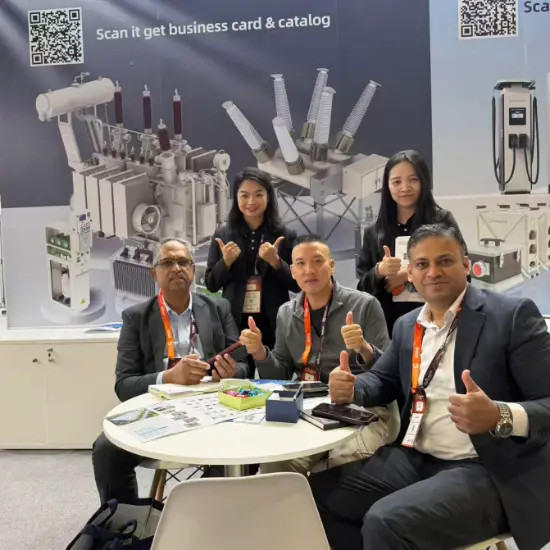
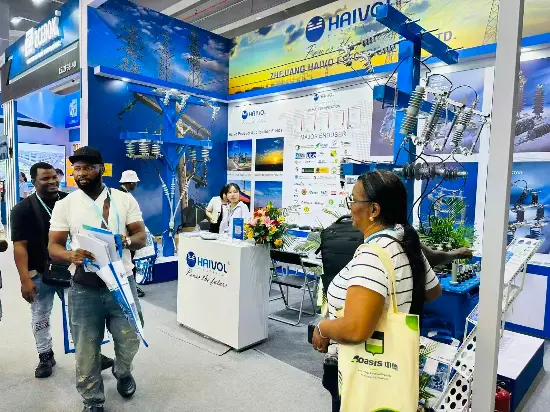
Mismatched traffic profile: Comprehensive exhibition zones feature a high proportion of intermediaries and low-margin price-focused manufacturers. Technical solutions struggle to reach final decision-makers at power utilities or EPC contractors.
Competing resource allocation: Heavy-duty and self-healing demonstration systems such as eco-friendly GIS and smart reclosers require single-line diagram screens, controller demos and FAT documentation walls. Placed in remote or non-specialized booth areas, these displays fail to attract sustained attention from professional buyers.
Ageing visitor customer base: New foreign buyers, new EPC firms and new power utility representatives are scarce on-site; most interactions are casual catch-ups with existing clients. For companies targeting new tender projects, marginal lead acquisition value approaches zero.
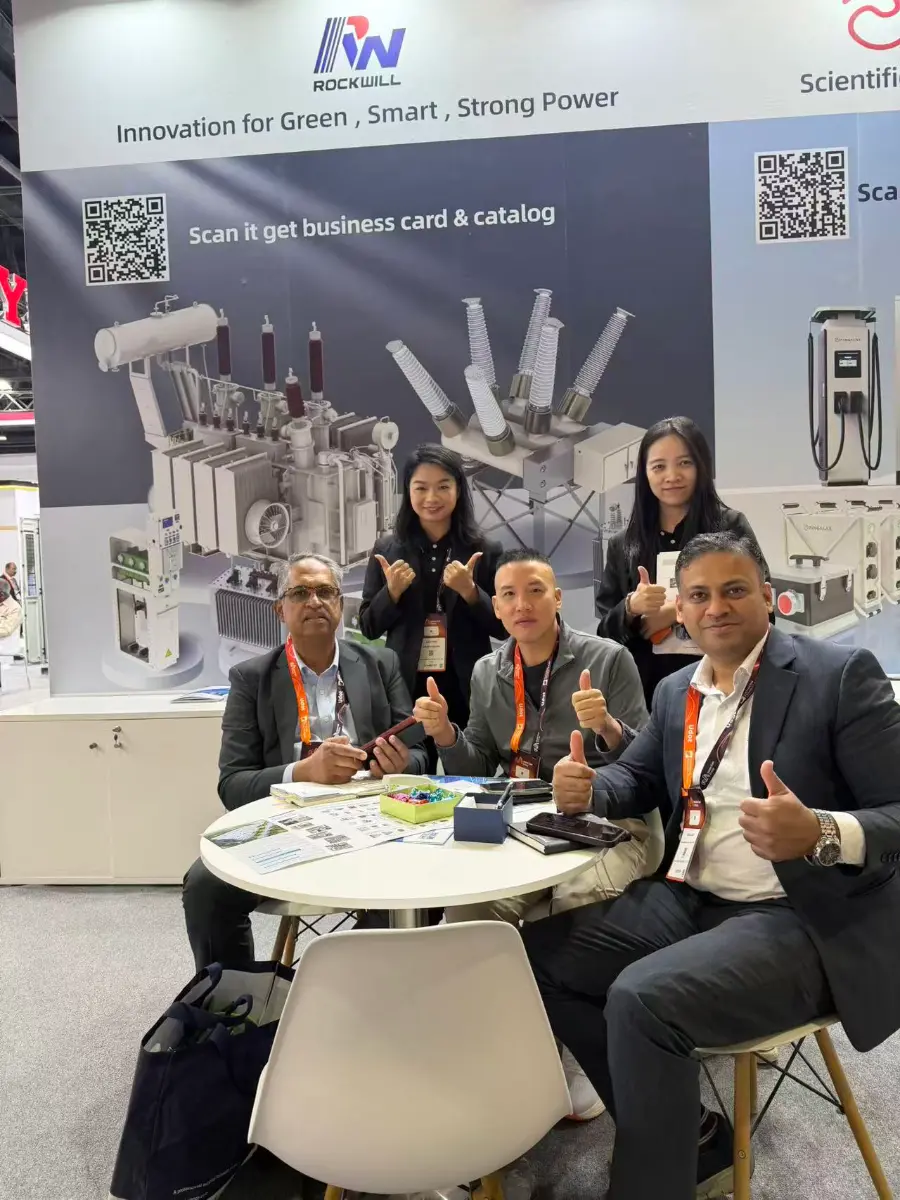
Low conversion efficiency: Costs for booth rental, custom stand fabrication, travel, engineer labour and sample shipping are substantial. Yet fewer than 10 valid business cards are collected daily over the 7-day exhibition. After filtering out prospects with no budget or outside target markets, very few new leads qualify for in-depth technical discussions.
II. Product Portfolio: Technical Bid-Evaluation Attributes of Four Core Smart Product Lines
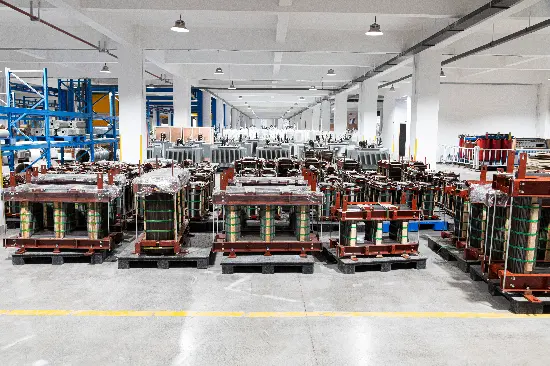
Procurement of medium and high-voltage grid equipment is far from a simple “view sample and place order” transaction; it constitutes an extremely complex systems engineering process. Rockwill’s four core product lines all carry high technical barriers, long-cycle Factory Acceptance Test (FAT) requirements and tender compliance obligations, which cannot be fully explained verbally amid the noisy environment of a general trade show.
Recloser (RCW/RWK85, Rysec-12/24 series)Covers 6–52 kV overhead pole-mounted and medium-voltage distribution networks, complying with dual international standards IEC 62271-111 and ANSI/IEEE C37.60. The system integrates Modbus, DNP3, IEC 60870-5-101/104 and IEC 61850 digital protocols and supports GPRS/SCADA dispatching. New-generation models incorporate AI protection logic and mobile App interaction. Large-scale deployments include 200+ units for Cambodia’s distribution network, 170 units for Kenya Power, NGCP factory audit in the Philippines, cold-resistant autonomous operation for DTEK in Ukraine, and distribution network projects in Saudi Arabia. Buyers focus on protection curves, reclosing logic and bi-directional high-impedance fault detection — details impossible to fully benchmark technically on a general exhibition floor.
Smart Step Voltage Regulator6–362 kV oil-immersed / inductive smart voltage regulation systems. Deployed in Bangladesh’s grid (263 units of 33 kV oil-immersed 32-tap regulators), TANESCO distribution network upgrades in Tanzania, and stable 3-year operation under −45°C extreme cold in Russia, with ongoing project negotiations in the US market. Purchasing decision-makers are typically planning departments of power utilities or electrical teams of large EPC contractors. Their core requirement is engineering calculation documents based on system impedance and load curves, not product brochure aesthetics.
MV/HV Eco-friendly SwitchgearMedium-voltage range includes REC 12/24/38.5 kV (air/N₂ insulation, vacuum interrupter, IP67, zero GWP), RAR 24 kV (dry-air RMU supporting IEC 61850) and RMR solid-insulated ring main units. Primary equipment RGIS adapts pure dry air, N₂ or g³ eco-friendly gas. High-voltage RVD vacuum dead-tank circuit breakers (72.5/145 kV) paired with g³ C-GIS/GIS reduce greenhouse gas potential (GWP) by over 99% versus conventional SF₆ solutions. The company has exported 145 kV eco-GIS systems to Poland, a high-end European benchmark market, fully complying with stringent EU F-gas low-carbon regulations. Core selling points such as partial discharge control, internal arc classification and lifecycle carbon footprint are heavily diluted within general exhibition environments.
SF₆-free Modular VCB & LBSRysec modular solutions (12/24 kV) feature an ultra-narrow 420 mm cabinet width and M2-class mechanical endurance of 10,000 operations. Target applications include compact urban substations, new energy charging stations and industrial parks. As highly customised components, buyers need to assess bay expandability, CT/VT compatibility and seamless future capacity expansion plans on-site. Static displays cannot replace engineering configuration reviews.
Additional products supporting Rockwill’s full turnover delivery capability, such as medium/high-voltage metal-clad switchgear, KYN series, GIS/HGIS, power/distribution/dry-type transformers, earthing transformers, prefabricated / containerised / smart substations and EPC services, are not expanded with parameters in this article.
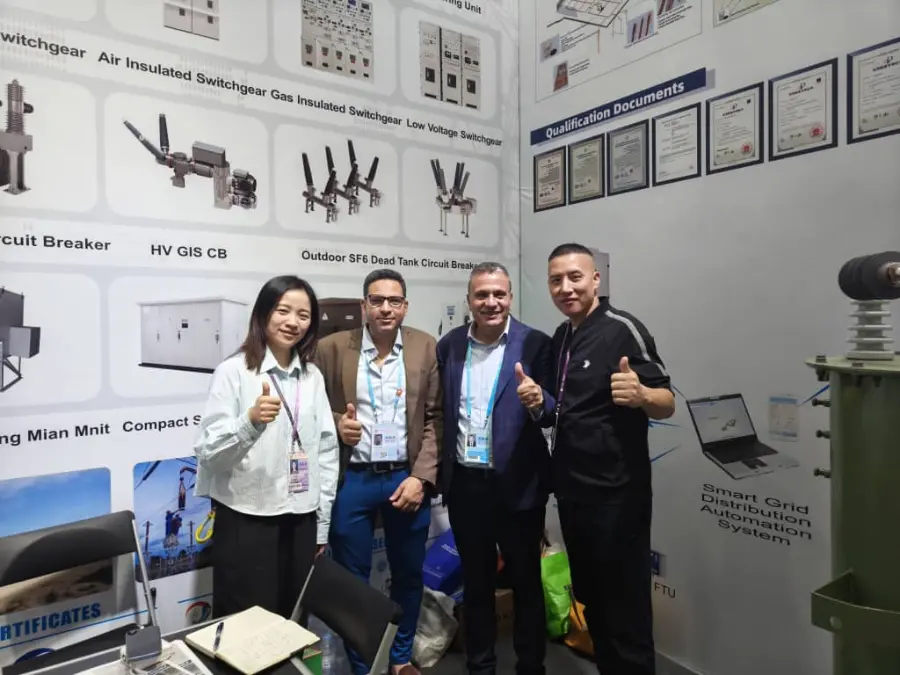
III. Channel Mismatch: Substantial Differences Between General Exhibitions and Specialised Channels
When the traditional KPI of “business card volume” loses validity, technology manufacturers must rebuild their marketing funnel. General trade fairs such as the Canton Fair attract mainly intermediaries, trading companies and buyers of consumer and standard products. Core interactions are limited to paper business cards, brochures and static sample displays. Business decisions are often based on on-site intent, with follow-up conversion within 1–6 months post-show. Their core value proposition is “connect global buyers with Chinese factories” to resolve information asymmetry.
By contrast, specialised power exhibitions, technical summits and direct project procurement channels reach highly targeted audiences: utility operators, large EPC prime contractors, grid chief engineers and energy investors. Discussions immediately dive into single-line diagrams, engineering calculation sheets, FAT reports and compliance certification documents. Commercial decisions tie to public tendering, bid clarifications and technical defence, with typical cycles ranging from six months to several years. These specialised channels aim to “let top global power grids validate an enterprise’s low-carbon and power automation engineering delivery capability”.
Calculating ROI using the conventional formula for general trade shows — valid cards multiplied by average order value divided by total booth and travel costs — almost always returns losses for long-cycle, technology-heavy power equipment. If KPIs shift to tender shortlisting rate and signed project value, resources redirected toward specialised channels deliver far higher returns.
IV. Third-Party Perspective: Channel Evolution Rather Than Exhibition Failure
Rockwill’s planned withdrawal from offline Canton Fair exhibits should not be simplistically interpreted as the end of Canton Fair dividends. Instead, it represents an inevitable evolution of enterprise customer acquisition channels amid global power supply chain decarbonisation and digital transformation. The Canton Fair has fulfilled its historic mission, helping Chinese manufacturing build solid global credibility. Entering the “Export 2.0 era”, Rockwill’s core objective is to quickly demonstrate its low-carbon and power automation engineering delivery capacity to EU, American and national grid operators worldwide.
Converting the crude cost of “collecting business cards” into targeted investment for sending senior electrical engineers to engage directly with overseas tender projects is not a radical retreat, but a highly rational, forward-thinking upgrade of export marketing strategy.
FAQ – Common Questions & Clarifications
Will Rockwill permanently stop attending the Canton Fair? Chen Chengming’s statement refers to a planned exit from offline exhibitions. Until an official formal announcement is released, “planned exit / suspension of offline participation” remains the prudent external wording.
Will the company continue business in high-end European and American markets? Yes. Benchmark references include the export of 145 kV eco-GIS to Poland, FAT for containerised substations in France, technical discussions on Smart Step Voltage Regulators and Reclosers in the US, and cold-resistant operation of 10 kV smart Reclosers in Ukraine. Mature technical adaptation and benchmark deployments are already established across developed Western markets.
What are the four core smart products? Reclosers, Smart Step Voltage Regulators, MV/HV Eco-friendly Switchgear, and SF₆-free Modular VCB / LBS.
Are other products no longer important? No. Switchgear, GIS, transformers, prefabricated substations and EPC services complement full turnkey capabilities. This article focuses only on the four high-barrier core smart products to analyse lead model mismatch.
How should technical manufacturers calculate Canton Fair ROI? Use the formula: (Valid leads × technical qualification rate × project value) minus costs for booth, custom build, travel and engineer man-hours. Total footfall is not the key metric. If new EPC and utility leads remain below threshold levels, downgrade or exit general comprehensive exhibitions.

 Login