What is a Sinusoidal Wave Signal?
Sinusoidal Wave Signal
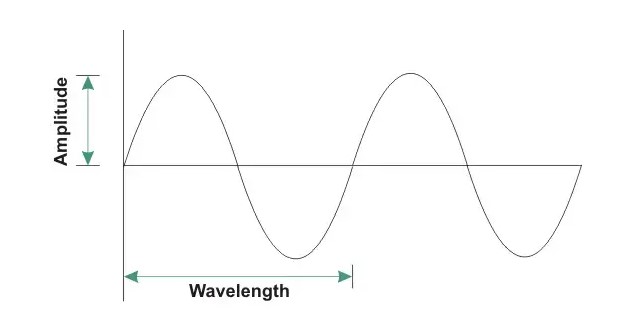
A sine wave signal is defined as a periodic signal with smooth and repetitive oscillations based on a sine or cosine function.
Mathematical feature
It can be expressed as y (t) = A sin (ωt + φ), where A is the amplitude, ω is the angular frequency, and φ is the phase.
y (t) is the signal value at time t
A is the amplitude of the signal, i.e. the maximum deviation from zero
f is the frequency of the signal, that is, the number of cycles per second
ω= 2πf is the angular frequency of the signal, that is, the rate of change of the Angle, expressed in radians per second
φ is the phase of the signal, that is, the initial Angle at time t= 0
Application of Sinusoidal Wave Signal
Audio system
Wireless communication
Electric power system
Signal analysis

 Login