Capacitance, current, voltage and resistance are the basic electrical parameters in a circuit, and the relationship between them can be understood by Ohm's law and the characteristics of capacitors. Here are the main relationships between them:
The relationship between voltage and current
Ohm's law: In a pure resistance circuit, the relationship between voltage (V) and current (I) follows Ohm's law, that is, I = V/R, where R is resistance (Ω), indicating that current is proportional to voltage and inversely proportional to resistance.
Effect of capacitance: In AC circuits, the effect of capacitance on current is different. Capacitors prevent direct current from passing through, but allow alternating current to pass through. The charge and discharge process of the capacitor causes the current to change over the period of the AC signal, which is reflected in the capacitance impedance (capacitive reactance).
The relationship between capacitance and voltage
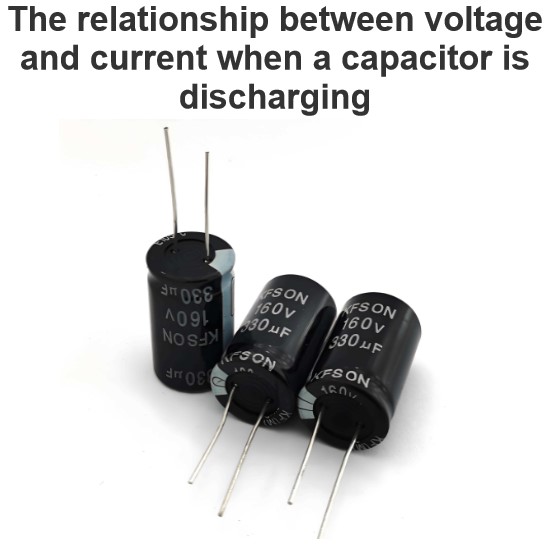
Voltage-current characteristics of the capacitor: In the DC circuit, the current of the capacitor is proportional to the voltage change rate at both ends, that is, I = C * dV/dt, where C is the capacitance (F), indicating that the capacitor's ability to store charge is related to the voltage change rate.
Capacitor impedance and frequency relationship: In AC circuits, the impedance (capacitive reactance) of the capacitor is inversely proportional to the frequency, that is, Zc = 1 / (2 * π * f * C), which means that the higher the frequency, the less the capacitor obstructs the current.
The relationship between capacitance and resistance
Parallel equivalent of capacitors and resistors: In practical applications, capacitors and resistors are often used in parallel, and capacitors can compensate the influence of resistors on AC signals, forming a parallel equivalent of capacitors and resistors. This parallel combination plays a role in voltage division and filtering in circuit design.
Relation between capacitance impedance and impedance
Capacitive impedance: In an AC circuit, the capacitor appears as a complex impedance, that is, the capacitive reactance, which is related to the capacitance of the capacitor and the frequency of the AC signal. In some circuit analysis, the impedance of a capacitor can be understood as a "special" resistance.
The existence of these relationships stems from the fundamental properties of capacitors and resistors as circuit elements. Capacitors' ability to store charge and their response to AC signals make them play a different role than resistors in circuits, especially when processing AC signals. Understanding these relationships is essential for circuit design and analysis.

 Login