Search


What is an Oscillator Transducer?

Oscillator transducer: Converts force/pressure into voltage via capacitance-frequency modulation. Used in telemetry with mechanical linkages despite temperature sensitivity limitations.

Encyclopedia
Field: Industry News
Electrical Engineer
10Year<
China
Add us on Google


What is an Oscillator Transducer?


Oscillator Transducer Definition


An oscillator transducer is a device that converts force, pressure, or displacement into a measurable voltage.


Constituent Part


  • Mechanical linkage

  • Oscillator

  • Frequency modulator

  • Force summing member


Working Principle


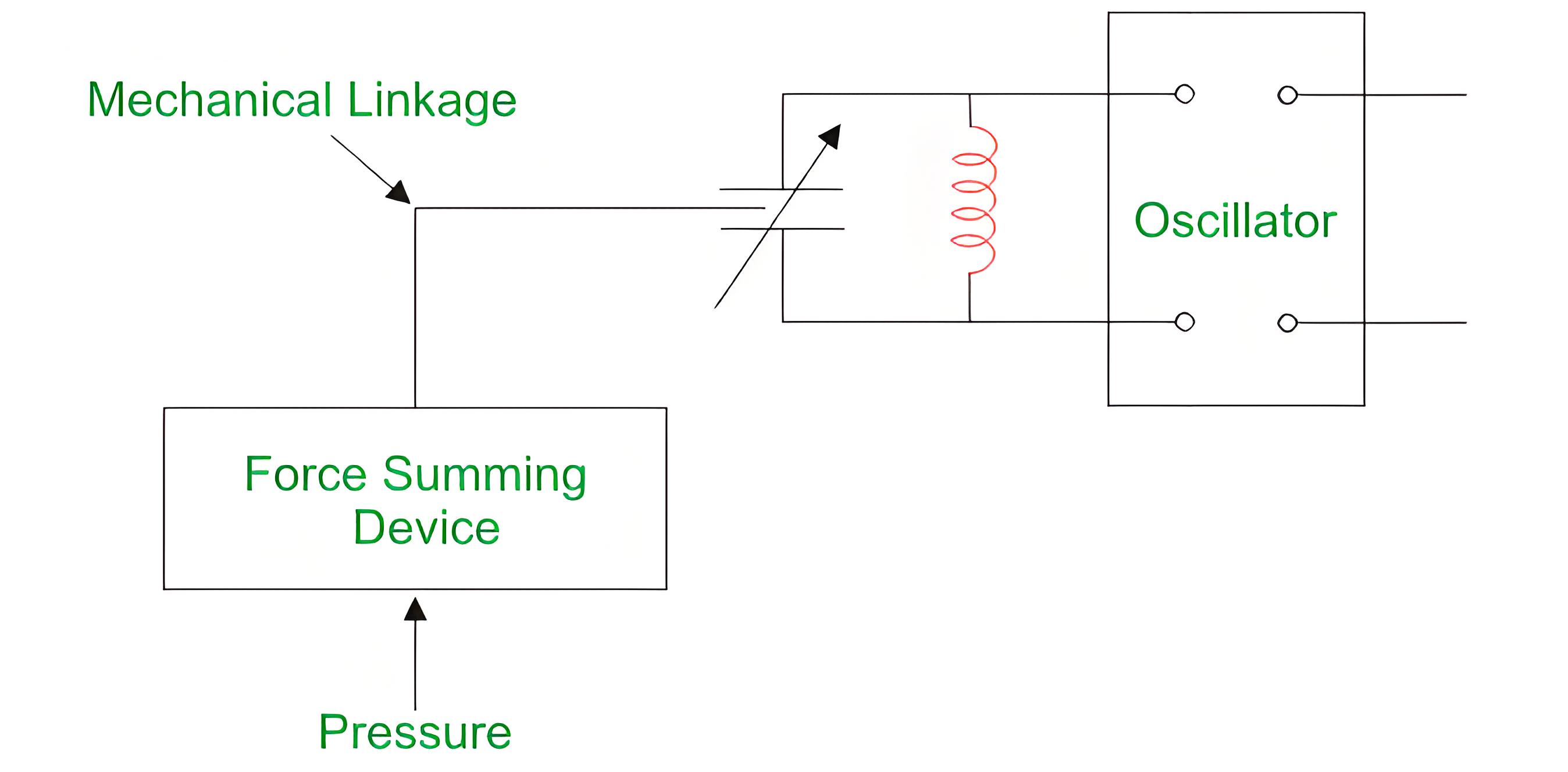
It operates by using pressure to change the capacitance in a capacitor, which alters the frequency of an oscillator.


e0412a1c6982e2b42dcd4bef97612d94.jpeg


Components


The key parts include a mechanical linkage, oscillator, frequency modulator, and force summing member.


Advantages


  • This transducer can measure both dynamic and static phenomena, making it versatile for different applications.


  • This transducer is very useful for telemetry applications.


Disadvantages


  • This transducer has very hunted temperature range.


  • It has a poor thermal stability.


  • It has a low accuracy and therefore is used only in low accuracy applications.


Give a tip and encourage the author!

Comments

Share your question or perspective
WhatsApp
Send inquiry
+86
Click to upload file
Download
Get the IEE Business Application
Use the IEE-Business app to find equipment, obtain solutions, connect with experts, and participate in industry collaboration anytime, anywhere—fully supporting the development of your power projects and business.
Login
or continue with
New here?
Register