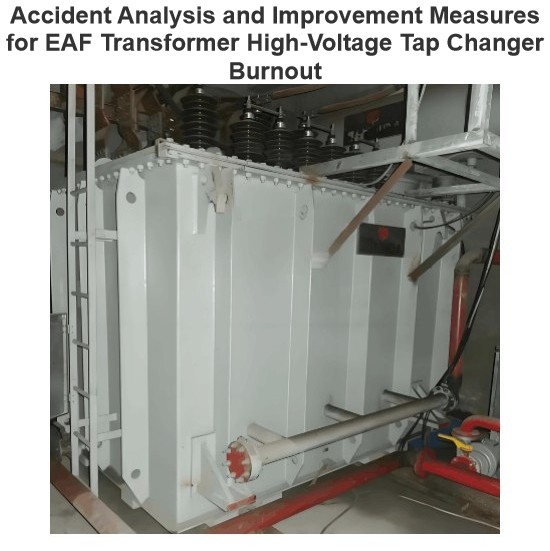
Fixed Tap Changer (Fixed Tap Changer) and On-Load tap changer (OLTC) are both devices used to regulate the output voltage of a Transformer, but they work differently and in different application scenarios. Here are the differences between the two types of transformers:
Fixed Tap Transformer (Fixed Tap Transformer)
Working principle
Fixed tap-changer transformers usually have only one or a few pre-set tap-changer positions, which determine the ratio of the transformer.
When the transformer ratio needs to be changed, the load must be disconnected, the transformer out of the operating state, manually or through auxiliary equipment to switch to the desired tap position.
This switching operation is usually performed in the event of a transformer outage, so it is also known as an Off-Load Tap Changer (OLT).
Peculiarity
Lower cost: Compared to on-load tap-changer transformers, fixed tap-changer transformers have a lower cost.
Easy maintenance: Due to the low operating frequency, the fixed tap-changer has less wear and is relatively easy to maintain.
Application limitation: It is suitable for occasions where the load changes little or does not require frequent voltage regulation.
On-Load Tap Changer (OLTC)
Working principle
The on-load tap-changer transformer can adjust the transformer ratio in a live state (that is, the load is not interrupted).
Through the internal switching mechanism, it is possible to switch between different tap positions, so as to achieve continuous voltage regulation.
This switching operation can be carried out when the transformer is running with power, so it is also known as on-load tap-changer.
Peculiarity
Dynamic regulation: It can adjust the voltage in real time according to the actual demand of the power grid to ensure the quality of power supply.
Strong adaptability: It is suitable for occasions where the load changes greatly or the voltage needs to be adjusted frequently.
Higher cost: Due to technical complexity, the cost of on-load tap-changer is higher than that of fixed tap-changer.
Complex maintenance: The on-load tap-changer needs regular maintenance to ensure reliable operation due to its complex internal structure when working in a live state.
Application scenario comparison
Fixed tap-changer transformer
Application scenario: Applicable to situations where the load is relatively stable, such as small power distribution stations and rural power grids.
Advantages: Low cost, simple maintenance.
Disadvantages: inconvenient adjustment, need power outage operation.
On-load tap-changer transformer
Application scenario: Applicable to situations where the load changes greatly and the voltage needs to be adjusted frequently, such as urban distribution power stations and large industrial users.
Advantages: can dynamically adjust the voltage, improve the quality of power supply.
Disadvantages: High cost and complex maintenance.
Sum up
The fixed tap-changer transformer is suitable for situations where the load changes little and the regulation frequency is low, while the on-load tap-changer transformer is suitable for situations where the load changes greatly and the voltage needs to be adjusted in real time. The type of transformer chosen depends on factors such as the specific application requirements, cost budget, and maintenance conditions. Although the on-load tap-changer is expensive and complex to maintain, it has been widely used in modern power systems because of its ability to regulate voltage in a live state.

 Login