As a frontline tester, I work with industrial and commercial energy storage systems daily. I know firsthand how critical their stable operation is for energy efficiency and business profitability. While installed capacity grows rapidly, equipment failures increasingly threaten ROI—over 57% of energy storage plants reported unplanned outages in 2023, with 80% stemming from equipment defects, system anomalies, or poor integration. Below, I share practical testing insights for the five core subsystems (battery, BMS, PCS, thermal management, EMS) and three - tiered inspection framework (daily checks, periodic maintenance, deep diagnostics) to help fellow practitioners.
1. Core Subsystem Testing Practices
1.1 Battery System: The "Heart" of Energy Storage
Batteries are the energy backbone, requiring comprehensive testing across three dimensions:
(1) Electrochemical Performance Testing
Capacity Testing: Follow GB/T 34131—discharge at 0.2C to cutoff voltage (25±2℃), compare actual vs. rated capacity to assess “endurance.”
Internal Resistance Testing: Use AC injection (1kHz sine wave, most representative but prone to interference), AC discharge conductance, or DC discharge methods. I recommend enhancing AC injection with Kalman filtering to reduce noise for accuracy.
SOC/SOH Monitoring: Combine ampere - hour integration, open - circuit voltage, and electrochemical impedance spectroscopy. Modified ampere - hour integration (accounting for temperature and charge - discharge states) keeps SOC errors <1%.
(2) Safety Performance Testing
Thermal Runaway Testing: Follow UL 9540A—test at cell, module, and system levels to characterize thermal runaway behavior and gas combustion properties (critical for hazard assessment).
Overcharge/Overdischarge Testing: Simulate extreme conditions per GB/T 36276 to verify safety thresholds.
Short - Circuit Protection Testing: Directly simulate external shorts to validate protective responses (a must - have for system safety).
(3) Physical Condition Testing
Visual Inspection: Check for case deformation, leaks, and legible labeling (small details hide big risks).
Connector Testing: Inspect for oxidation, corrosion, or looseness; measure contact resistance (poor connections cause operational failures).
Ingress Protection (IP) Testing: Follow GB/T 4208 to ensure reliability in harsh environments (dust, moisture, etc.).
1.2 BMS: The "Brain" of Battery Management
BMS monitors and protects batteries—focus on communication, state estimation, and protection:
(1) Communication Protocol Compatibility Testing
BMS must integrate with PCS/EMS via protocols like Modbus/IEC 61850. Use CAN analyzers (e.g., Vector CANoe) and protocol converters to test:
I use finite - state machine (FSM) - based test case generation to cover all communication scenarios.
(2) SOC/SOH Algorithm Validation
Ensure SOC errors ≤±1% and SOH errors ≤±5% (GB/T 34131):
Offline Calibration: Compare BMS estimates to lab - measured capacity / Internal Resistance
Online Testing: Simulate real - world charge - discharge cycles.
Battery simulators and BMS interface emulators automate this for efficiency.
(3) Cell Balancing Testing
(4) Safety Protection Testing
Trigger overcharge, overdischarge, and thermal protection:
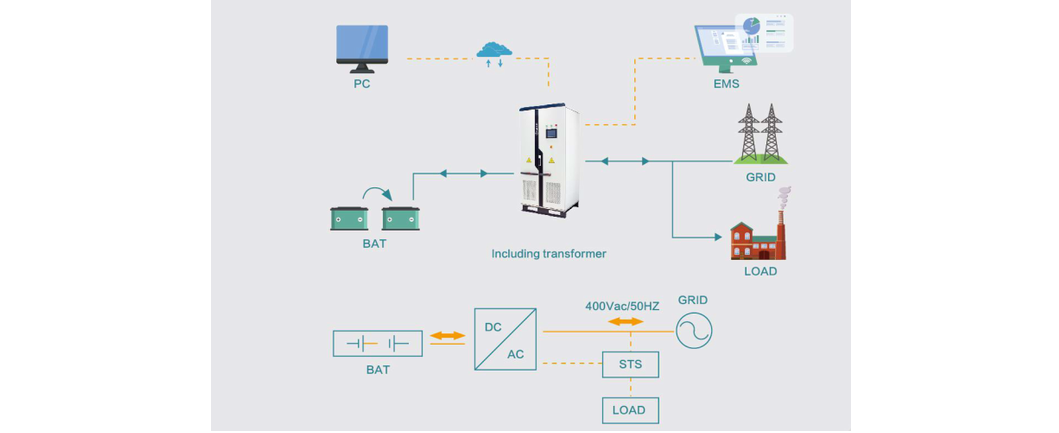
1.3 PCS: The "Power Hub" for Energy Conversion
PCS converts AC/DC—test efficiency, protection, and power quality:
(1) Efficiency Testing
Meet GB/T 34120 (≥95% efficiency at rated power):
Input - Output Comparison: Measure power at both ends to calculate efficiency.
Load Profiling: Test across loads to map efficiency curves.
Use high - precision analyzers (e.g., Fluke 438 - II) at 25±2℃ for accuracy.
(2) Protection Testing
Validate overload (110% rated load), short - circuit, and overvoltage responses. Must meet GB/T 34120.
(3) Harmonic Analysis
Ensure THD ≤5% (GB/T 14549/GB/T 19939):
Direct Measurement: Use power quality analyzers (e.g., Fluke 438 - II) to test waveforms.
FFT Analysis: Calculate harmonic amplitudes from current signals.
Test across loads and operating conditions.
(4) Output Stability Testing
Measure voltage, frequency, and power factor stability under varying loads. Use high - precision scopes/analyzers to verify compliance.
1.4 Thermal Management System: The "Cooling Guardian"
Maintains optimal battery temperature—test cooling, temperature control, and ruggedness:
(1) Cooling Performance Testing
Air - Cooled Systems: Test filter clogging (pressure drop) and fan life (vibration analysis).
Liquid - Cooled Systems: Test pipeline pressure (hydraulic sensors) and coolant flow (flowmeters).
Must meet GB/T 40090. Example: CATL uses modified K - means clustering + wavelet denoising to predict SOH with <3% error.
(2) Temperature Control Precision Testing
Uniformity: Deploy sensors across the battery pack, ensure max ΔT ≤5℃ (GB/T 40090; liquid - cooled systems target ≤2℃).
Response Time: Measure time to stabilize temperature after environmental changes.
(3) Ruggedness Testing
Conduct IP (GB/T 4208), vibration (GB/T 4857.3), and salt - spray (GB/T 2423.17) tests. Critical for extreme environments (e.g., Huawei’s Red Sea project uses distributed cooling for 50℃ conditions).
(4) Leak Detection (Liquid - Cooled Only)
Fluorescent Tracer: Add dye, inspect with UV light.
Pressure Testing: Pressurize lines to check seals.
Ensure no leaks and stable coolant pressure.
1.5 EMS: The "Commander" of Energy Management
Optimizes operation and dispatching—test algorithms, communication, and security:
(1) Algorithm Accuracy Testing
Validate load forecasting, charge - discharge optimization, and economics:
Historical Backtesting: Use past data to verify models.
Live Testing: Validate with real - time operations.
Example: CATL’s AI cuts fault detection time by 7 days, boosting efficiency by 3% and reducing losses by 25%.
(2) Communication Protocol Compatibility Testing
Ensure support for IEC 61850/Modbus (IEC 62933 - 5 - 2):
(3) Data Security Testing
Validate SM4 encryption, access control, and integrity (per national crypto standards):
Encryption: Test SM4 key exchange.
Access Control: Verify user permission enforcement.
Integrity: Ensure no data loss/corruption during transit/storage.
(4) Response Time Testing
Ensure system response ≤200ms (GB/T 40090) to handle grid demands. Trigger EMS actions and measure latency.
2. Three - Tiered Inspection Framework
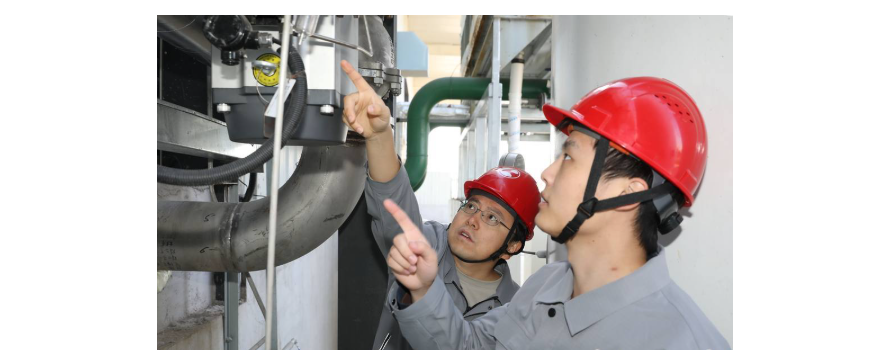
2.1 Daily Checks (Rapid Fault Detection)
Conducted per shift to catch issues early:
Scope: Battery temp/voltage/SOC, BMS communication, PCS parameters, thermal cooling, EMS data.
Tools: Thermal cameras, multimeters, oscilloscopes, communication testers.
Focus: System status and anomalies—address issues immediately.
2.2 Periodic Maintenance (Preventive Care)
Scheduled to extend lifespan:
Scope: Battery internal resistance (AC injection), BMS firmware updates/SOC calibration, PCS efficiency/harmonics, thermal system seals/IP, EMS algorithm updates/security checks.
Tools: Dedicated resistance meters, CAN analyzers, power analyzers, encryption tools.
Cadence: Tailor to equipment (e.g., quarterly battery tests, semi - annual BMS updates).
2.3 Deep Diagnostics (Root - Cause Analysis)
Triggered by recurring issues (e.g., frequent thermal runaway alerts, BMS communication failures):
Scope: Thermal runaway (UL 9540A), BMS fault diagnosis, PCS protection/efficiency deep dives, thermal system leak/vibration tests, EMS algorithm validation/security scans.
Tools: Thermal runaway chambers, vibration analyzers, encryption scanners, fault injectors.
Goal: Identify root causes for targeted repairs/upgrades.
3. Best Practices: Standardization, Data - Driven Testing, Prevention
3.1 Standardization
Follow IEC 62933 - 5 - 2/GB/T 40090 - 2021:
Process: Define preparation (scope, tools, environment), execution (testing + data logging), and analysis (reporting).
Reports: Include equipment specs, test conditions, data, results, and recommendations (per GB/T 40090 requirements for traceability).
3.2 Data - Driven Testing
Build a unified data pipeline (battery temp, voltage, SOC, PCS efficiency, THD, etc.). Use AI (LSTM, random forests) and digital twins:
Example: CATL’s AI predicts SOC errors <1% and SOH decay with >95% accuracy, issuing 7 - day advance thermal runaway alerts.
Example: Huawei uses digital twins to simulate extreme conditions, pre - identifying failures.
3.3 Preventive Testing
Schedule proactive checks based on equipment behavior:Cadence: Quarterly cell balancing, semi - annual BMS updates, annual PCS harmonics/thermal seals checks, quarterly EMS algorithm updates.
Frontline testing demands rigor, expertise, and practical know - how. Mastering these subsystems, tools, and strategies ensures energy storage systems deliver reliability and efficiency—safeguarding business and grid operations. This guide distills years of hands - on experience—I hope it empowers fellow testers to raise the bar in energy storage reliability.

 Login