Search


What are the differences between compact substations for ordinary residential communities and those for industrial enterprises?

Residential European vs industrial American substations: Load capacity, voltage, short-circuit, harmonics, IP rating, GB/T & IEC standards differ significantly.

Vziman
Field: Manufacturing
10Year<
China
Add us on Google

In the field of power equipment, the differences between compact substations for residential communities (residential substations) and those for industrial enterprises (industrial substations) are determined by their respective load characteristics and environmental requirements.

Core Difference Comparison Table

Characteristic Residential Substation Industrial Substation
Typical Capacity 100–630 kVA 630–5000 kVA (or even higher)
Voltage Level Primarily 10kV / 0.4kV 10kV, 35kV / 0.4kV or higher
Load Characteristics Large seasonal fluctuations, significant peak-valley differences; mainly lighting and household appliances Primarily continuous loads, stable operating conditions; mainly motors and large equipment
Transformer Type Primarily dry-type (SC type), some oil-immersed Both dry-type and oil-immersed; oil-immersed (SH/SBH series) preferred for large capacities
Short-circuit Withstand Capability General (≤25 kA) High (31.5 kA or 40 kA common)
Harmonic Suppression Demand Low High (many harmonic sources such as VFDs and arc furnaces)
Metering Method High-voltage supply, low-voltage metering (0.4kV at user side) High-voltage supply, high-voltage metering (10kV side, with higher accuracy requirements)
Enclosure Protection Rating IP33D / IP44 (outdoor aesthetics prioritized) IP54 / IP65 (dustproof, waterproof, corrosion-resistant prioritized)
Reactive Power Compensation Primarily collective compensation, smaller capacity Combined collective and individual compensation, larger capacity, supporting dynamic compensation (SVG/TSC)
Protection Configuration Simple: primarily overcurrent and short-circuit protection Complete: full suite of relay protection including differential, overcurrent, earth fault, overtemperature, etc.
Communication / Intelligence Optional AMI/remote meter reading Standard SCADA/RTU interfaces, supporting industrial Ethernet
Typical Standards GB/T 17467-2020, IEC 60076 (distribution level) GB/T 17467-2020 + GB/T 6451-2023 (power level), some ANSI/IEEE

Detailed Explanation of Key Differences

1.Capacity and Voltage

  • Residential substations typically use 200–400 kVA as the main configuration, with the power supply radius covering one or several residential buildings.

  • Industrial substations commonly use 1000–2500 kVA and must be capable of continuous full-load or even overload operation.

iee-business

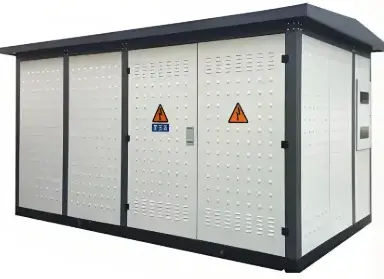
Physical Photos of European-type Prefabricated Substation for Residential Communities

2. Transformer Loss Level

  • Residential: Priority given to SC(B)11/SC(B)13 dry-type transformers (low noise, oil-free, maintenance-free, suitable for residential areas).

  • Industrial: For large capacities, priority given to SH15/S13 amorphous alloy oil-immersed transformers (extremely low no-load loss, better economy).

3. Short-circuit Current and Busbar Specifications

  • Industrial sites have stronger power grids, with short-circuit currents reaching 40 kA, requiring larger busbar cross-sections and higher rated short-time withstand currents for switching devices (circuit breakers, disconnectors).

What are the differences between compact substations for ordinary residential communities and those for industrial enterprises?

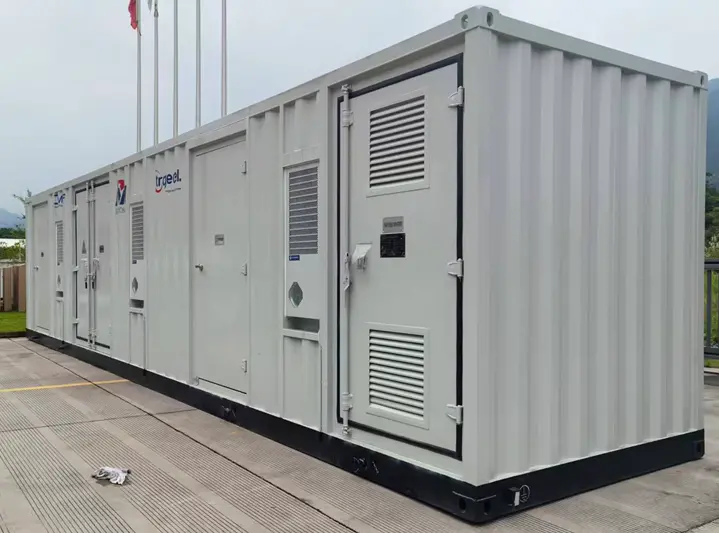
Physical Photos of YB Series Compact Substation for Industrial Plants

  • Residential substations are typically designed for 20–25 kA.

4. Harmonics and Power Quality

  • Factories contain many harmonic sources such as VFDs, arc furnaces, and UPSs. Industrial substations require active/passive filtering devices on the low-voltage side.

  • Residential areas have few harmonic sources and generally do not require dedicated harmonic mitigation.

5. Enclosure and Installation Scenarios

Scenario Residential Substation Industrial Substation
Landscaped Community European-style stone-look enclosure, low noise Not applicable
Factory Area — Large metal enclosure, anti-corrosion spray coating, with maintenance walkways
Underground Garage Small compact type, oil-free design —
Chemical / Coastal — Stainless steel or galvanized enclosure, IP65, salt-fog resistant

6. Intelligence Level

  • Industrial substations typically have built-in RTU/DTU, uploading real-time operating data (current, temperature, switch status) to SCADA systems.

  • Residential substations focus mainly on remote meter reading (AMI) and simple fault alarming.

Edited From:Edwiin

Give a tip and encourage the author!

Comments

Share your question or perspective
WhatsApp
Send inquiry
+86
Click to upload file
Download
Get the IEE Business Application
Use the IEE-Business app to find equipment, obtain solutions, connect with experts, and participate in industry collaboration anytime, anywhere—fully supporting the development of your power projects and business.
Login
or continue with
New here?
Register