Learn the key advantages of Z-connected earthing transformers: zero-sequence impedance, fault current handling, and stable neutral grounding.

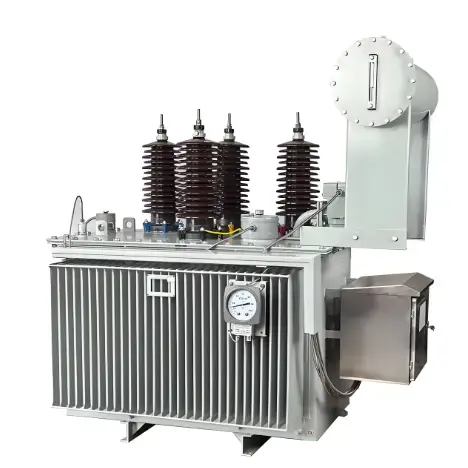
Each phase winding of a Z-type transformer is split into two halves wound in opposite directions on different core limbs. When a single-phase ground fault generates zero-sequence current, the two half-windings on the same core limb produce equal and opposite zero-sequence magnetomotive forces that cancel each other out.
This allows zero-sequence flux to circulate directly within the core rather than through the high-reluctance leakage path, presenting extremely low impedance to zero-sequence currents. The resulting low-impedance path for ground fault current ensures sensitive and reliable protection relay operation.
The design capacity of a Z-type transformer winding is substantially lower than the system nominal capacity. For the same system capacity, this dramatically reduces copper and silicon steel consumption, lowering manufacturing cost, physical size, and weight, while saving substation floor space and overall investment.
The Z-type transformer provides a reliable artificial neutral point for connecting arc suppression coils or neutral grounding resistors. During a single-phase fault, an arc suppression coil injects inductive current to compensate the capacitive current at the fault point, enabling arc extinction.
A neutral grounding resistor supplies sufficient zero-sequence current for protection systems to isolate the faulty line quickly.
Because the two half-windings of each phase are wound on different core limbs with opposite polarity, third-harmonic electromotive forces cancel within the winding.
When combined with a three-phase five-limb core or three single-phase transformer banks, third-harmonic flux circulates through the side yokes in a closed loop, eliminating third-harmonic contamination, reducing neutral-point displacement voltage, and preventing ferromagnetic resonance overvoltage.
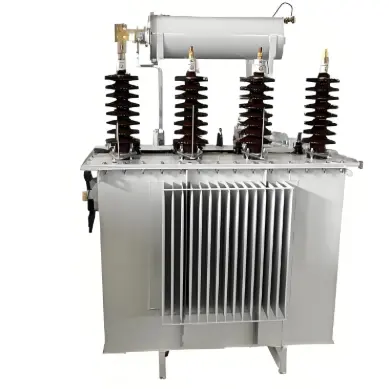
Under asymmetric operating conditions, the Z-type connection utilizes its low zero-sequence impedance to form a zero-sequence current path, automatically balancing the three-phase magnetomotive forces and preventing core saturation from accumulated zero-sequence flux.
This ensures thermal stability during single-phase faults or unbalanced three-phase loading. A low-voltage secondary winding (e.g., ZNyn11 connection) can be added, enabling a single unit to simultaneously provide the HV-side neutral point and supply LV station service power — achieving equipment integration and investment optimization.
The Z-type earthing transformer, with its distinctive electromagnetic structure and winding design, has become the core equipment of modern distribution network grounding systems. It physically solves the grounding challenge of systems without a neutral point by providing a reliable connection point for arc suppression coils and grounding resistors.
Electrically, it achieves the ideal characteristic of high impedance to positive- and negative-sequence currents while presenting low impedance to zero-sequence currents, ensuring precise protection operation. Its comprehensive performance in harmonic suppression, unbalanced load handling, and dual-use as a station service transformer balances technical advancement with engineering practicality.
Edited From:Leon








 Login

