Why Can't VT Be Shorted & CT Be Opened? Explained
We all know that a voltage transformer (VT) must never operate short-circuited, while a current transformer (CT) must never operate open-circuited. Short-circuiting a VT or opening the circuit of a CT will damage the transformer or create hazardous conditions.
From a theoretical standpoint, both VTs and CTs are transformers; the difference lies in the parameters they are designed to measure. So why, despite being fundamentally the same type of device, is one prohibited from short-circuit operation while the other cannot be open-circuited?
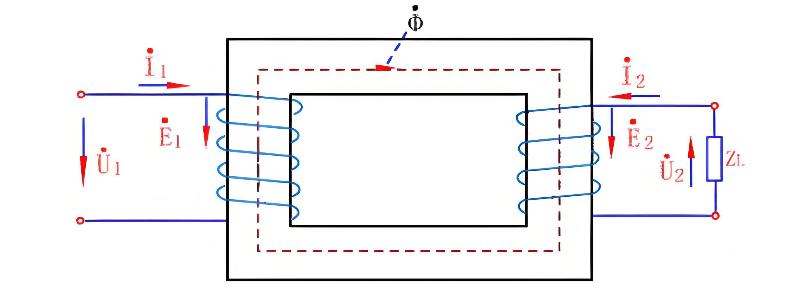
Under normal operation, a VT’s secondary winding operates in a near-open-circuit condition with a very high load impedance (ZL). If the secondary circuit shorts, ZL drops nearly to zero, causing a massive short-circuit current to flow. This can destroy secondary equipment and pose serious safety risks. To protect against this, a VT can have fuses installed on its secondary side to prevent damage from a short. Where possible, fuses should also be installed on the primary side to protect the high-voltage system from faults in the VT’s high-voltage winding or connections.
In contrast, a CT operates with a very low impedance (ZL) on the secondary side, effectively in a short-circuit state during normal operation. The magnetic flux generated by the secondary current opposes and cancels the flux from the primary current, resulting in a very small net excitation current and minimal core flux. Thus, the induced electromotive force (EMF) in the secondary winding is typically only a few dozen volts.
However, if the secondary circuit opens, the secondary current drops to zero, eliminating this demagnetizing effect. The primary current, unchanged (since ε1 remains constant), becomes entirely excitation current, causing a dramatic increase in core flux Φ. The core quickly saturates. Given that the secondary winding has many turns, this results in a very high voltage (possibly reaching several thousand volts) across the open secondary terminals. This can break down insulation and poses a severe risk to personnel. Therefore, an open secondary circuit on a CT is absolutely prohibited.
Both VTs and CTs are transformers in principle—VTs are designed to transform voltage, while CTs transform current. So why can a CT not be open-circuited while a VT cannot be short-circuited?
In normal operation, the induced EMFs ε1 and ε2 remain essentially constant. A VT is connected in parallel with the circuit, operating at high voltage and very low current. The secondary current is also extremely small, nearly zero, forming a balanced condition with the near-infinite impedance of an open circuit. If the secondary is shorted, ε2 remains constant, forcing the secondary current to increase drastically, burning out the secondary winding.
Similarly, for a CT connected in series with the circuit, it operates at high current and very low voltage. The secondary voltage is nearly zero under normal conditions, forming a balanced state with a near-zero impedance (short-circuit). If the secondary circuit opens, the secondary current collapses to zero, and the entire primary current becomes excitation current. This causes a rapid surge in magnetic flux, driving the core into deep saturation and potentially destroying the transformer.
Thus, although both are transformers, their different applications lead to completely different operational constraints.