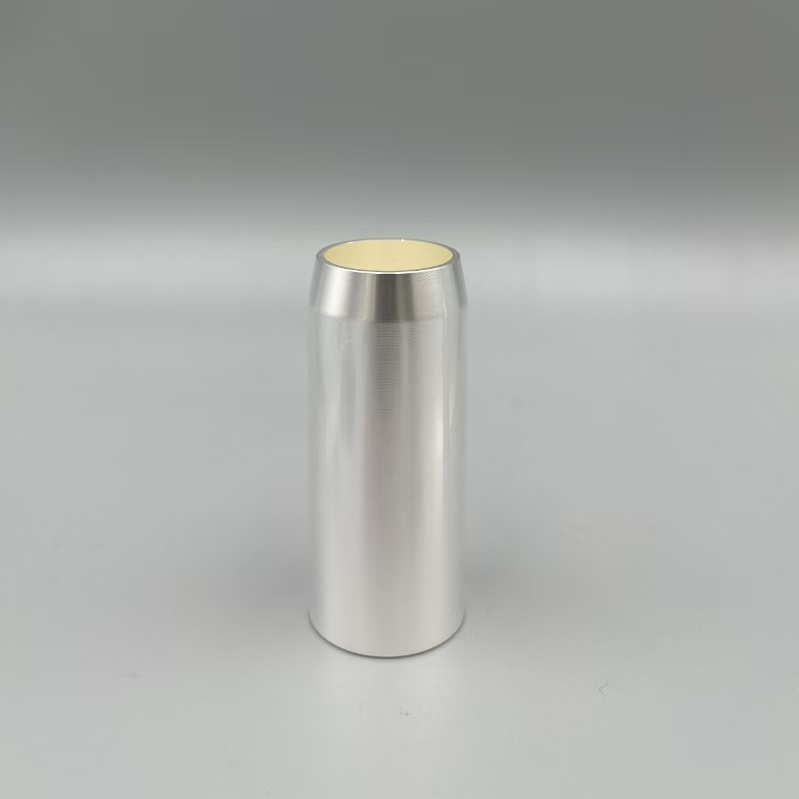
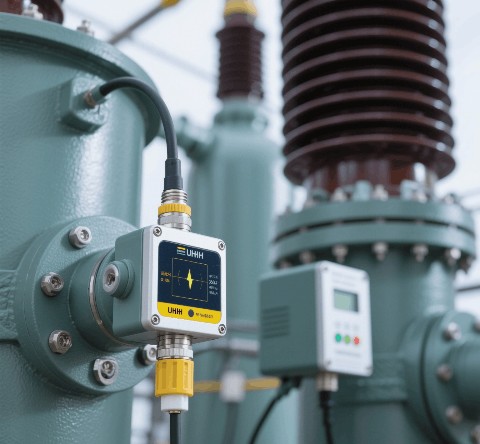
In most types of Gas - Insulated Switchgear (GIS), the Ultra - High - Frequency (UHF) energy is concentrated within the frequency range of 100 MHz to 2 GHz. The frequency response of the sensor is contingent upon its size, shape, and the connection method employed. Most sensors are, in themselves, resonant structures at UHF frequencies, and this characteristic can be exploited to enhance performance. Typical sensors are depicted in the figure.
Internal sensors are typically installed in a recess within the enclosure. In this area, the radial component of the electric field is the most significant. Since degassing of the GIS chambers is essential, internal sensors must be installed during the manufacturing of the GIS or retrofitted during maintenance. These sensors commonly take the form of a metal disc that is insulated from the GIS enclosure by a dielectric material. The measurement connection is established through a coaxial connector, which is usually attached to the center of the disc.
Externally mounted sensors (for instance, at an inspection window or barrier insulator) will be influenced by the field patterns in the structure on which they are mounted. In such cases, the mounting arrangement should be regarded as an integral part of the sensor. External sensors are installed in an aperture in the chamber wall, such as an inspection window or an exposed barrier edge.

 Login