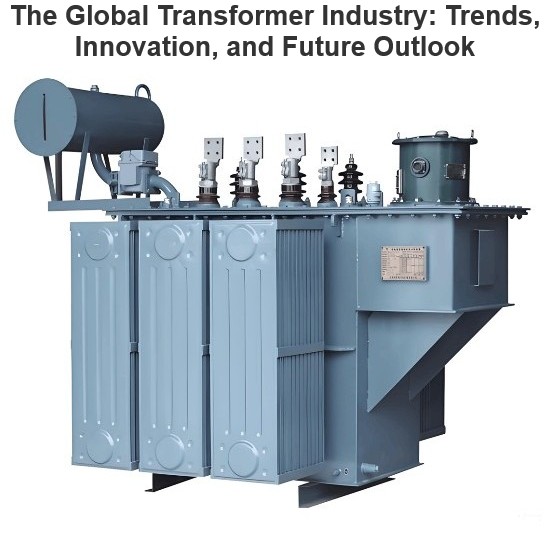
Transformer HV and LV Bushings — Core Functional and Structural Differences

Transformer HV and LV bushings: core functional and structural differences for insulation, current flow, and termination in power transformers.

Vziman
Field: Manufacturing
10Year<
China
Add us on Google
 

I. Core Function (Highly Consistent)

Both HV and LV bushings serve as the primary insulation devices that extend transformer windings through the grounded tank. They share three core functions:

  • Electrical insulation and lead exit: Safely conduct the internal winding leads out of the grounded tank while withstanding the voltage between the lead and the tank wall to prevent breakdown.
  • Mechanical support and current carrying: Carry the continuous load current and fault current as a current-carrying element; simultaneously anchor the lead against external line tension, wind load, and short-circuit electrodynamic forces.
  • Sealing and isolation: Seal the transformer tank to prevent oil leakage and the ingress of moisture or contaminants.

iee-business

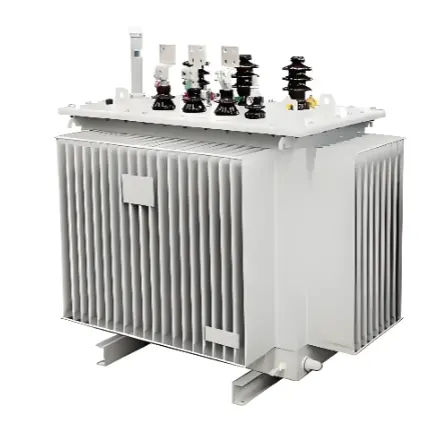
Oil-Immersed Power Transformer Source manufacturer

II. Fundamental Structural Differences

Because the HV side is voltage-driven while the LV side is current-driven, their design philosophies diverge sharply.

1. Insulation Structure — Field Control vs. Basic Insulation

  • HV bushing (capacitive graded design): The electric field stress on the HV side is severe. Simply increasing insulation thickness would produce an unacceptably large component. Hence, capacitive-graded construction (oil-impregnated paper or resin-impregnated paper) is used for 110 kV and above. Multiple layers of insulating paper interleaved with aluminum foils form a capacitive core. The series-capacitor voltage-divider principle forces uniform radial and axial field distribution, achieving high insulation strength in a compact envelope.
  • LV bushing (solid porcelain or resin insulation): The LV side operates at low voltage with modest field stress, requiring no complex grading. Simple solid porcelain bushings or resin-cast bushings are used, relying on the porcelain's inherent insulation strength and creepage distance. Air or epoxy resin serves as the primary dielectric.

2. Conductor and Current-Carrying Design — Small Cross-Section vs. Large Cross-Section

  • HV bushing: By transformer principle, the HV side sees high voltage and low current. The internal conductor cross-section is relatively small, placing modest demands on heat dissipation and mechanical strength.
  • LV bushing:The LV side sees low voltage but very high current. The conductor is invariably a large hollow copper tube or copper bar. The hollow bore not only increases the effective cross-section but also allows internal oil circulation for cooling under high current, while providing ample margin against electrodynamic forces during faults.

3. Accessories and Monitoring — Precision Instrument vs. Simple Termination

  • HV bushing:A precision insulating component with complex internals. A small oil conservator is often fitted at the top to accommodate oil expansion/contraction. A grading shield at the bottom refines the tail-end field. A test tap (last screen) is provided at the flange. The test tap must be reliably grounded during normal operation to maintain proper internal field distribution; during de-energized maintenance it serves as a test terminal for measuring tan δ and capacitance to detect internal moisture or aging.
  • LV bushing: Compact structure with no internal grading devices, oil conservator, or test tap. Connection relies on external terminals for simple mechanical fastening and electrical connection.

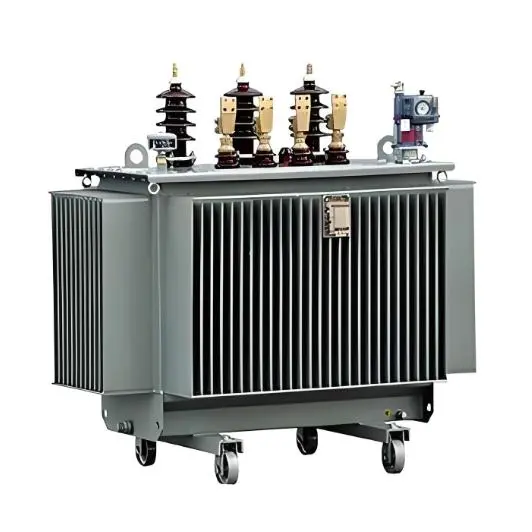
Medium voltage hermetically sealed Oil-immersed Power Transformer 15kV 20kV 27kV

Medium voltage hermetically sealed Oil-immersed Power Transformer

4. External Profile and Anti-Contamination Design

  • HV bushing : To prevent surface flashover under high voltage, the external sheds (porcelain or silicone rubber) are densely spaced with a long creepage path. The overall profile is slender and tall.
  • LV bushing :Sheds are relatively sparse. The overall profile is short and stout.

Summary

The essential difference between HV and LV bushings is that the HV bushing is a product of electric field control and precision insulation — complex in structure with numerous accessories — whereas the LV bushing is a product of high-current conduction and basic insulation — simpler in structure, oriented toward mechanical strength and current-carrying capacity.

Edited From:Leon

Give a tip and encourage the author!
Topics:

Comments

Share your question or perspective
WhatsApp
Send inquiry
+86
Click to upload file
Download
Get the IEE Business Application
Use the IEE-Business app to find equipment, obtain solutions, connect with experts, and participate in industry collaboration anytime, anywhere—fully supporting the development of your power projects and business.
Login
or continue with
New here?
Register