Karon, adunay usa ka tibuok nga pasabot ang Tsina sa karon nga butang. Ang mga literatura nga gisugyot niana adunay tipikal nga pag-organisa sa proteksyon sa grounding fault sa low-voltage distribution system sa nuclear power plant. Batas sa analisis sa mga kasinatian sa domestic ug international diin ang grounding fault sa low-voltage distribution system sa nuclear power plant miresulta sa maloperation sa zero-sequence protection sa transformer, ang underling nga mga dahon nakakita. Sumala pa, gi-suggest ang pag-improve sa grounding fault protection measures sa auxiliary power system sa nuclear power plant batas sa tipikal nga pag-organisa.
Ang mga literatura nagtuon sa variation patterns sa differential current ug restraint current, ug pinaagi sa pagkalkula sa ratio sa pagitan sa differential current ug restraint current, ang quantitative analysis gihatag alang sa adaptability sa main transformer ratio differential protection sa sulod sa katigayunan nga fault conditions.
Apan, ang uban pang mga problema ang gipahibalo nga adunay lisod nga kinahanglan i-resolve. Taliwala, ang excessive grounding resistance, improper selection sa grounding methods, ug inadequate lightning protection grounding measures—ang tanang isyu mahimong mag-resulta sa transformer failures ug mahimo pud mohatag og safety accidents. Dili na lang, importante nga mas daghan pa ang imbestigasyon ug analisis sa teknolohiya sa transformer grounding protection sa construction sites, sumala sa pinaka-bag-ong research findings ug technological developments.
Pinaagi niining imbestigasyon, dili lang ang teoretikal nga level sa teknolohiya sa transformer grounding protection ma-enhance, apan ang practical ug feasible nga solusyon ug mga hakbang mahimo usab nga hatagan ang actual nga construction projects. Ginadugay niana nga makapuyo ang higit pang atensyon ug importansya gikan sa scholars alang sa teknolohiya sa transformer grounding protection sa construction sites, ug collectibong mogamit sa development sa field.
1 Paghatag sa Transformer Grounding Methods
Ang tradisyonal nga neutral point direct grounding method sa transformer mahimong mogamit og excess nga short-circuit currents sa certain conditions, mahimong maka-damage sa equipment. Dili na lang, gi-suggest ang neutral point low-resistance grounding method. Neutral point low-resistance grounding usa ka effective nga approach sa grounding sa transformer nga makakontrol sa grounding current sa pamamaraan sa pag-connection sa low resistance sa pagitan sa neutral point sa transformer ug earth. Kini nga grounding method dili ra makaregulate sa magnitude sa grounding current ug mabawasan ang impact sa lightning ug overvoltage sa transformers, apan makalimitar usab sa short-circuit currents ug mabawasan ang risk sa damage sa equipment.
Partikular, panahon sa implementasyon sa neutral point low-resistance grounding sa transformers sa construction sites, ang unang step mao ang paghatag sa appropriate nga grounding resistance value. Sumala sa Ohm's law, ang grounding resistance value inversely proportional sa grounding current ug grounding voltage. Dili na lang, sa pagpili sa grounding resistance value para sa neutral point low-resistance grounding method, ang resistance value kinahanglan hatagan og priority, ang calculation formula as follows:

Sa formula, R₀ represents the resistance value of the grounding resistor; U₀ represents the average rated voltage of the electrical system in construction; I₀ represents the current flowing through the neutral point resistor. Sumala sa calculation sa formula (1), ang appropriate nga grounding resistance value kinahanglan hatagan ug dapat makalimitar sa short-circuit current samtang walay excess impact sa transformer.
Sunod mao ang paghatag sa parameters sama sa cross-sectional area ug material sa grounding wire. Ang material sa grounding wire kinahanglan may excellent conductivity ug corrosion resistance aron masiguro ang service life ug reliability. Sa study, comprehensive consideration sa actual conditions sa transformer grounding sa construction sites, ug gitangtang ang tinned copper wire isip grounding conductor—material nga may good conductivity, convenient wiring, ug strong anti-corrosion capabilities, fully meets the requirements of the neutral point low-resistance grounding method.
Ang cross-sectional area sa grounding wire directly affects its resistance value, which further influences the grounding current. Therefore, the appropriate cross-sectional area of the grounding wire is selected based on the following formula:

Sa formula, S represents the cross-sectional area of the grounding wire in the neutral point low-resistance grounding method; η represents the ratio coefficient between the neutral point grounding resistance and the transformer grounding resistance; T represents the allowable temperature rise of the grounding wire. Finally, the burial depth of the grounding electrode must be determined. To ensure stable operation of the grounding electrode in harsh environments, its burial depth should exceed the frozen soil layer thickness at the construction site, thereby comprehensively guaranteeing the reliability and safety of the grounding system.
In summary, when implementing grounding for transformers in construction sites, a neutral point low-resistance grounding method is adopted, with reasonable settings for grounding parameters including resistance value, grounding wire cross-sectional area, material selection, and burial depth of the grounding electrode, providing a solid foundation for stable transformer operation during construction.
2 Design of Transformer Grounding Protection Scheme
Batasan sa uban nga sulod, ang paggamit sa neutral point low-resistance grounding method gipili sa teknolohiya sa proteksyon sa pag-ground sa transformador para sa mga construction site. Kini nga metodo sa pag-ground mahimong maabot ang epektibong kontrol sa ground current sa transformador pinaagi sa mabatong resistance. Ang uban nga klase sa sayop mahimong maisulod samtang nagoperasyon ang transformador, ug ang labing kasagaran mao ang single-phase grounding faults. Ang single-phase grounding fault nagpasabot sa short circuit tali asa ka phase winding sa transformador ug ang lupa, samantalang ang uban pang duha ka phase adunay normal nga operasyon. Kini nga sayop nagresulta sa pagbag-o sa potential sa neutral point sa transformador, resulta niana ang imbalance sa three-phase currents. Pinaagi niining katangian, gi-propose ang usa ka proteksyon nga gisaka sa imbalance sa three-phase currents sa mga transformador:
Ang unang bahin mao ang zero-sequence section I protection, ang iyang setting calculation formula mao kini:

Sa formula, ang I₁ mao ang zero-sequence protection operating current value sa mga transformador sa construction; ang γ₁ mao ang reliability coefficient; ang γ₂ mao ang zero-sequence branch coefficient; ug ang I₂ mao ang zero-sequence protection operating current value sa adjacent components sa mga transformador sa construction. Pagkahuman sa pagkalkula sa current value alang sa zero-sequence section I protection batas sa formula (3), ang operating time sa section I protection karanihan gitakda nga mas dako sa tunga 0.5 seconds sa operating time sa next-level zero-sequence protection.
Sumusunod mao ang zero-sequence section II protection. Ang calculation formula alang sa iyang protection current value sama sa zero-sequence section I protection, ang protection current makukuha usab batas sa formula (3), apan ang operating time walay kalain, kinahanglan og daghan sa tunga 0.3 seconds batas sa operating time sa zero-sequence section I protection.
Sa wala na, may-ada ang zero-sequence voltage protection. Sa pagkonsidera sa kabuok, samtang naglakip sa single-phase grounding faults sa mga transformador sa construction site, ang neutral point mahimong mogawas sa natural nga sensitivity, ang operating voltage sa zero-sequence voltage protection kinahanglan mas baba sa maximum zero-sequence voltage nga mogawas sa protection installation point samtang naglakip sa single-phase grounding faults. Ang value sa zero-sequence voltage protection voltage mahimong makapugos gamit ang sumusunod nga formula:

Sa formula, ang U₁ mao ang operating voltage sa zero-sequence voltage protection; ang U₂ mao ang rated voltage sa tulo ka secondary windings.
Bilin, aron makabuo og kompletong three-phase current imbalance protection scheme, kinahanglan og kompleho nga mga kalkula, kasama ang mga calculation formulas alang sa zero-sequence section I, zero-sequence section II, ug zero-sequence voltage protection. Ang derivation ug application sa mga formula mao ang makatabang mas accurate nga mahatagan og detalye ang klase ug severity sa single-phase grounding faults sa construction sites. Kini nga proteksyon scheme makakapabilis sa pag-locate ug pag-isolate sa grounding faults, ug mapadami sa probabilidad sa power outage incidents nga gisulay sa grounding faults. Samtang gipagsama sa neutral point low-resistance grounding method, gibuo ang comprehensive grounding protection structure alang sa mga transformador sa construction, naghatag og matigas nga proteksyon alang sa safe operation sa mga transformador.
3 Experimental Analysis
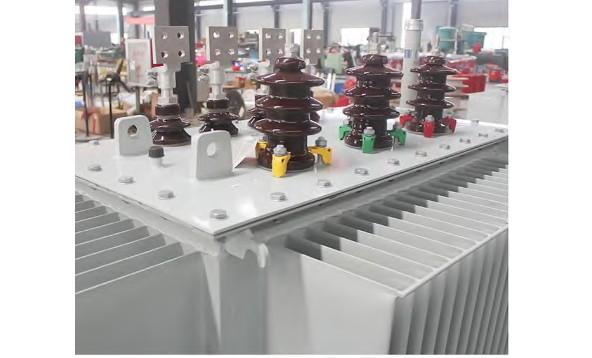
Arong mapapatunayan ang effectiveness sa nabanggit nga teknolohiya sa pag-ground sa transformador sa mga construction site, kini nga chapter gigamiton ang PowerFactory simulation software aron magbutang ug eksperimento sa simulation sa pag-ground sa transformador. Unsa mao ang unang gibuhat mao ang pagbuhat og modelo sa building electrical system sa simulation software, kasama ang mga transformador, high ug low voltage lines, loads, ug uban pang equipment. Table 1 nagpakita sa modelo ug parameter specifications sa experimental transformador.
Item |
Parametro |
Modelo |
S11-M-1600/10 kVA |
Kapasidad nga Gin-Rating |
1600 kVA |
Voltaje nga Gin-Rating |
10 kV/0.4 kV |
Kuryente nga Gin-Rating |
144.2 A/2309 A |
Kuryente sa Walay Load |
≤4% |
Impedance sa Short-circuit |
≤6% |
Ang espesipikong estraktura sa transformer gitungha sa Figure 1.
Pagkatapos, gisagol ang mga eksperimento sa simulation sa grounding protection sa transformer pinaagi sa paggamit sa tulo ka lain-laing metodo sa grounding: neutral point low-resistance grounding, neutral point high-resistance grounding, ug neutral point grounding nga may arc-suppression coil. Sa pag-set sa mga grounding methods, para sa neutral point low-resistance grounding method, isulti ang resistor nga may gamay nga resistance value, specifically set to 0.5 Ω, aron simularon ang epekto sa low-resistance grounding; para sa neutral point high-resistance grounding method, isulti ang resistor nga may dako nga resistance value, set to 10 Ω, aron simularon ang katangian sa high-resistance grounding.
Sa panahon sa eksperimento, gisimularon ang mga level sa grounding current sa transformer sa single-phase grounding faults. Ang espesipikong lugar sa fault gitungha sa midpoint sa usa ka phase line sa low-voltage side sa transformer, ug ang fault resistance gitungha sa 100 Ω aron simularon ang grounding resistance sa panahon sa grounding fault. Sa proseso sa simulation sa fault, gisagol ang high sampling rate data acquisition system aron irekord ang grounding current data, ug ang sampling frequency gitungha sa 1000 times per second aron masigurado ang pagkuha sa subtle changes sa grounding current.
Bisan sa pagrekord sa grounding current value sa moment sa pag-occur sa fault, gisulod ang daghang time points, kasagaran 0.1 s, 0.5 s, 1 s, 5 s, ug 10 s human sa pag-occur sa fault, aron obserban ang mga changes sa grounding current sa lain-laing time points. Aron iwasan ang randomness sa experimental results, girekord ang grounding current data 10 ka ulang, ug ang average value giangkon ingon final experimental result. Ang Figure 2 maghatag og komparasyon sa mga epekto sa grounding protection sa transformer sa lain-laing mga grounding methods.
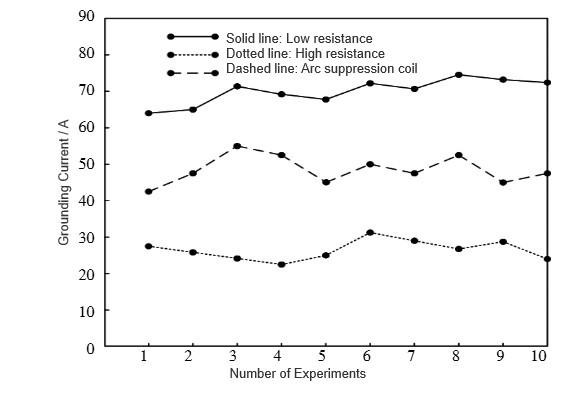
Gisubli sa Figure 2, ang simulation analysis nagsugyot sa komparasyon sa mga characteristics sa grounding current sa transformers sa single-phase faults para sa neutral point low-resistance grounding, high-resistance grounding, ug arc-suppression coil grounding methods. Ang mga resulta nagpakita nga, sa panahon sa single-phase grounding fault sa transformers, ang grounding current sa neutral point low-resistance grounding method labi ka dako kaysa sa neutral point high-resistance grounding ug neutral point arc-suppression coil grounding methods.
Sa nadisenyo nga grounding protection technology, ang average transformer grounding current mao ang 70.11 A, na is usa ka increase sa 43.44 A ug 21.62 A respektibo kaysa sa control group technologies. Kini makatabang sa pagbawas sa intensity sa arc sa fault point ug pagpasabot sa self-clearing capability sa fault. Kini nagpakita nga ang nadisenyo nga grounding protection technology maoy feasible ug reliable, suitable sa practical application sa single-phase grounding faults sa transformers, ug efektibong protektahan ang operational safety sa transformers sa construction sites.
4.Konklusyon
Ang grounding protection technology para sa transformers sa construction nagproposa og zero-sequence overcurrent protection scheme batasan sa neutral point low-resistance grounding method. Pinaagi sa comparative experiments, natun-an ang superiority sa nadisenyo nga grounding protection technology sa main protection para sa transformer single-phase faults. Bisag adunay mga research achievements, adunay yarihi nga mga limitasyon. Taliwala niini, ang experimental conditions ug data samples mahimong dili comprehensive enough, kinahanglan pa usab og pag-validate sa universality sa mga konklusyon.
Ang future research mahimong mogfocus sa sumala nga mga areas: unangtana, pag-expand sa scope sa experiments ug pag-increase sa data samples aron mapausab ang accuracy ug universality sa mga konklusyon; ikaduha, pag-conduct sa in-depth studies sa uban pang mga protection schemes ug technologies aron explorar ang mas efficient ug reliable nga mga transformer grounding protection methods; ug ikatulo, pag-develop og higher-performance protection devices ug systems sa combination sa practical engineering applications.