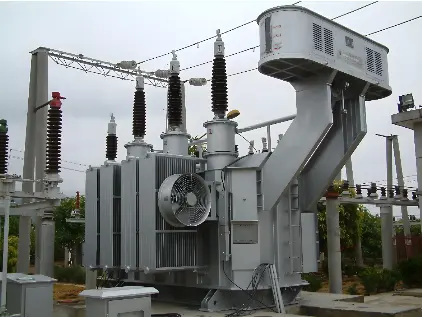
Learn power transformer core fault analysis – common causes, diagnostic techniques, and repair methods for reliable operation.

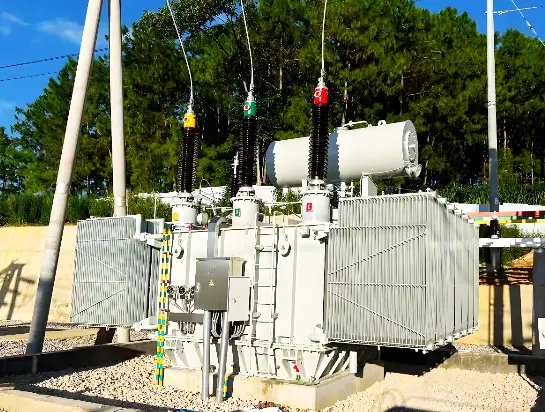
During operation, the core resides within the winding electric field. Due to non-uniform capacitive voltage distribution, the core develops a floating potential. To prevent intermittent partial discharge, the core must be reliably grounded at a single point. If two or more grounding points occur, a closed loop forms between them. The main magnetic flux passing through this loop induces a circulating current (which can reach tens of amperes), triggering a chain of faults: localized overheating, insulation aging, and oil deterioration.
| Category | Specific Causes |
|---|---|
| Manufacturing & Installation Residues | Metallic debris (nails, welding rods, tools) left in the tank; transport positioning pins not rotated or removed |
| Structural Contact | Clamping side plates too close to core limbs; lamination warpage contacting clamps; yoke tie-rod bushings too long; thermometer pocket sleeves too long contacting upper clamping structure |
| Insulation Failure | Insulation cardboard between lower clamp foot and yoke detached or damaged; wooden spacers dampened or contaminated with conductive sludge, reducing insulation resistance to near zero |
| Sludge Bridging | Metal particles from submerged oil pump bearing wear accumulating at tank bottom, forming conductive bridges under electromagnetic force |
| Method | Key Points |
|---|---|
| Clamp-on Ammeter (Online) | Measure grounding lead current; normal range is milliamp level (<100 mA); >1 A warrants attention |
| Dissolved Gas Analysis / DGA (Energized) | Significant rise in total hydrocarbons dominated by CH₄ and C₂H₄ indicates bare-metal overheating; presence of C₂H₂ suggests unstable/arcing grounding |
| Insulation Resistance Test (De-energized) | 2500 V megger test of core-to-ground insulation: ≥200 MΩ = good; hundreds of Ω = high-resistance grounding; 1–2 Ω = metallic (solid) grounding |
Temporary Measures (Without Outage):
Comprehensive Repair (De-energized):
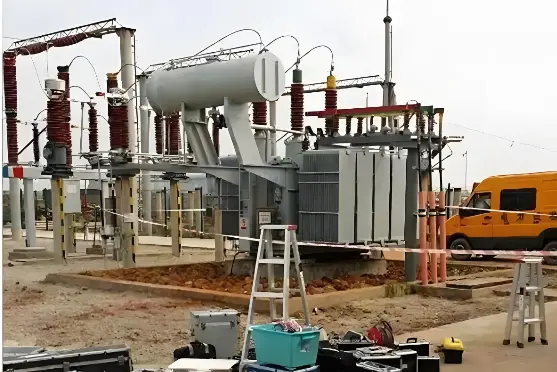
Figure 4 On‑site maintenance scene of de‑energized power transformer
| Category | Specific Causes |
|---|---|
| Core Inherent Defects | Inter-lamination short circuits; loose laminations; excessive edge burrs; uneven stacking gaps; misalignment causing voids |
| Grounding Anomalies | Poor grounding; yoke tie-rod grounding; through-core bolt insulation rupture and carbonization |
| Structural Issues | Clamps contacting core; through-core bolts too long; grounding copper strip too long creating multi-point grounding |
| External Factors | Winding short circuits; prolonged overloading; system overvoltage; core stray flux |
| Cooling Deterioration | Low oil level; oil degradation; loose spacers blocking oil ducts |
| Aspect | Actions |
|---|---|
| Routine Monitoring | Periodic measurement of core grounding current (normal <100 mA); regular DGA with focus on total hydrocarbon trend |
| Preventive Testing | Annual preventive tests and major overhauls: prioritize core insulation resistance, grounding integrity, and lamination tightness checks |
| Operational Control | Strictly prohibit long-term over-excitation and overloading; tightly control rated flux density; ensure sealing and moisture prevention |
| Manufacturing & Installation QC | Rigorous cleaning to eliminate metallic debris; thorough deburring of core edges; verify insulation reliability between clamps and core |
Power transformer core faults center on two primary types — multi-point grounding and overheating — characterized by strong concealment, long development cycles, and severe consequences. Effective O&M should adhere to the following framework:
| Principle / Element | Description |
|---|---|
| One Principle | Core must have one and only one reliable grounding point |
| Two Methods | Combine online monitoring (clamp-on grounding current, DGA) with offline testing (insulation resistance) |
| Three Root Causes | Manufacturing/installation residual defects; in-service insulation aging/failure; external factors (overloading, cooling deterioration) |
| Four Measures | Continuous monitoring of grounding current & DGA; scheduled preventive testing & overhaul; strict operational condition control; source quality control at manufacturing/installation |
Edited From:Echo








 Login