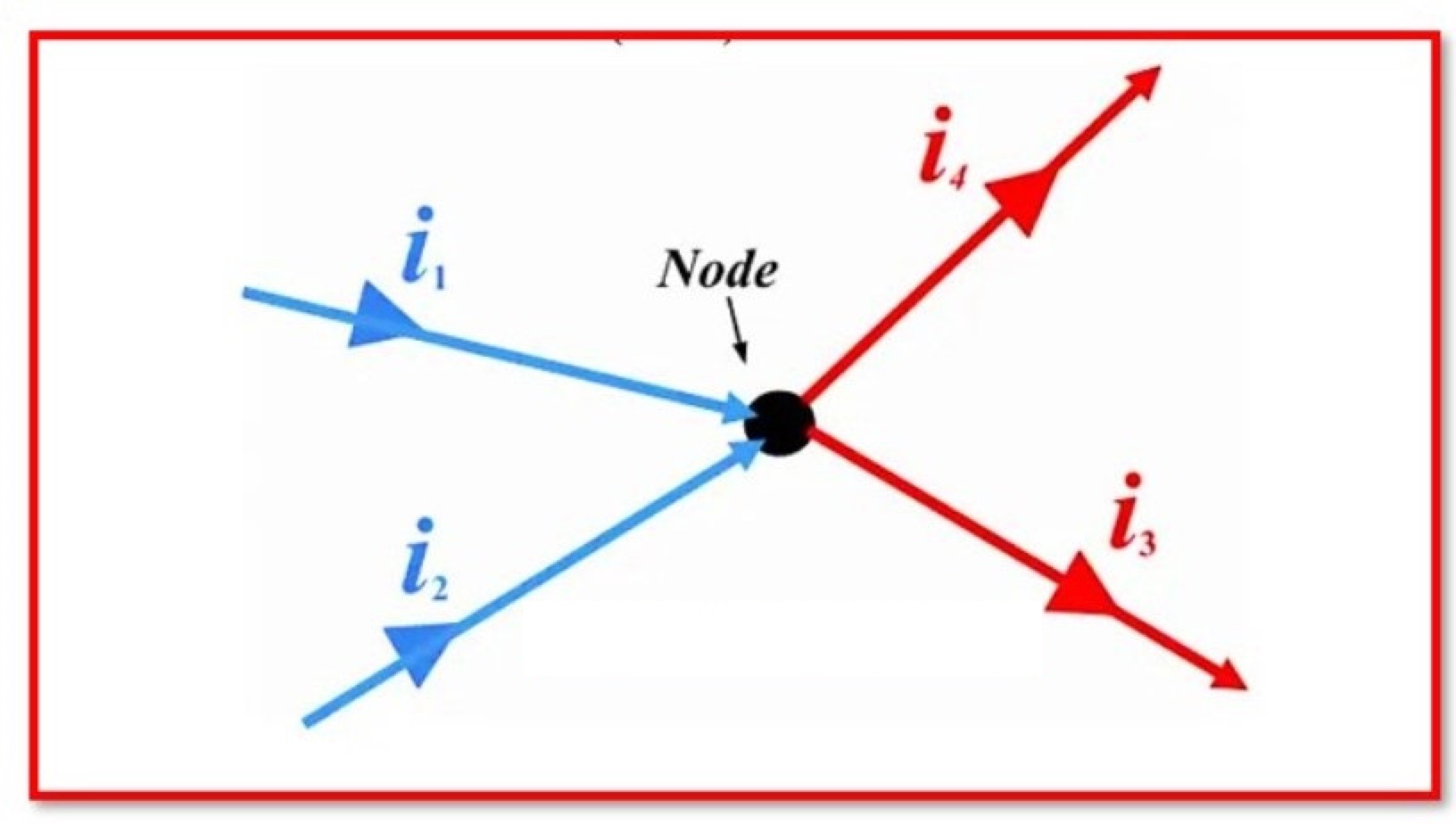
Kirchhoff’s Laws include two fundamental principles in electrical circuit analysis:
These principles serve as essential tools for evaluating complicated electrical circuits, allowing engineers & researchers to predict & comprehend the behavior of circuits in various configurations. Kirchhoff’s Laws are widely applied in
What does Kirchhoff’s Current Law (KCL) State?
Kirchhoff’s current law states that the algebraic sum of current entering into a node (or) a loop must be equal to the algebraic sum of current flowing out of it.

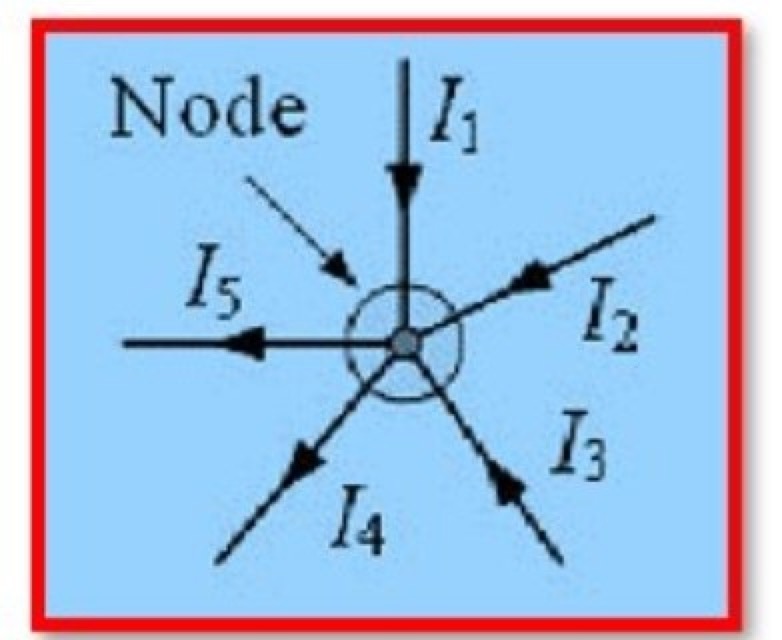
What is Node?
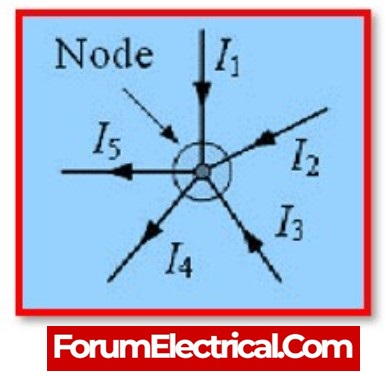
A node is a junction, connector, or terminal in a circuit that connects two or more branches by joining or connecting circuit components. A dot represents a node.
In an electrical circuit, the term “Node” typically refers to
the joining or intersecting of two or more components, such as cables, that conduct current. A closed circuit path is also necessary for current to flow through a node, either in or out.
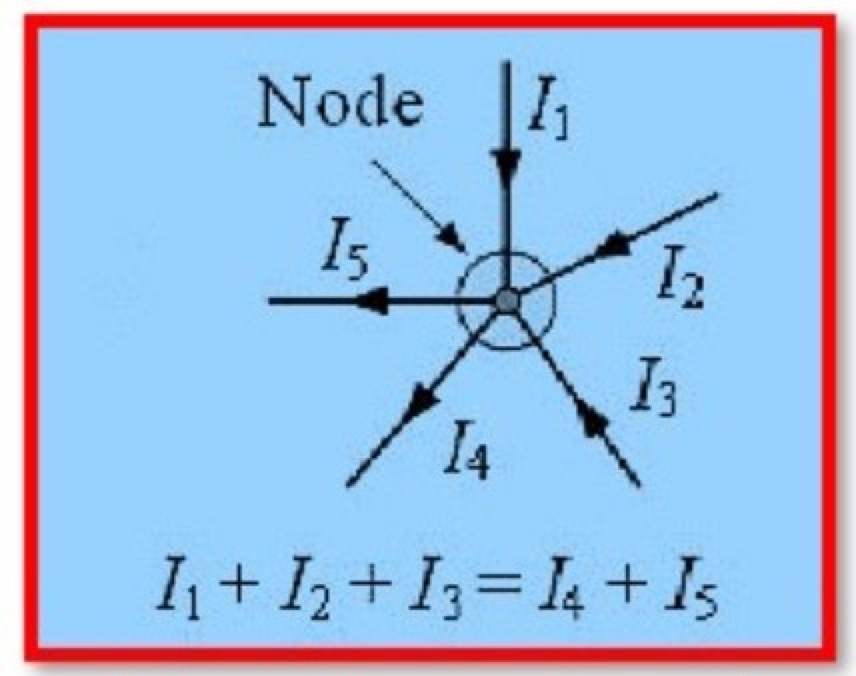
According to the node currents from the above diagram,
The 3 currents entering the node in this case,
I1, I2, and I3 all have positive values, whereas
I4 and I5 have negative values,
the two currents leaving the node.
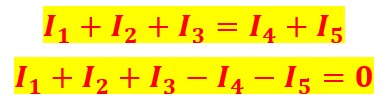
As a result, the equation can also be rewritten,
What is the other name of Kirchhoff’s Current Law?
Kirchhoff’s Current Law is also called as Kirchhoff’s First Law.
Application of KCL:
KCL is used to calculate the amount of current passing through each electronic component in a circuit. By adjusting the component’s resistance, we can alter the component’s current according to KCL law.
Statement: Respect the original, good articles worth sharing, if there is infringement please contact delete.

 Login
Login