European-type prefabricated substations and pad-mounted transformers are both common outdoor packaged power distribution equipment. However, they differ significantly in structural design, high-voltage wiring, protection level, and maintenance convenience.
This article compares the two from five aspects: structure, wiring, protection, selection, and applicable standards, helping engineers quickly identify suitable application scenarios. It can also serve as a reference for technical selection in overseas power distribution projects.
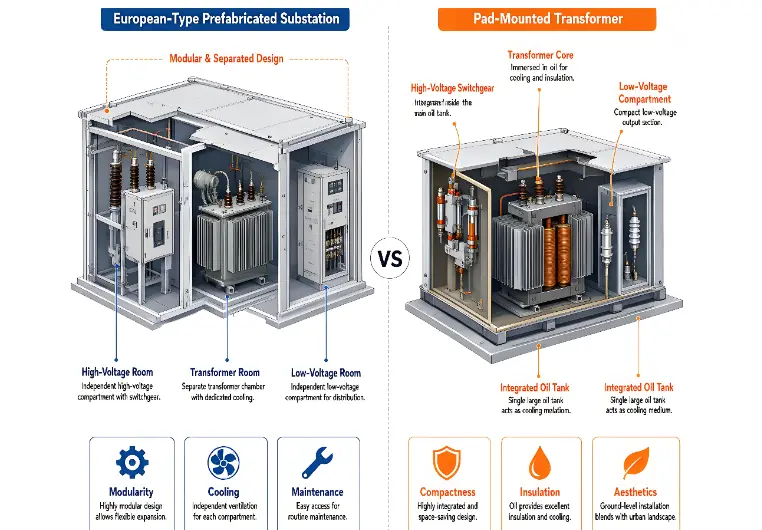
Both European-type prefabricated substations and pad-mounted transformers are factory-assembled packaged distribution units, but their design philosophies are different. A European-type prefabricated substation is closer to a “compact distribution room,” with independent compartments for high voltage, transformer, and low voltage.
A pad-mounted transformer is closer to an “integrated transformer,” with high-voltage components integrated into the transformer tank, resulting in a smaller footprint and more compact installation.
1. Structural Differences
| Comparison Item |
European-Type Prefabricated Substation |
Pad-Mounted Transformer |
| Overall Structure |
High-voltage, transformer, and low-voltage compartments are separately enclosed, typically arranged in an “I” or “triangle” layout |
High-voltage load switch, fuses, and transformer are integrated in the same oil tank; the low-voltage compartment is separate |
| Equipment Form |
Similar to installing compact HV switchgear, transformer, and LV switchgear inside one enclosure |
High-voltage protection and partial LV functions are integrated based on the transformer body |
| Capacity Range |
Typically between 630 kVA and 2,500 kVA, depending on manufacturer and applicable standards |
Commonly below 1,250 kVA; many applications use 630 kVA and below |
| Footprint and Size |
Larger volume; maintenance clearance is required |
Smaller volume and more compact footprint |
| Transformer Type |
Oil-immersed or dry-type transformers can be selected |
Mostly oil-immersed transformers; the tank serves as both insulation and cooling medium |
| Expandability |
Easier to add metering, protection, capacitor banks, and communication modules |
Limited expandability; expansion is often constrained by tank design and foundation conditions |
The main advantage of European-type substations is clear functional separation. High-voltage equipment, transformers, and low-voltage equipment do not interfere with each other, making later modification, maintenance, and capacity expansion easier. Pad-mounted transformers are highly integrated and compact, making them suitable for space-limited locations such as urban green belts, roadside areas, residential compounds, and temporary construction sites.
2. Wiring Differences
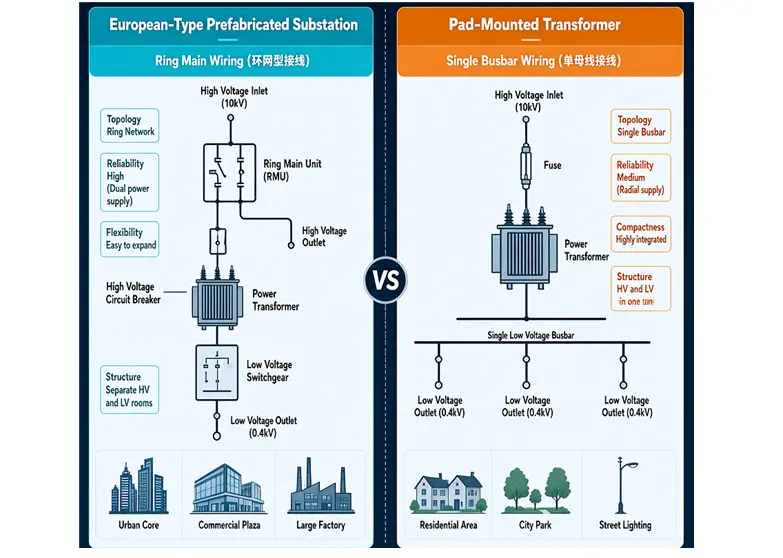
The high-voltage side of a European-type prefabricated substation offers more flexible wiring arrangements. Common configurations include terminal type and ring-main type. The terminal type receives power from one or two 10 kV incoming lines through the high-voltage compartment to supply the transformer. The ring-main type can realize two incoming lines with one outgoing line, or multiple circuits for ring-main distribution.
High-voltage equipment can be equipped with a load switch plus current-limiting fuses, or a vacuum circuit breaker combined with a microprocessor-based protection relay, supporting remote measurement, remote signaling, remote control, and other distribution automation functions.
The high-voltage wiring of a pad-mounted transformer is relatively simplified. The high-voltage load switch and fuses are usually installed inside the transformer tank. Typical arrangements include single-busbar or simple ring-main wiring, mainly used for terminal supply or small ring networks. The high-voltage load switch generally performs only normal switching operations, while short-circuit and overload protection mainly rely on fuses. If one high-voltage fuse operates, the load is often disconnected through undervoltage or overcurrent protection of the low-voltage molded-case circuit breaker, so supply reliability is generally lower than that of European-type solutions.
On the low-voltage side, European-type substations can be equipped with relatively complete LV switchboards, multiple outgoing circuits, and additional functions such as reactive power compensation, energy metering, and intelligent monitoring units.
Pad-mounted transformers usually have simpler LV configurations with fewer outgoing circuits. Some standard pad-mounted products do not include complete LV protection or metering, so additional LV distribution units are often added in practical applications.
3. Protection and Safety Differences
European-type prefabricated substations usually have a higher enclosure protection level, commonly reaching IP54 or above, depending on product design and project requirements. Because the high-voltage, transformer, and low-voltage compartments are physically separated, mechanical interlocks and five-prevention measures can reduce the risk of misoperation during maintenance, lowering the possibility of personnel contacting live parts.
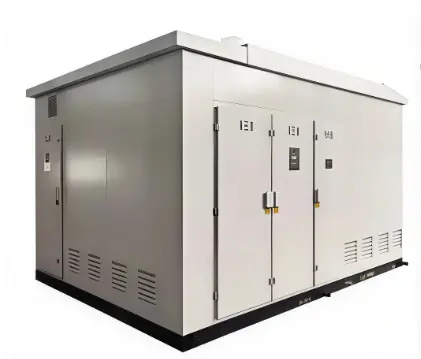
Pad-mounted transformers adopt a fully sealed tank structure, with high-voltage components immersed in insulating oil. This provides good insulation and resistance to dust and moisture. However, because high-voltage operating components are highly integrated with the transformer body, maintenance usually requires qualified personnel, and there is no independent switchgear maintenance space comparable to European-type substations. The enclosure protection level is generally lower, commonly between IP33 and IP43, subject to the product nameplate and technical documentation.
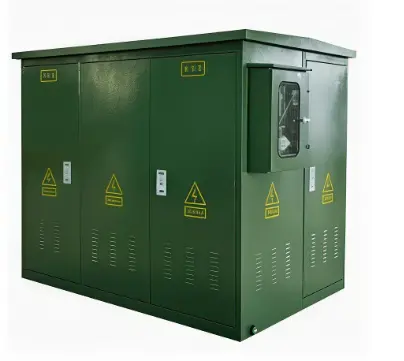
Regarding protection configuration, European-type substations can more easily achieve multi-level protection. The high-voltage side may use a load switch with current-limiting fuses, where fuse operation can trip the load switch. For important loads, a vacuum circuit breaker with comprehensive protection can provide instantaneous overcurrent, time-delay overcurrent, zero-sequence, and transformer temperature protection. Pad-mounted transformers mainly rely on high-voltage fuses to protect against internal transformer faults, while outgoing circuits are protected by low-voltage molded-case circuit breakers, resulting in a relatively simpler protection hierarchy.
4. How to Select?
- Prefer a European-type prefabricated substation when the project has larger capacity, important loads, ring-main supply requirements, distribution automation, capacitor compensation, or future expansion needs. Typical applications include main distribution for residential communities, industrial parks, hospitals, data centers, and PV step-up distribution points.
- Prefer a pad-mounted transformer when space is limited, initial investment is sensitive, loads are relatively simple, and fast installation with a small footprint is required. Typical applications include temporary construction power supply, street lighting, small commercial areas, and rural or township distribution networks.
In general, European-type prefabricated substations are stronger in clear compartmentalization, flexible wiring, higher protection level, and easier automation and maintenance. Pad-mounted transformers are stronger in compact structure, small footprint, fast installation, and lower initial investment. Neither is absolutely superior; the final choice depends on project capacity, power supply reliability requirements, site conditions, and long-term operation and maintenance needs.
5. Applicable Standards
European-type prefabricated substations are commonly designed with reference to standards such as IEC 62271-202. Pad-mounted transformers are often designed with reference to standards such as IEEE C57.12.34.
Actual selection should follow the standards of the project country or region, local utility requirements, and product technical documentation. Specific parameters and configurations shall be subject to the project technical specification and product data sheets.









 Login

