• Product
  • Suppliers
  • Manufacturers
  • Solutions
  • Free tools
  • Knowledges
  • Experts
  • Communities
Search


The Future of Intelligent Electrical Rooms: Innovation, Efficiency & Sustainability

Echo
Echo
Field: Transformer Analysis
China

What Is the Future of Intelligent Electrical Rooms?

The Future of Intelligent Electrical Rooms

Intelligent electrical rooms represent a significant upgrade from traditional setups by leveraging technologies such as the Internet of Things (IoT), big data analytics, and cloud computing. These advancements facilitate 24/7 remote monitoring, ensuring optimal safety, reliability, and operational efficiency.
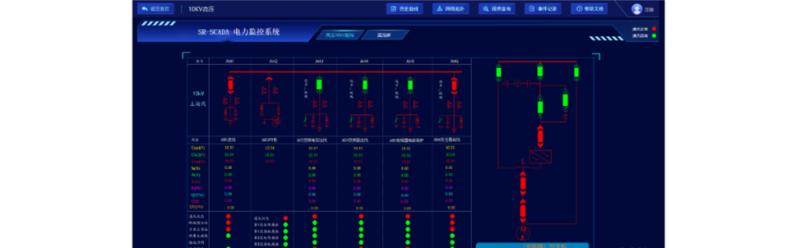
image.png

Key Trends in Intelligent Electrical Room Development Include:

  • Integration and Innovation through Technology

    • Utilizing IoT and Cloud Computing for real-time equipment status monitoring and advanced data analysis.

    • Applying Big Data and AI for predictive maintenance and operational optimization.

    • Employing modern sensing and communication technologies like 5G and NB-IoT for improved accuracy and faster response times.

  • System Integration and Smart Management

    • Developing integrated management platforms that unify access control, power automation, and equipment monitoring.

    • Implementing smart online monitoring systems to track various parameters continuously, ensuring stable power delivery.

    • Using AI-driven systems for routine inspections and decision-making support, reducing human error and improving incident response times.

  • Green and Sustainable Practices

    • Focusing on energy efficiency and conservation through dynamic load optimization.

    • Promoting eco-friendly equipment to minimize environmental impacts.

    • Integrating renewable energy sources into the grid, supporting sustainable energy systems.

  • Policy Support and Market Demand

    • National and local government policies encourage investments in smart grids and distribution network upgrades.

    • Growing market demand due to economic development and increased electricity needs is driving the adoption of intelligent electrical rooms.

Conclusion

The future of intelligent electrical rooms hinges on technological innovation, system integration, sustainability, and supportive policies. As smart grids evolve, these rooms will be crucial in enhancing power reliability, cutting maintenance costs, and optimizing energy efficiency.

By focusing on these key areas and integrating relevant keywords naturally throughout the content, this optimized article aims to improve its visibility and ranking on search engines like Google.
Give a tip and encourage the author!
Recommended
How SSTs Revolutionize Data Center Power at 800V DC
Optimized SEO-Friendly Abstract: NVIDIA’s 800V DC Architecture and the Rise of Solid-State Transformers in Next-Gen AI Data CentersOn October 16, 2025, NVIDIA published its landmark white paper, “800 VDC Architecture for Next-Generation AI Infrastructure,” signaling a pivotal shift in power delivery for AI-driven data centers. As large-scale AI models and next-gen CPUs/GPUs push computational demands to unprecedented levels, rack-level power consumption has surged from 10 kW in 2020 to 150 kW in
Echo
10/31/2025
What is a solid state transformer? How does it differ from a traditional transformer?
Solid State Transformer (SST)A Solid State Transformer (SST) is a power conversion device that uses modern power electronics technology and semiconductor devices to achieve voltage transformation and energy transfer.Key Differences from Conventional Transformers Different Operating Principles Conventional Transformer: Based on electromagnetic induction. It changes voltage through electromagnetic coupling between primary and secondary windings via an iron core. This is essentially a direct "mag
Echo
10/25/2025
3D Wound-Core Transformers in China: Technical Trends for Utility Companies
Technical Requirements and Development Trends for Distribution Transformers Low losses, especially low no-load losses; highlighting energy-saving performance. Low noise, particularly during no-load operation, to meet environmental protection standards. Fully sealed designto prevent transformer oil from contacting external air, enabling maintenance-free operation. Integrated protection devices within the tank, achieving miniaturization; reducing transformer size for easier on-site installation. C
Echo
10/20/2025
Reduce Downtime with Digital MV Circuit Breakers
Reduce Downtime with Digitized Medium-Voltage Switchgear and Circuit Breakers"Downtime" — it’s a word no facility manager wants to hear, especially when it’s unplanned. Now, thanks to next-generation medium-voltage (MV) circuit breakers and switchgear, you can leverage digital solutions to maximize uptime and system reliability.Modern MV switchgear and circuit breakers are equipped with embedded digital sensors that enable product-level equipment monitoring, providing real-time insights into the
Echo
10/18/2025
Send inquiry
Download
Get the IEE Business Application
Use the IEE-Business app to find equipment, obtain solutions, connect with experts, and participate in industry collaboration anytime, anywhere—fully supporting the development of your power projects and business.