• Product
  • Suppliers
  • Manufacturers
  • Solutions
  • Free tools
  • Knowledges
  • Experts
  • Communities
Search


Earthing Switch Contact Oxidation & Corrosion: Root-Cause Analysis & Maintenance Guide

Rockwill
Field: Manufacturing
10Year<
China
 

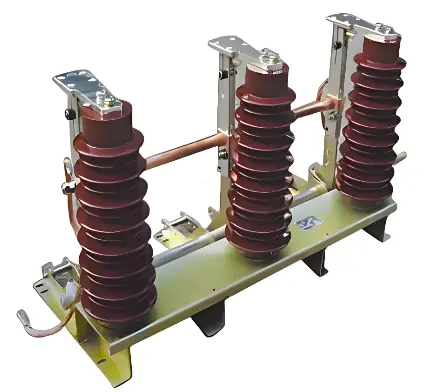
Earthing switch contacts are the core current-carrying components; their condition directly affects making/breaking performance and operational reliability. Contact oxidation and corrosion increase contact resistance, causing localised overheating.

In severe cases this can lead to equipment burn-out or system-wide failures. This guide covers root causes and maintenance practices for daily O&M reference.

Safety notice: All maintenance work must be carried out after de-energisation and proper safety measures are in place. Live testing (e.g., infrared thermography) shall only be performed by qualified personnel following approved procedures.

iee-business

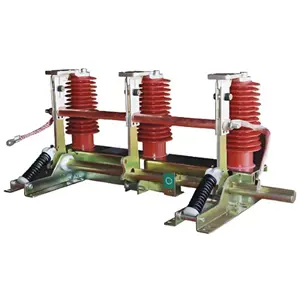
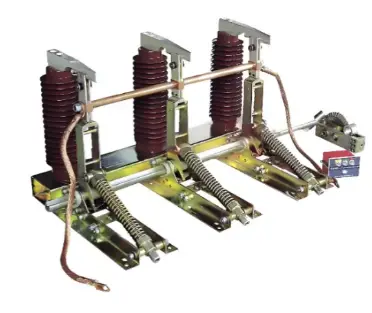
Indoor High-Voltage grounding switch Manufacturer

Root Causes of Contact Oxidation & Corrosion

Environmental Factors

  • Humidity and high temperature:prolonged exposure to moist, hot environments accelerates surface oxidation of metal contacts.
  • Corrosive gases :atmospheric pollutants such as SO₂ react with contact surfaces, forming insulating oxide films that raise contact resistance.
  • Salt-fog corrosion:coastal installations expose copper contacts to salt spray, significantly accelerating oxide formation.
  • Dust and contaminants:dust, oil residue, and salt deposits form insulating or semi-insulating layers on contact faces, impeding good contact and promoting corrosion.

Material and Structural Factors

  • Unsuitable material selection:components made from materials with poor corrosion resistance are prone to electrochemical corrosion in humid environments.
  • Dissimilar-metal joints (copper–aluminium) :the large electrochemical potential difference between copper and aluminium drives galvanic corrosion, producing white powdery corrosion products.
  • Damaged or missing rain shields:loss of protective rain shields leaves contacts directly exposed to weather, accelerating oxidation and rust.

Operational and Workmanship Factors

  • Insufficient contact pressure :loose bolts or aged/relaxed springs reduce contact force, shrinking effective contact area and increasing local current density, which intensifies heating and oxidation.
  • Poor installation workmanship :residual oxide films, burrs, or insufficient insertion depth of moving contacts all result in poor initial contact.
  • Vicious heating–oxidation cycle :rising contact resistance → heating → accelerated oxidation → further resistance increase → eventual contact burn-through or welding.
 

Maintenance Methods & Measures

1. Routine Inspection & Testing

  • Infrared thermography ;detect abnormal temperature rise early; increase frequency for heavily loaded or harsh-environment equipment.
  • Contact resistance measurement : track resistance trend over time with a micro-ohmmeter; investigate any clear upward trend versus baseline data.
  • Visual inspection:check for discoloration, burn marks, oxide layers, rust spots, and rain-shield integrity.

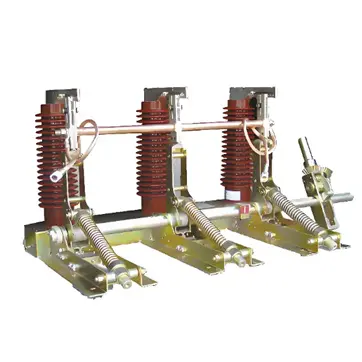
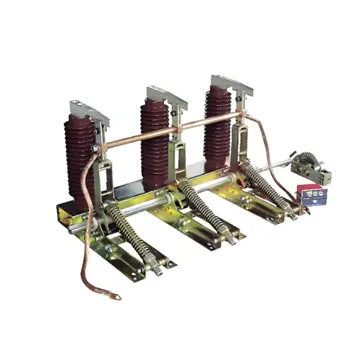
iee-businessCustomizable Indoor High-Voltage Earthing Switch

2. Oxidation & Corrosion Treatment

  • Light oxidation :polish contact faces with fine abrasive cloth or non-woven pads until bright and flat; remove all oxide and contamination.
  • General contamination :clean with dedicated electrical contact cleaner or isopropyl alcohol; dry thoroughly before further treatment.
  • Severe corrosion / burn-through / deformation :replace the affected contact finger or complete contact assembly; do not attempt repair.

3. Corrosion-Prevention Measures

  • Apply conductive grease / electrical joint compound: after cleaning, coat contact faces evenly with a thin layer of approved conductive grease or electrical joint compound to seal out air and moisture.
  • Emergency temporary protection: if professional compound is unavailable, a thin film of neutral petroleum jelly may be used as a stop-gap; replace with approved compound at the earliest opportunity.
  • Nano-conductive coating (HV equipment) :for high-voltage contacts, spray a qualified nano-conductive coating to enhance conductivity and corrosion resistance; use only products that have passed type tests and follow the manufacturer's application instructions.
  • Non-contact surface protection :apply anti-corrosion grease to shafts, adjusting screws, and other non-conductive parts; consider stainless-steel replacements for critical ferrous components.

4. Mechanical Adjustment & Tightening

  • Torque tightening :use a calibrated torque wrench; tighten all connection bolts to the manufacturer's specified values to ensure uniform, adequate contact pressure.
  • Spring inspection & replacement : check contact pressure springs for ageing or relaxation; replace any that no longer deliver the required force.
  • Contact pressure verification: adjust contact pressure per equipment specification; confirm it meets operational requirements.

5. Environmental & Structural Improvements

  • Repair or replace rain shields: ensure contact rain shields are intact to prevent direct exposure.
  • Improve sealing:enhance sealing of mechanism boxes and enclosures to limit moisture ingress.
  • Dehumidification:in high-humidity switchrooms, implement site-appropriate moisture-control measures.
  • Copper–aluminium transition: use bi-metallic (copper–aluminium) transition lugs or tinned/silvered transition plates at dissimilar-metal joints; coat mating faces with anti-corrosion conductive compound.

6. Maintenance Intervals

Maintenance intervals for each activity shall be defined based on the equipment manufacturer's manual and site operating procedures, taking into account environmental severity, loading profile, and historical defect data.


Summary

Earthing switch contact oxidation and corrosion is a progressive degradation process driven by the combined action of environmental, material, and workmanship factors.

The core prevention philosophy is "prevention first, integrated prevention and cure" — maintain effective sealing and moisture exclusion, conduct regular temperature-rise and contact-resistance monitoring, promptly polish and protect any oxidised surfaces with approved conductive compound, and decisively replace severely degraded components.

Only by establishing a robust inspection regime and clear maintenance standards can equipment life be maximised and power-system safety and stability assured.

Edited From: Garca

Give a tip and encourage the author!
Topics:

Comments

Share your question or perspective
WhatsApp
Send inquiry
+86
Click to upload file
Download
Get the IEE Business Application
Use the IEE-Business app to find equipment, obtain solutions, connect with experts, and participate in industry collaboration anytime, anywhere—fully supporting the development of your power projects and business.
Login
or continue with
New here?
Register