In medium and high voltage distribution systems, circuit breakers, disconnectors, and earthing switches all belong to switchgear, but their responsibilities are fundamentally different: circuit breakers are responsible for live switching and fault protection; disconnectors provide visible isolation and isolate the power supply; earthing switches ensure maintenance earthing and discharge residual voltage. These three devices are normally used together and cannot replace one another.
1. Circuit Breaker: The System’s Protective Switch
A circuit breaker is the most critical switching device in a distribution circuit.
Its main functions are:
- Normal switching of load current: It can connect or disconnect circuit current during operation, maintenance, switching operations, and energization.
- Interruption of short-circuit fault current: When overload or short-circuit faults occur, it can quickly interrupt fault current.
- Protection function: It works together with relay protection to realize overcurrent, instantaneous, and earth-fault protection.
- Arc-extinguishing capability: It is equipped with vacuum, SF₆, air, or other arc-extinguishing devices, allowing safe opening under load or fault conditions.
A circuit breaker does not provide a visible physical isolation gap. Therefore, even when the circuit breaker is open, the equipment cannot be considered safe for maintenance. A disconnector must still be used to form a visible isolation point, and an earthing switch must be closed to provide maintenance earthing.
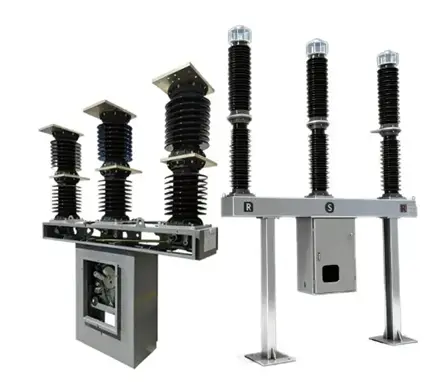
Live Tank SF6 Circuit Breaker
2. Disconnector: The System’s Visible Isolation Point
A disconnector is commonly called a disconnector or isolator. In the IEC system, disconnector is the preferred term.
Its main functions are:
- Providing a visible break: After opening, it creates a visible isolation gap to confirm that the equipment has been electrically isolated from the power supply.
- Ensuring maintenance safety: It provides isolation conditions for maintenance, testing, and inspection.
- Supporting switching operations: It is used to change operating modes in double-busbar, sectionalized busbar, ring main unit, and GIS systems.
- Limited switching capability: It must not be operated under load and cannot interrupt short-circuit current. It may switch negligible currents or bus-transfer currents only when specified by the equipment rating.
Disconnectors have no arc-extinguishing device, so load-breaking operation is strictly prohibited. Forcibly opening a disconnector under load may produce strong arcing, causing equipment damage, personal injury, or even system accidents.
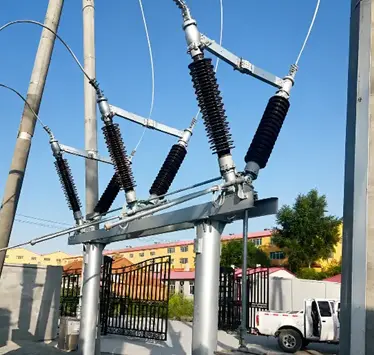
Outdoor High voltage disconnect switch
3. Earthing Switch: Safe Earthing for Maintenance
An earthing switch is commonly referred to as an earthing switch or grounding switch. It can be divided into maintenance earthing switches and fast earthing switches.
Its main functions are:
- Reliable equipment earthing: During maintenance, it earths lines or equipment to prevent electric shock caused by accidental re-energization.
- Discharging residual voltage: It releases residual voltage and static charges on cables, capacitors, busbars, and other equipment.
- Withstanding short-circuit current: Although it cannot interrupt load current, it must withstand short-circuit current and peak making current for a specified duration.
- Fast making capability for fast earthing switches: Fast earthing switches are typically used in GIS or special line applications and can make short-circuit currents under defined conditions.
Maintenance earthing switches are not intended to make or break load or fault currents, whereas fast earthing switches are rated for short-circuit making. Earthing switches must not be operated under load. They may only be closed after the circuit has been de-energized, isolated, and confirmed to be voltage-free.
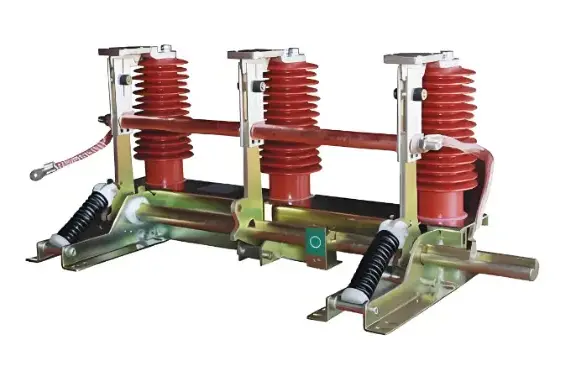
Indoor High-Voltage Grounding Switch
4. Key Differences
| Comparison Item |
Circuit Breaker |
Disconnector |
Earthing Switch |
| Main function |
Switches load current and clears faults |
Provides visible isolation |
Provides maintenance earthing and discharges residual voltage |
| Load-breaking operation |
Permitted |
Prohibited |
Prohibited |
| Short-circuit interruption |
Yes |
No |
No |
| Arc-extinguishing device |
Yes |
No |
No |
| Protection function |
Yes |
No |
No |
| Typical English term |
Circuit Breaker |
Disconnector / Isolator |
Earthing Switch |
5. Typical Operating Sequence
In high-voltage switchgear, GIS, ring main units, or substation primary systems, these three devices must operate in a strict sequence.
De-energizing for maintenance:
- Open the circuit breaker to interrupt load current.
- Open the disconnectors on the de-energized side to form a visible isolation point.
- Close the earthing switch to earth the equipment.
Re-energizing after maintenance:
- Open the earthing switch.
- Close the disconnectors on the isolated side.
- Close the circuit breaker to restore supply.
This sequence must not be reversed. Incorrect operation may cause load-breaking with a disconnector or closing onto an earthed circuit. The exact sequence must always follow site switching permits, equipment manuals, and five-prevention interlocking logic.
6. Coordination in Engineering Applications
In practical distribution equipment, these devices are frequently combined:
- In switchgear: The circuit breaker provides protection and switching, the disconnector provides maintenance isolation, and the earthing switch provides maintenance earthing.
- In GIS: Circuit breakers, disconnectors, and earthing switches are integrated within enclosed metal housings, with mechanical and electrical interlocks to prevent misoperation.
- In ring main units: Load switches or circuit breakers are commonly used together with disconnectors and earthing switches.
- On high-voltage line sides: Fast earthing switches may be installed to make induced currents or handle special fault conditions.
Summary
Circuit breakers interrupt load and fault currents; disconnectors provide visible isolation and may switch only no-load or very small currents; earthing switches ensure maintenance earthing and discharge residual voltage. Fast earthing switches can make short-circuit currents and are typically used in GIS or special line applications. These devices must not be operated interchangeably.
A simple way to remember: circuit breakers interrupt current, disconnectors isolate the power supply, and earthing switches protect personnel. In technical documentation, always emphasize their functional boundaries and operating sequences, as these are key criteria for equipment selection and important safety compliance points for overseas customers.









 Login

