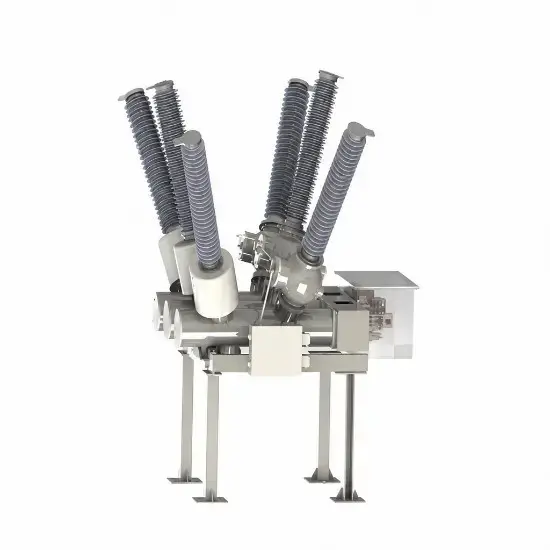
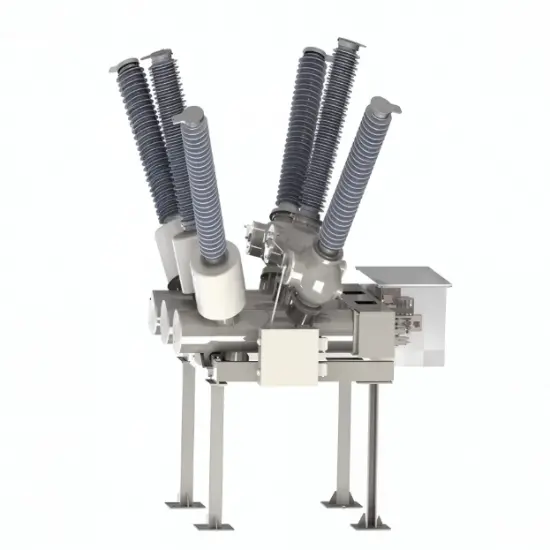
RHP-245(T) type Hybrid Gas Insulated Switchgear
**Brand: ROCKWILL** >220kV transmission substations, large solar & wind farm booster stations, urban central substations, industrial heavy power supply projects with limited footprint.
This document contains the complete engineering drawings of the RHP-245(T) type Hybrid Gas Insulated Switchgear.
RHP-245(T) is ROCKWILL three-phase common-tank hybrid gas insulated switchgear (HGIS) rated at 245kV, complying with IEC 62271-203, IEC 62271-100 and GB/T7674, KEMA type tested. It adopts self-blast SF6 circuit breaker with bistable spring or spring-hydraulic operating mechanism. Available rated current:2000A,2500A,3150A,4000A; rated short-circuit breaking current:31.5kA,40kA,50kA. All primary live components including CB, DS, ES and CT/PT are enclosed inside one shared SF6 metal tank, while main busbar uses air insulation. With fewer sealing joints, it lowers gas leakage risk and reduces on-site installation workload. Widely applied in 220kV transmission substations, large renewable energy booster stations and urban power grid projects
L'RHP HGIS integra l'interruttore, il sezionatore-termostatore a tre posizioni e i TA/TV in unità in serbatoio riempito di gas, mantenendo al contempo le sbarre AIS convenzionali di tipo aperto per il collegamento in sito. Rispetto al GIS completo, consuma solo il 20% di gas SF₆, riducendo l'investimento per le apparecchiature. Rispetto all'AIS convenzionale, riduce notevolmente l'ingombro, i punti di connessione e il carico di manutenzione. Bilancia compattezza, costi e flessibilità di installazione.
È pienamente conforme agli standard internazionali IEC. Adotta un design ottimizzato del campo elettrico con scarica parziale ≤3pC, un meccanismo a molla standardizzato a lunga durata (6000 cicli) e un sistema completo di interblocco meccanico per le cinque prevenzioni, al fine di eliminare i rischi di manovre errate. Il tasso di perdita annuale di SF6 è ≤0,5%, garantendo un funzionamento stabile e sicuro della rete.