Application Scenarios
Urban power grid upgrades, power supply for large industrial parks, grid integration of renewable energy power stations, and other medium-to-short-distance, high-reliability power transmission scenarios.
Core Requirements
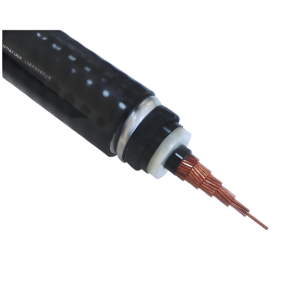
Excellent flame retardancy, compact structure for easy installation, strong corrosion resistance, and high mechanical stress resistance.
Solution
Implementation Results
After application in a coastal industrial park project:
Cable installation density increased by 35%.
Failure rate reduced to 0.12 instances/100 km·year.
Expected service life extended to 35 years.
Passed electromagnetic compatibility tests per CISPR 22 standards.
Smart Monitoring Expansion Function
Optional distributed temperature sensing (DTS) and partial discharge monitoring modules enable real-time operational status monitoring, achieving a warning accuracy rate of ≥90%.
Note: This solution complies with standards such as GB/T 12706-2020 and IEC 60502-2. Customized designs are available based on specific engineering requirements.

 Login
Login