Applicable Fields: Municipal Engineering | Power Systems | Communication Construction | Oil and Gas | Construction
I. Industry Pain Points: The Invisible "Urban Lifelines" Pose Significant Construction Risks
During urban infrastructure construction and maintenance, a vast network of critical underground facilities—including power cables, communication fiber optics, water supply pipelines, gas pipes, and drainage systems—remains hidden beneath the surface. These concealed systems, often referred to as "urban lifelines," can lead to severe consequences if accidentally damaged during construction:
Major safety incidents (e.g., gas leaks, cable punctures)
Widespread power outages or communication disruptions
Substantial economic losses and project delays
Public safety crises and corporate liability claims
However, due to incomplete documentation, aging or displaced pipelines, and the challenges of detecting non-metallic pipes, traditional methods like manual excavation or经验判断 (experience-based judgment) no longer meet the demands of modern urban精细化管理 (refined management).
How can we achieve non-destructive, high-precision, and efficient detection of underground pipelines?
II. Solution: Underground Pipeline Detectors—Making the "Invisible" Visible
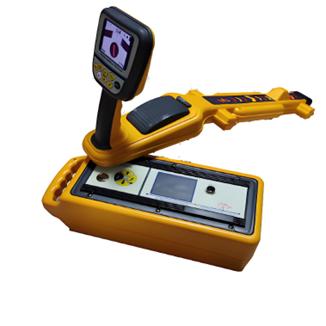
To address these challenges, IEE-Business introduces high-performance Underground Pipeline Detectors, specifically designed for complex urban environments and industrial sites. Integrating electromagnetic induction, signal transmission/reception, GPS positioning, and intelligent analysis technologies, these devices enable users to quickly and accurately identify the location, depth, and trajectory of underground pipelines.
Product Details: Link
Core Features:
Feature |
Description |
Multi-Mode Detection |
Supports active/passive frequencies, peak/valley methods, and more, adapting to various geological conditions and pipeline materials. |
Precise Positioning |
Accurately locates metal pipelines and measures burial depth (error < ±5%), with real-time data feedback and trajectory recording. |
Strong Anti-Interference |
Built-in digital filtering and noise suppression algorithms ensure stable performance in dense pipeline areas or high-electromagnetic environments. |
Portability & Ease of Use |
Lightweight design with an HD LCD display and intuitive interface, enabling single-person operation. |
Non-Metallic Pipe Detection |
Compatible with ground-penetrating radar (GPR) or tracer wires for indirect detection of non-conductive pipes (e.g., PVC, concrete). |
Data Traceability |
Supports GPS coordinate marking and detection log exports for report generation, archiving, and audits. |
III. Typical Application Scenarios
Municipal Road Reconstruction and Pre-Excavation Surveys
Conduct comprehensive scans of construction areas before road widening, subway access, or drainage projects to avoid damaging main cables or gas pipelines.
Case Study: During a metro ancillary project, an unmarked 10kV high-voltage cable was detected in advance, averting a potential explosion risk.
Power System Maintenance and Fault Diagnosis
Identify underground cable paths, locate joints, and detect potential交叉 (crossings) or short circuits to enhance inspection efficiency and safety.
Case Study: In a substation expansion project, the detector confirmed existing cable routes, saving 3 days of exploration time and minimizing power outage impacts.
Communication Network Wiring and Fiber Optic Installation
Assist telecom operators in avoiding existing communication pipelines when laying new fiber optics in old residential areas or complex districts, preventing signal interference or physical damage.
Oil and Gas Pipeline Inspection
Work with warning tapes or conductive wires to trace long-distance oil/gas pipelines and assist in anti-corrosion layer detection, ensuring energy transport safety.
Construction Site Safety Assurance
Perform "pipeline scans" before pile drilling or foundation excavation to avoid damaging hidden pipeline systems within or around buildings.
IV. Why Choose WONE’s Underground Pipeline Detector?
WONE offers not just hardware but a full suite of reliable technical support and services:
Whole-Lifecycle Support: End-to-end services from model selection and on-site training to after-sales maintenance.
Whole Life Care Certified Products: Traceability, high reliability, and prioritized response mechanisms to reduce operational risks.
Integrated Tool Ecosystem: Compatible with other testing instruments on the IEE-Business platform (e.g., cable fault locators, ground resistance testers) for comprehensive solutions.
Expert Technical Support Network: Access to global electrical experts for professional guidance and best practices.
V. Implementation Recommendations: Maximizing Detector Value
Establish Standardized Detection Procedures: Implement a "mandatory pre-construction detection" policy integrated into project launch protocols.
Digitize Management with GIS Systems: Import detection data into geographic information systems (GIS) to create dynamically updated digital maps of underground networks.
Conduct Regular Personnel Training: Ensure operators master applicable scenarios for different modes and data interpretation skills.
Complement with Other Detection Methods: For complex areas, combine with ground-penetrating radar (GPR), pipeline endoscopes, and other technologies for cross-validation.

 Login
Login