• Product
  • Suppliers
  • Manufacturers
  • Solutions
  • Free tools
  • Knowledges
  • Experts
  • Communities
Search


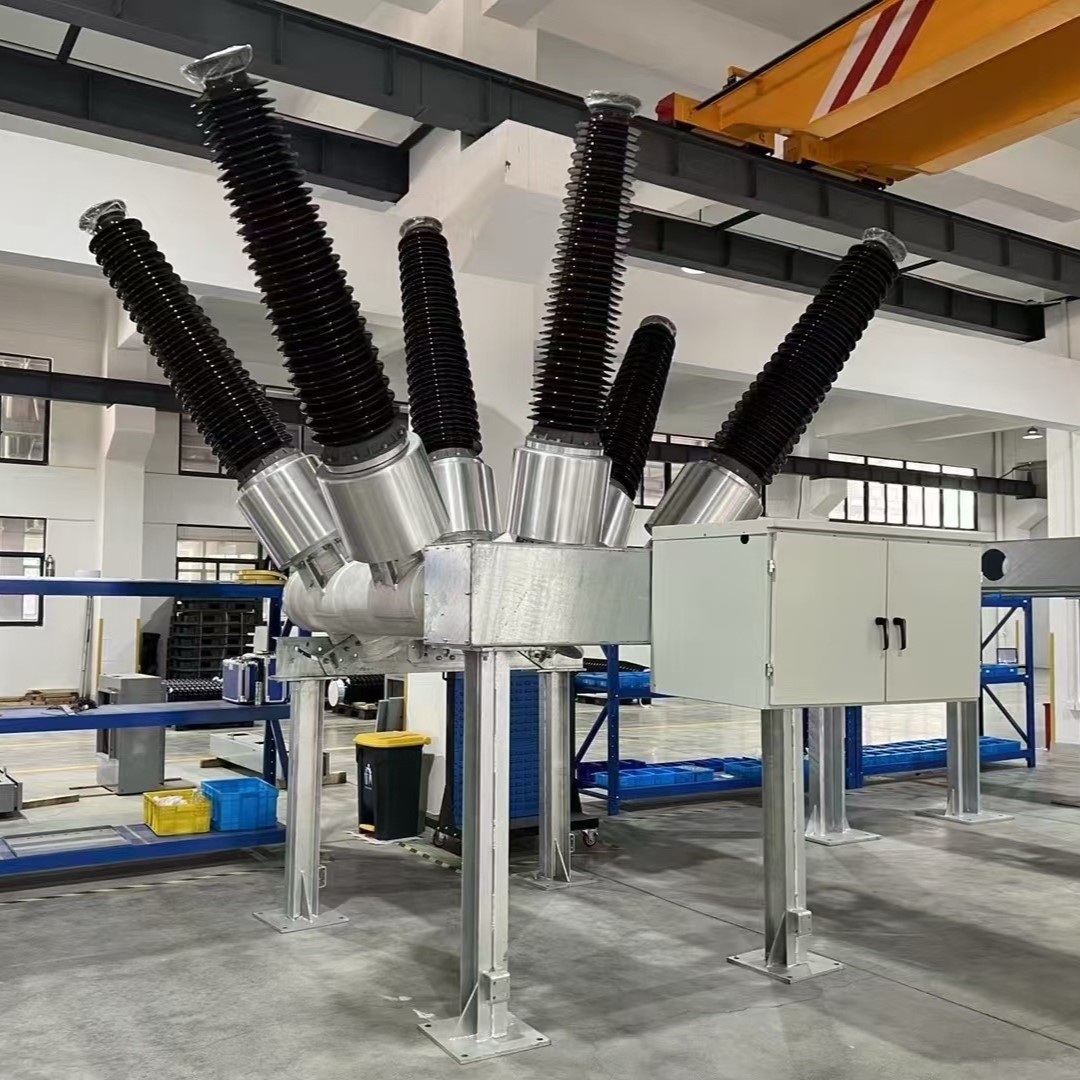
Dead Tank SF6 Circuit Breaker Africa Market Solution: Dual Breakthroughs in Gas Tightness and Arc Extinguishing Chamber Design

1. Gas Tightness Design: Core Assurance for Africa's Extreme Climates

1.1 Multi-Layer Sealing System Optimization
The Dead Tank SF6 Circuit Breakerimplements triple-sealed interfaces: EPDM flange gaskets (shore hardness 70&plusmn;5), dynamic PTFE O-rings, and plasma-sprayed aluminum oxide coatings. This design enables the Dead Tank SF6 Circuit Breaker to withstand 10,000 thermal cycles (50&deg;C&harr;-20&deg;C) while maintaining SF6 leakage <0.3%/year under Sahara dust storms.

1.2 Cryogenic Gas Mixture Engineering
For Atlas Mountain substations (-45&deg;C), the Dead Tank SF6 Circuit Breakerintegrates SF6/N2 mixtures (30:70 ratio) with active pressure regulators. The Dead Tank SF6 Circuit Breaker's gas density sensors (0.5% FS accuracy) auto-trigger electric heaters when detecting <400 kPa, preventing liquefaction during polar vortex events.

1.3 Predictive Leakage Management
Embedded in the Dead Tank SF6 Circuit Breaker, LoRaWAN-enabled monitors track gas purity (UHF spectroscopy) and moisture (<200 ppmv). Cloud-based algorithms predict seal degradation 6 months in advance, slashing maintenance costs by 40% for Africa's remote grids.

2. Arc Extinguishing Chamber Design: Combating African Grid Challenges

2.1 Dual-Speed Quenching Mechanism
The Dead Tank SF6 Circuit Breakercombines puffer pistons (15 m/s) with magnetic coils (0.5 T flux density), achieving 3 ms current-zero creation. This lets the Dead Tank SF6 Circuit Breaker clear 63 kA fault currents 18% faster than IEC 62271-100 standards.

2.2 Abrasion-Resistant Nozzle Assembly
In the Dead Tank SF6 Circuit Breaker, arc nozzles use boron-doped alumina (HVOF coating, 1,500 Hv hardness). Testing confirms <0.05 mm erosion after 10,000 operations under Kalahari sand (SiO2 >80%), tripling service intervals.

2.3 Modular Maintenance Configuration
The Dead Tank SF6 Circuit Breaker's cassette-style arc chambers enable <2-hour component replacement using basic tools &ndash; critical for Africa's limited skilled workforce. Each Dead Tank SF6 Circuit Breakerships with pre-calibrated modules to avoid on-site SF6 handling.

3.Africa-Specific Performance Enhancements

3.1 Dust & Vibration Protection
The Dead Tank SF6 Circuit Breaker achieves IP67 rating via laser-welded tanks and graphene-enhanced seals. Its 3D-printed base isolators dampen 0.5g seismic vibrations, certified for Great Rift Valley deployments.

3.2 Renewable Energy Integration
With 2 kHz current-zero detection, the Dead Tank SF6 Circuit Breaker interrupts 25% DC offset currents from African solar farms. Its CT/VT-integrated design reduces substation footprint by 35% versus conventional breakers.

3.3 Total Cost Leadership
The Dead Tank SF6 Circuit Breaker delivers 25-year lifespan (vs 15 years for oil CBs) with 0 scheduled maintenance. Combined with hybrid gas refilling (50% less SF6 usage), it cuts TCO by 58% over African CB lifecycle.
05/24/2025

Recommended

Procurement
Analysis of Advantages and Solutions for Single-Phase Distribution Transformers Compared to Traditional Transformers
1. Structural Principles and Efficiency Advantages1.1 Structural Differences Affecting EfficiencySingle-phase distribution transformers and three-phase transformers exhibit significant structural differences. Single-phase transformers typically adopt an E-type or wound core structure, while three-phase transformers use a three-phase core or group structure. This structural variation directly impacts efficiency: The wound core in single-phase transformers optimizes magnetic flux distribution, red
Procurement
Integrated Solution for Single Phase Distribution Transformers in Renewable Energy Scenarios: Technical Innovation and Multi-Scenario Application
1. Background and ChallengesThe distributed integration of renewable energy sources (photovoltaics (PV), wind power, energy storage) imposes new demands on distribution transformers: Volatility Handling:Renewable energy output is weather-dependent, requiring transformers to possess high overload capacity and dynamic regulation capabilities. Harmonic Suppression:Power electronic devices (inverters, charging piles) introduce harmonics, leading to increased losses and equipment aging. Multi-Scenari
Procurement
Single-Phase Transformer Solutions for SE Asia: Voltage, Climate & Grid Needs
1. Core Challenges in the Southeast Asian Power Environment​1.1 ​Diversity of Voltage Standards​Complex voltages across Southeast Asia: Residential use often 220V/230V single-phase; industrial zones require 380V three-phase, but non-standard voltages like 415V exist in remote areas.High-voltage input (HV): Typically 6.6kV / 11kV / 22kV (some countries like Indonesia use 20kV).Low-voltage output (LV): Standardly 230V or 240V (single-phase two-wire or three-wire system).1.2 ​Climate and Grid Condi
Procurement
Pad-Mounted Transformer Solutions: Superior Space Efficiency and Cost Savings over Traditional Transformers
1.Integrated Design & Protection Features of American-Style Pad-Mounted Transformers1.1 Integrated Design ArchitectureAmerican-style pad-mounted transformers employ a combined design integrating key components - transformer core, windings, high-voltage load switch, fuses, arresters - within a single oil tank, using transformer oil as both insulation and coolant. The structure consists of two main sections: Front Section:High & Low Voltage Operation Compartment (with elbow plug-in connect
Send inquiry
+86
Click to upload file
Download
Get the IEE Business Application
Use the IEE-Business app to find equipment, obtain solutions, connect with experts, and participate in industry collaboration anytime, anywhere—fully supporting the development of your power projects and business.