| Brand | Rw Energy |
| Series | RDK |
| Rated voltage | 24kV |
| Rated frequency | 60 Hz / 50 Hz (Selectable) |
| Rated continuous current | 100/200/300A |
| Current accuracy | ±5% |
| Main-circuit resistance | ≤300 μΩ |
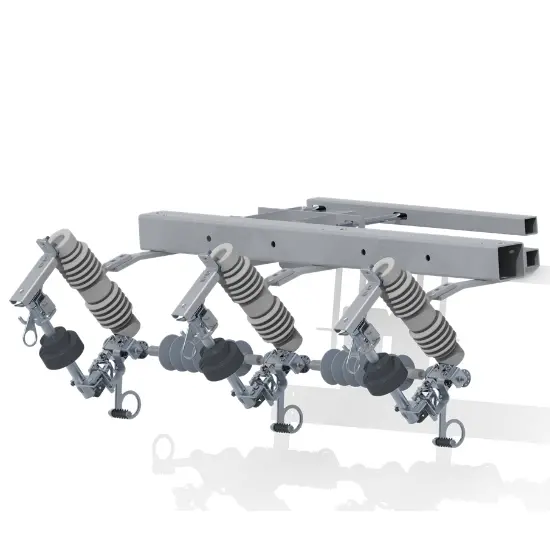
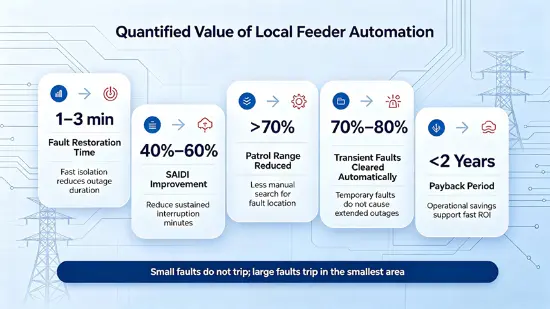
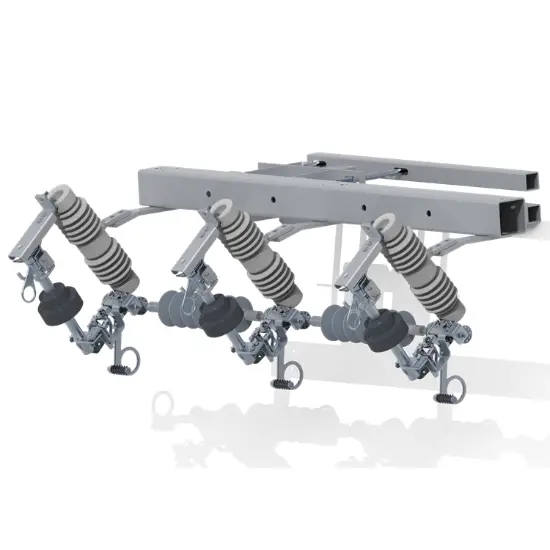
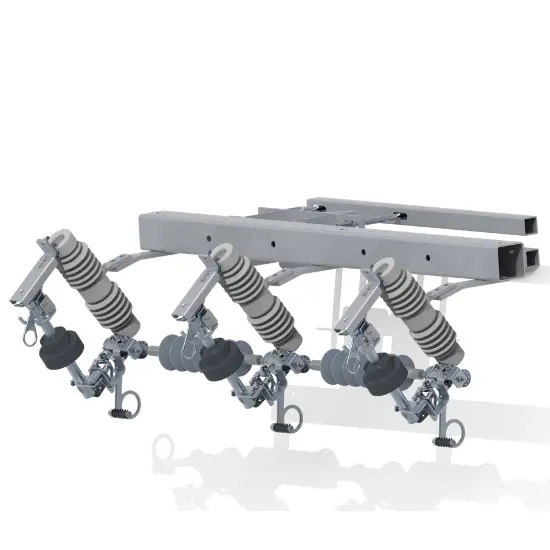
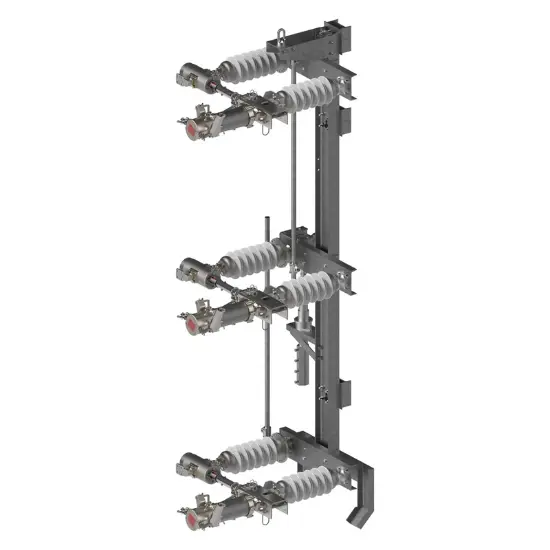
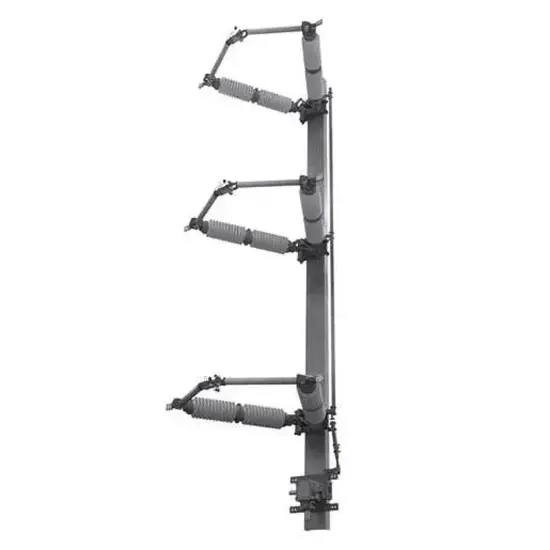
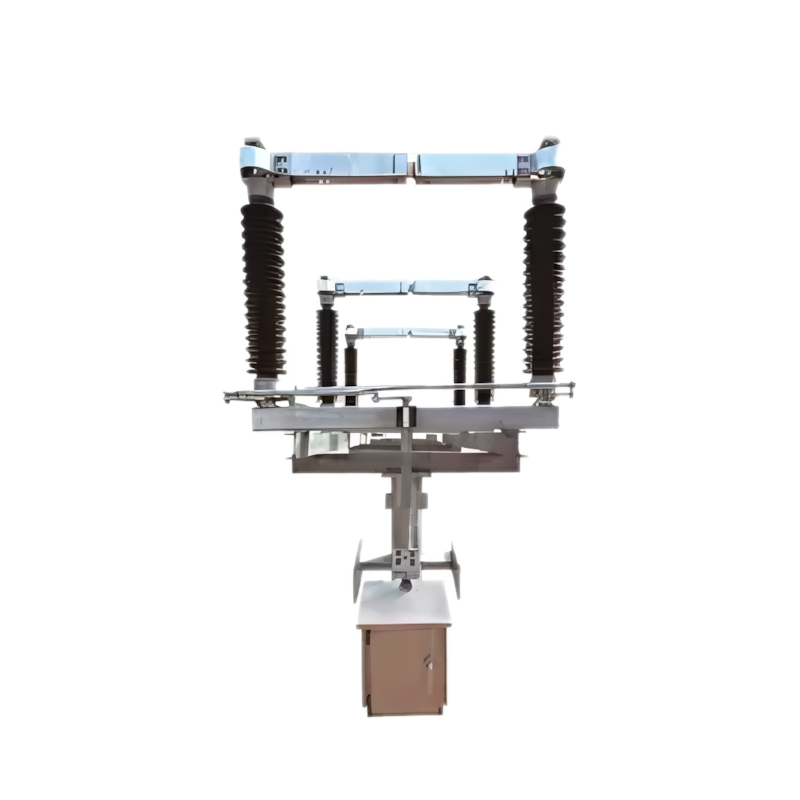
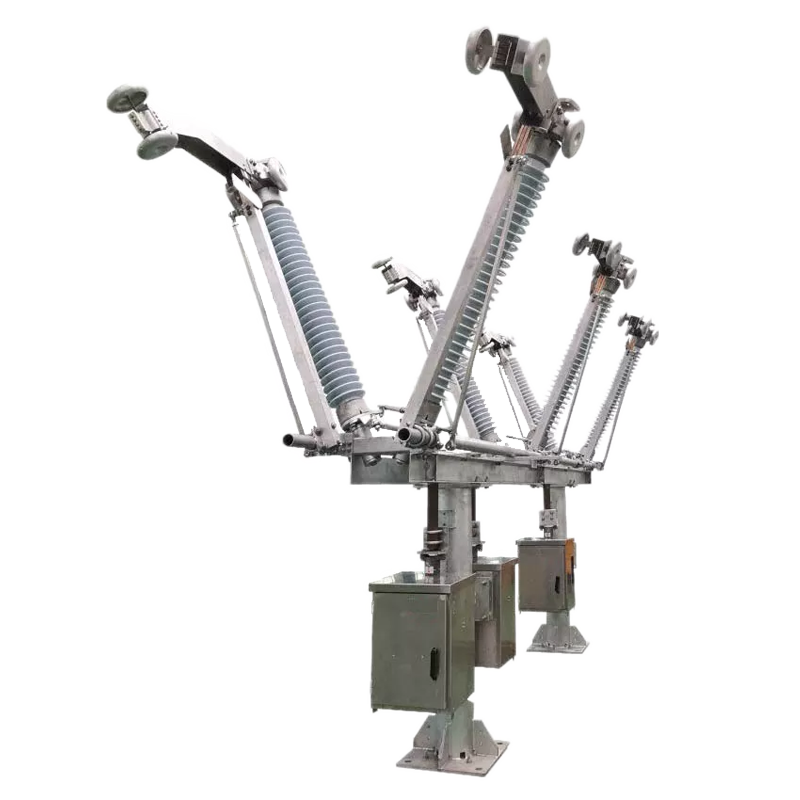
The RDK-24/300, developed by Zhejiang Rockwell Energy for domestic and overseas 24 kV, 50/60 Hz distribution systems, coordinates with reclosers or autoreclosing breakers to confine outages to the faulted segment . Because it distinguishes transient from permanent faults by counting fault-current events, it acts only on permanent faults — transient faults reset automatically after the programmable memory time (30–300 s) (p.3). Because its electronic controller is powered by line-current induction instead of an external auxiliary supply, it needs no PT, no batteries and no routine maintenance — main-circuit resistance ≤300 μΩ, current measurement accuracy ±5% .
| Parameter | Value |
| Rated voltage | 24 kV |
| Rated frequency | 60 Hz / 50 Hz (Selectable) |
| Rated continuous current | 100A/200A/300 A |
| Minimum line current | 10 A |
| Current accuracy | ±5% |
| Main-circuit resistance | ≤300 μΩ |
| Pickup (programmable) | 16–480 A(7 gears) |
| Counts (programmable) | 1 / 2 / 3 / 4 |
| Reset (memory) time | 30–300 s( 1 s) |
| Ambient temperature | -40 ℃ ~ +60 ℃ |
| Altitude / Wind pressure | ≤2,000 m / ≤700 Pa |
| USB port | IP68 |
| Event log | 100 records, Excel export |
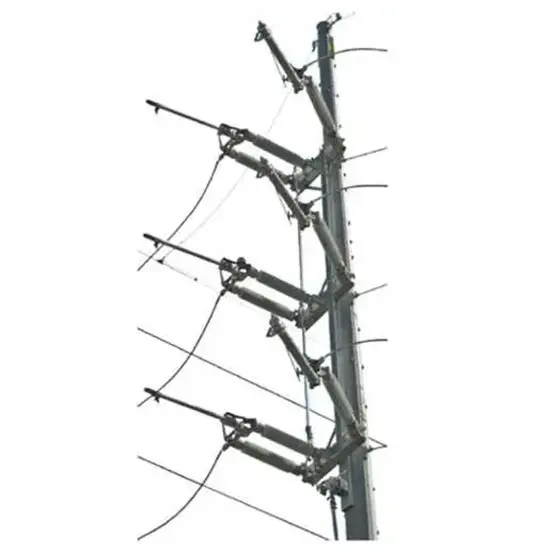
1.On long main lines with multiple branches, faults risk tripping the substation breaker and blacking out the whole feeder. Installed at branch/segment points, the RDK-24/300 resets automatically on transient faults and drops out load-free on permanent ones, isolating only the faulted branch .
2.With a 1-fast-3-slow substation recloser and sectionalizers set F1=3, F2/F3/F5=2, F4/F6=1 counts, any of 7 line segments is isolated on fault and the recloser restores the other six
3.Requiring no communication channel and no external supply, it fits remote lines without 4G or a master station, supporting local (non-communication) feeder automation
1.After closing by hookstick, counting starts once line current exceeds pickup .
2.When the upstream recloser trips and the line de-energizes — because the sectionalizer drops out only when load-free, its contacts fall safely to create a visible isolation gap.
3.After the programmed counts (1–4), the controller energizes the mechanism coil, releasing the pre-charged detent; the section drops out and the recloser restores healthy sections .
4.Transient faults never reach the count threshold — because the counter resets after the memory time (30–300 s), no crew visit is needed.
FAQ — 24 kV Drop-Out Sectionalizer (RDK-24/300)
Five questions from utilities operating 20 kV and 24 kV distribution networks in humid, coastal and salt-laden environments.
The insulation class changes; the operating logic does not. A 24 kV unit is dimensioned for a system highest voltage of Um 24 kV, which covers 20 kV networks with the margin that lightning impulse and switching overvoltages require. Two consequences follow that are specific to 20 kV practice. First, clearances grow: the bushing height and phase-to-structure distances of a 24 kV assembly are larger, so an existing 15 kV crossarm geometry cannot be reused without re-checking the phase-to-earth and phase-to-phase air gaps. Second, the neutral earthing regime matters. On impedance-earthed or compensated networks — common in French-derived practice — earth-fault current is deliberately limited, and a low-magnitude compensated earth fault may not produce a countable current pulse at all. That does not make the unit unsafe; it means earth-fault isolation on such networks remains a function of the upstream protection scheme, while the sectionalizer's counting duty is built on the phase-fault pulses it can definitely see.
A specific creepage of 25 mm/kV on a 24 kV system means a minimum leakage path of 600 mm phase-to-earth — roughly 60 % longer than the equivalent requirement on a 15 kV class insulator, which is precisely why a coastal 24 kV installation cannot share the insulator of an inland 15 kV one. The physics is well understood: airborne salt deposits a conductive layer on the insulator surface; morning dew or sea mist wets that layer; leakage current flows, dries the surface into bands, and dry-band arcing bridges the remaining distance into a full flashover. Elevating creepage is the primary defence, together with hydrophobic silicone sheds that force the water into droplets rather than a continuous film. Two practical points follow. Pollution severity should be taken from the utility's own pollution map rather than assumed, and the creepage figure must be fixed as a contractual requirement in the bill of materials — an insulator supplied "to standard" may satisfy dielectric tests and still fail in service at a coastal site.
Condensation is a leakage-current problem before it is a dielectric problem. The mechanism is a diurnal cycle: the assembly cools overnight by radiation, morning air arrives warm and moisture-laden, and water condenses on every surface cooler than the dew point — including the inside of an enclosure that has been opened in the field. Combined with dust and fungal growth, that film becomes a conductive path. Three design properties break the cycle: hydrophobic insulator surfaces, sealed interfaces that are only opened for a deliberate reason, and the absence of unnecessary external wiring — a drop-out sectionalizer takes its energy from line current, so it needs no external auxiliary supply and no voltage transformer, removing two of the most common moisture and tracking paths on pole-mounted equipment. Operationally, the discipline that matters is re-sealing after every parameter change and treating an annual insulation resistance and visual inspection as a scheduled task, not a fault response.
Set the count from the recloser's operation sequence, not from a rule of thumb: count = recloser trip operations − 1, with the most downstream position carrying the highest count. On a trunk where three positions must be discriminated in series, that requires an upstream recloser providing at least four trip operations — typically one fast and three delayed — so counts of 1, 2 and 3 can be assigned from the feeder end back towards the source. Two further settings must be verified. The memory time (30 s to 300 s) has to exceed the total duration of the reclose sequence, otherwise the count is wiped mid-cycle and the sequence restarts; and counted operations must run on the recloser's delayed curve (> 0.5 s) so each fault-current pulse lasts long enough to be registered. Finally, energising a 24 kV distribution transformer downstream produces a magnetising inrush that can resemble a fault pulse — which is why an inrush discrimination function covering both symmetrical and asymmetrical inrush is mandatory rather than optional on transformer-fed branches.
No. The 15 kV, 24 kV and 38 kV ratings share the same working principle, the same counting logic and the same setting method — but the parameter values are established per voltage class, and the 24 kV values are confirmed on a project-specific engineering basis. Three parameter groups change materially: the insulation level and the associated air clearances for Um 24 kV; the creepage distance required by the site's pollution severity; and the electrical and mechanical duty of the drop-out assembly itself, which becomes heavier as the interrupter and insulator grow. For a tender, ask Rockwell Energy for the 24 kV datasheet to state the system highest voltage, rated continuous current, short-time withstand current with its duration, creepage distance, and the type test evidence issued against IEEE C37.63. Those five items, stated for the 24 kV class, are what allow an evaluator to compare offers; a scaled-up 15 kV sheet does not.








 Login