Serie HV610 conversor de frecuencia especial para elevación

Atributos clave
| Marca | RW Energy |
| Número de modelo | Serie HV610 conversor de frecuencia especial para elevación |
| Frecuencia nominal | 50/60Hz |
| Serie | HV |
Descricións de produtos do fornecedor
Vista xeral
Coa fin de mellor atender as necesidades de aplicación dos clientes no sector de elevación, o produto está baseado na perspectiva da aplicación de elevación, integrando o control antibalancín, a protección contra o afloxo do cabo, a protección contra o deslizamento do gancho, o control de freno, o límite de deceleración, a velocidade con carga, os parámetros macro e outras funcións especiais, garantindo totalmente unha operación confiable, eficiente, segura e estable do equipo de elevación.
Características de rendemento
Especialización en características
Control antibalancín, suprimindo o balanceo do espaldero e operación eficiente
Ajustando a velocidade de funcionamento en tempo real segundo a variación da carga coa carga • Protección do gancho, detección do gancho, control de suspensión da saída do motor
Posicionamento fácil mediante a cooperación do límite de deceleración e o límite de parada
Protección contra o afloxo do cabo, subindo a unha velocidade fixa, acelerando lentamente e subindo suavemente ao detectar carga pesada
Pode seleccionarse o mecanismo de elevación correspondente segundo o valor de configuración macro dos parámetros de elevación
Conmutación entre múltiples motores, e soporta internamente 4 conxuntos de parámetros de motor.
Alta fiabilidade
Deseño independente de conducto de aire do conxunto para prever eficazmente a entrada de impurezas de polvo • Software de simulación térmica eficaz e preciso
Tecnoloxía e dispositivos avanzados de proba térmica e verificación para verificar eficazmente os resultados teóricos do deseño térmico
Procedementos de proba de verificación rigorosos de carga total e sobrecarga
Os produtos foron envellecidos a alta temperatura e carga, garantindo eficazmente a calidade de fábrica
O deseño de protección da placa de circuito é reforzado, antirroxo, impermeabilizado, antipolvo, etc
Alta adaptabilidade
Deseño de amplo rango de voltaxe, trifásico 380V~480V (-15%~+10%)
Filtro C3 incorporado, que suprime eficazmente os harmónicos de alta frecuencia xerados polo conversor de frecuencia
Deseño simple e amigable de interrupción de EMC, que pode reducir eficazmente a corrente de fuga ao chan
Deseño tipo libro, que reduce o volume do modelo tradicional en aproximadamente 40%
O conxunto pode instalarse lado a lado para ahorrar espazo de instalación.
Excelente control de rendemento
Soporte para o control de tracción de motores asíncronos trifásicos e motores síncronos de imán permanente
Soporte para o control V/F, vectorización aberta, control vectorial pechado
Gran par de arranque, OLVC: 0,5Hz/150%, CLVC: 0Hz/200%
Alta capacidade de sobrecarga, 150% de corrente nominal 60s, 180% de corrente nominal 10s
Cómodo e facil de usar
Máquina estándar de 132kW ou superior equipada de fábrica con teclado LED que pode soportar a introdución externa
A introdución externa do teclado para 110kW ou inferior pode estar equipada con teclado LED independente
Ao iniciar e detener o conversor de frecuencia, o motor pode ser controlado mantendo o freio • Función de control de múltiples velocidades, que realiza a operación de 16 velocidades a través do terminal de control
Función de servo cero, o motor
Profundidade PWM aleatoria para mellorar a dureza do motor
Modo de operación redundante do codificador que se cambia automaticamente á operación OLVC cando falla o codificador
Ampliación diversificada
Soporte para varias tarxetas de interface de código, soporte para tarxetas de expansión de terminais I/O
Soporte para Profibus-DP, Profinet IO, CANopen, Modbus-TCP/IP, EtherNet IP, Ethercat e outras comunicacións
Comissionamento autónomo e rápido
Soporte para conexión a software de fondo, facendo que a depuración e manutención sexan máis cómodas
Soporte para rexistro de eventos e rexistro de fallos
Parámetros principais
project |
Specifications and technical data |
|
Power input and output |
Input voltage |
380V(-15%)~480V(+10%) three-phase |
Input power frequency |
50Hz/60Hz ±5% |
|
Input voltage imbalance |
≤3% |
|
Output voltage |
0V~input voltage |
|
Output frequency |
0~600Hz |
|
Mainly control performance |
Motor type |
Asynchronous motor, synchronous motor |
Control mode |
V/F, OLVC (Open-Loop Vector Control), CLVC (Closed-Loop Vector Control) |
|
speed regulation range |
1:10 V/F; 1:100 OLVC; 1:1000 CLVC |
|
Start torque |
OLVC:150%(0.5Hz);CLVC:200%(0Hz) |
|
Torque accuracy |
≤±5%, under vector control mode |
|
Torque pulsation |
≤±5%, under vector control mode |
|
Steady speed accuracy |
OLVC: 0.2%; CLVC :0.01% |
|
Torque response |
≤5ms, under vector control |
|
acceleration and deceleration time |
0.0s~3200.0s;0.0min~3200.0min |
|
Torque increase |
0.0%~30.0% |
|
Overload capacity |
150%1min/5min、180%10s/5min |
|
VF curve |
Straight type, multi-point type |
|
Input frequency resolution |
Digital setting 0.01Hz; Analog setting: Maximum frequency ×0.025% |
|
Dedicated features |
Anti-shake function |
Prevents accidents caused by large swings of the load during acceleration or deceleration |
Anti-loose rope protection |
Accelerate slowly and rise smoothly according to whether the weight is lifted |
|
Hook protection |
After holding the gate, it detects whether the heavy object is hooked, and an alarm is issued, and the motor hovers |
|
Holding the brake control |
Control the brake holding device and loosening the brake through the judgment of frequency, current, etc., to avoid accidents such as slipping |
|
Joystick zeroing detection |
Determine whether the joystick is in neutral or not |
|
Command reverse control |
When the brake control is effective, it supports holding the brake to stop during the forward and reverse switching process, or running directly to the reversal frequency without holding the brake |
|
Accelerate and deceleration switching |
Support 3 frequency switching points to switch acceleration and deceleration time |
|
Deceleration limit |
Realize simple positioning function, automatic optimization of deceleration time |
|
Voltage suppression |
Automatically change the frequency to stabilize the bus voltage to prevent fault reporting |
|
Overload protection |
Prevents excessive loads from damaging the equipment |
|
Low-speed operation protection |
The main application is not suitable for machines that run at low speed for a long time |
|
Load as you go |
Automatically adjust the operating speed according to load changes to improve work efficiency |
|
Macro parameters |
According to the on-site application scenario, different lifting mechanisms choose different lifting macros |
|
Basic features: |
acceleration and deceleration curves |
Straight line, S-curve |
Simple PLC, multi-terminal speed |
16 speed operation is achieved through the control terminal |
|
Master-slave control |
It can realize the master-slave synchronous control function of two or more motors |
|
Automatic voltage adjustment |
When the grid voltage changes within a certain range, it can automatically keep the output voltage constant |
|
Multi-motor switching |
Four sets of motor parameters, which can realize the switching control of four motors |
|
Overvoltage and overcurrent stall control |
Automatic current and voltage limit during operation to prevent frequent overcurrent and overvoltage tripping |
|
Power outage and restart |
After the frequency converter is powered off, when it is powered on again, it will automatically run after the set time is reached |
|
Fast current throttling |
Avoid frequent overcurrent failures of the frequency converter |
|
Power input and output |
Frequency setting method |
Operation panel given, UP/DOWN terminal, multi-speed give, terminal pulse given, communication |
Analog input terminals |
AI1、AI2:0V~10V/ 0 (4)mA~20mA |
|
Digital input terminals |
DI1-DI5, 5 programmable digital inputs, optocoupler-isolated, drain/source compatible inputs |
|
The DI5 supports high-speed pulse input with a maximum input frequency of 100kHz |
||
Digital output terminals |
open-circuit collector output; Output Voltage Range: 0V~24V; Current load capacity: 50mA |
|
DO1 supports high-speed pulse output, maximum output frequency: 100kHz |
||
Analog output terminals |
1 way 0V~10V/0(4)mA~20mA |
|
Relay output |
1 contact type: FormC normally open + normally closed |
|
communication |
Communication protocol |
Modbus RTU (standard); Profibus-DP, Profinet IO, CANopen, Modbus TCP/IP, Ethercat, EtherNet/IP (optional) |
Usage environment |
altitude |
no derating is required within 1000 meters above sea level; At an altitude of 1000 meters ~ 3000 meters, the current must be reduced by 1% for every 100 meters of elevation |
Ambient temperature |
-25°C~+40°C (40°C to 55°C derating is allowed) |
|
humidity |
15%~95%, no condensation |
|
vibration |
0.75~110kW is the 3M3 standard, 2Hz≤f<9Hz, displacement 1.5mm, 9Hz≤f<200Hz, acceleration 5m/s2 |
|
132kW~400kW is the 3M5 standard, 2Hz≤f<9Hz, displacement 3mm, 9Hz≤f<200Hz, acceleration 10m/s2 |
||
Storage temperature |
−40°C~+70°C |
|
Place of use |
Indoors, there is no direct sunlight, no flammable and corrosive gases, liquids and conductive particles |
|
Options: |
code disk card, communication expansion card, I/O terminal expansion card |
|
Protection function |
Short circuit, overcurrent, overload, overvoltage, undervoltage, phase loss, overheating, external faults, etc |
|
Installation method: |
Loading machines and containers |
|
Protection level |
IP20 |
|
Cooling method |
Air cooling |
|

Produtos relacionados
-
RWV-300 Conxelente Rendemento AC DRIVE

-
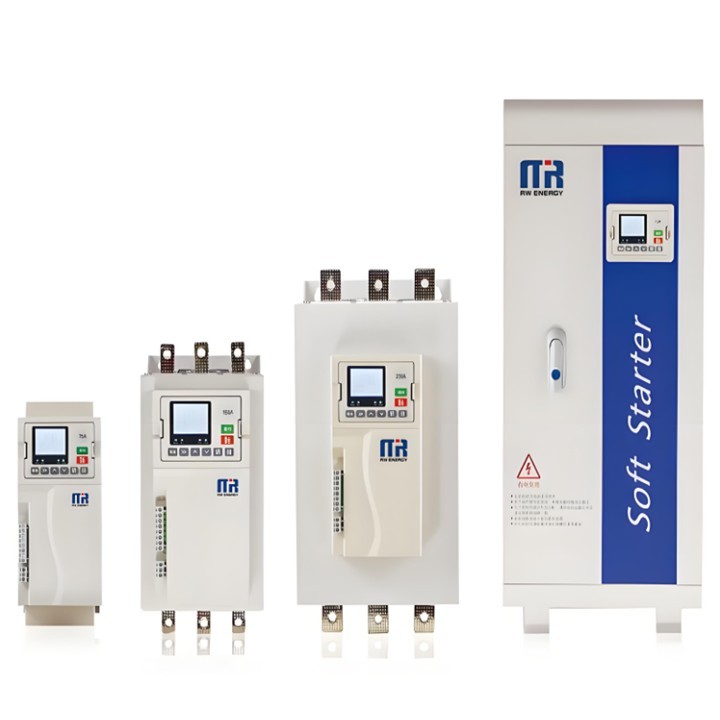
RWS-7000 Incorporado tipo bypass motor soft starter

-
RWS-6800 Arranque suave inteligente en liña para motores/armario
-
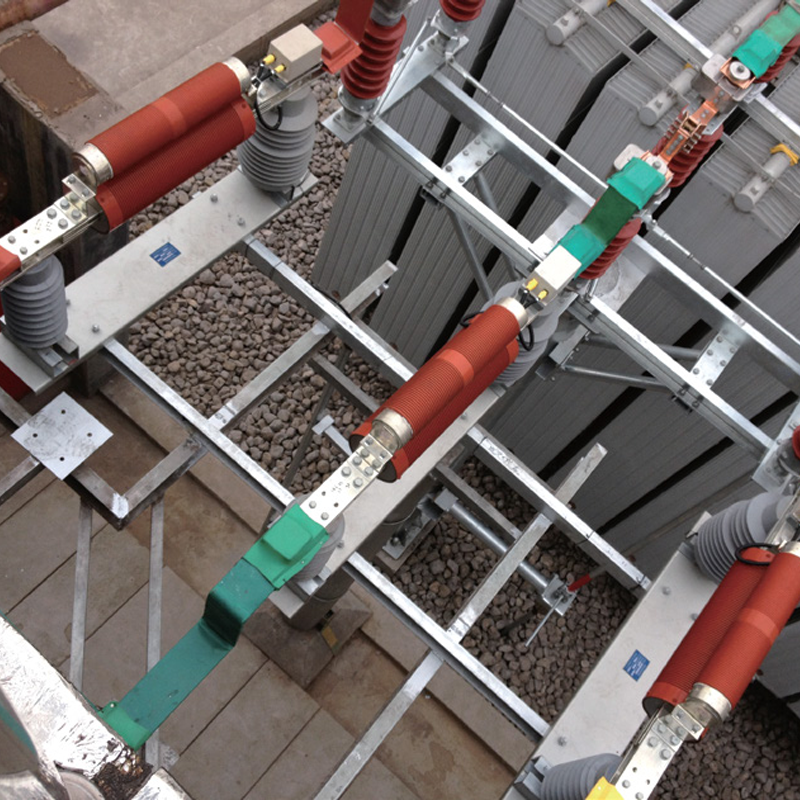
Limitador de corrente ultra-rápido
-
Serie HV510 de conversores de frecuencia de alto rendemento

-
Serie HD8000 de conversor de frecuencia de media tensión para corriente alterna

-
Serie HD2000 Conversor de frecuencia de media tensión (refrigerado por aire)

Coñecementos relacionados
-
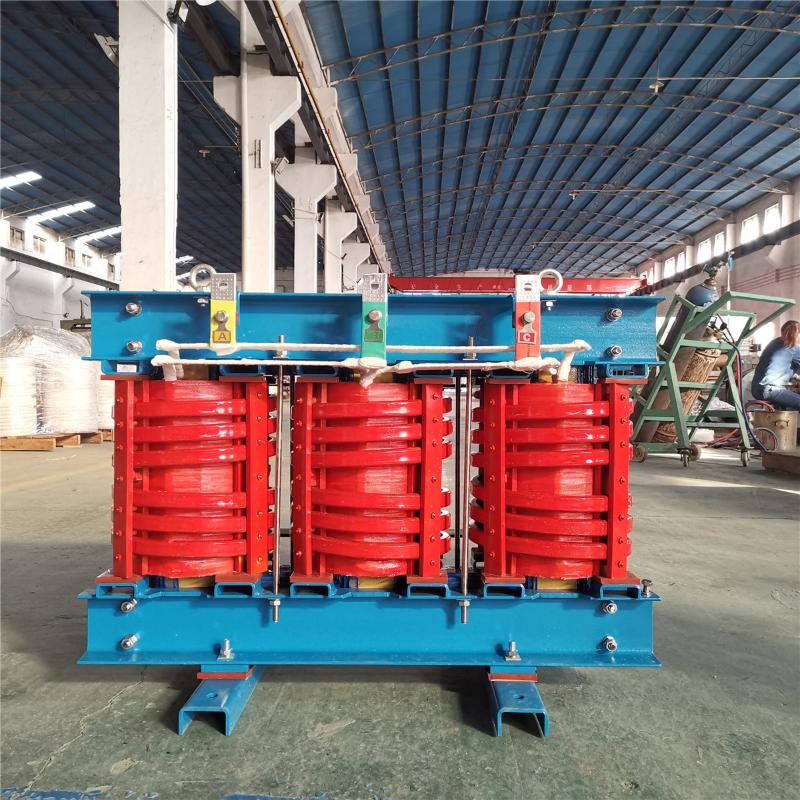 Como Implementar a Protección de Brecha do Transformador & Pasos Estandarizados para o ApagadoComo implementar medidas de protección do gap de terra da neutral do transformador?Nunha certa rede eléctrica, cando ocorre unha faltada de terra monofásica nunha liña de alimentación, tanto a protección do gap de terra da neutral do transformador como a protección da liña de alimentación actúan simultaneamente, causando un corte dun transformador que de outra forma estaria sano. A razón principal é que durante unha faltada monofásica no sistema, a sobretensión de secuencia cero causa a rupturaNoah12/05/2025
 -
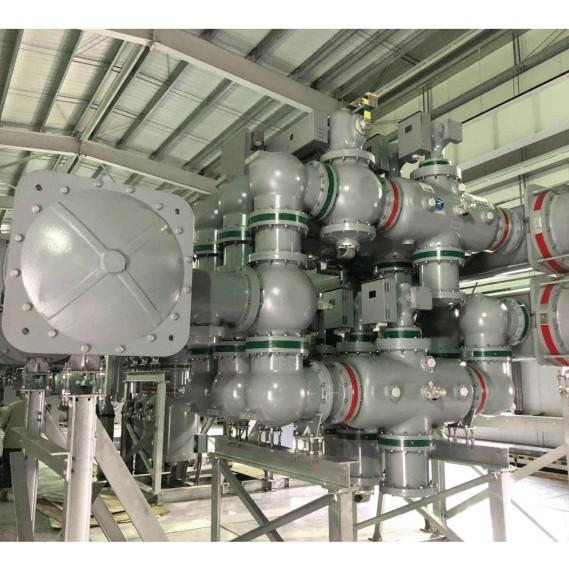 GIS Dual Grounding & Direct Grounding: Medidas Antisiniestro da State Grid 20181. En relación coa GIS, como se debe entender o requisito do punto 14.1.1.4 das "Dezoito Medidas Antisiniestro" da State Grid (Edición 2018)?14.1.1.4: O punto neutro dun transformador debe estar conectado a dous lados diferentes da malla principal de aterramento mediante dous conductores de descenso de aterramento, e cada conductor de descenso de aterramento debe cumprir os requisitos de verificación de estabilidade térmica. O equipamento principal e as estruturas de equipamentos deben ter dousEcho12/05/2025
 -
 Estruturas de Enrolamento Innovadoras e Comúns para Transformadores de Alta Voltagem e Alta Frecuencia de 10kV1.Estructuras innovadoras de bobinado para transformadores de alta tensión y alta frecuencia de clase 10 kV1.1 Estructura ventilada zonada e parcialmente encapsulada Dúas núcleos de ferrita en forma de U son acoplados para formar unha unidade de núcleo magnético, ou incluso assemblados en módulos de núcleo en serie/serie-paralelo. As bobiñas primaria e secundaria montanse nas pernas dereitas e esquerdas do núcleo, respectivamente, co plano de acoplamento do núcleo como capa de fronteira. Os bobiNoah12/05/2025
 -
 Como aumentar a capacidade dun transformador? Que necesita ser substituído para unha actualización da capacidade do transformador?Como aumentar a capacidade do transformador? Que componentes deben ser substituídos para unha actualización da capacidade do transformador?A actualización da capacidade do transformador refírese a mellorar a capacidade dun transformador sen substituír a unidade completa, mediante certos métodos. Nas aplicacións que requiren corrente alta ou potencia de saída alta, as actualizacións da capacidade do transformador son a miúdo necesarias para satisfacer a demanda. Este artigo introduce métodos paraEcho12/04/2025
 -
 Causas da corrente diferencial do transformador e perigos da corrente de polarización do transformadorCausas da corrente diferencial do transformador e perigos da corrente de polarización do transformadorA corrente diferencial do transformador é causada por factores como a asimetria incompleta do circuito magnético ou danos na isolación. A corrente diferencial ocorre cando os lados primario e secundario do transformador están aterrados ou cando a carga está desequilibrada.En primeiro lugar, a corrente diferencial do transformador leva ao desperdicio de enerxía. A corrente diferencial causa unhaEdwiin12/04/2025
 -
 Melhoramento da Lóxica de Protección e Aplicación Enxeñeira dos Transformadores de Aterramento nos Sistemas de Abastecemento Eléctrico de Transporte Ferroviario1. Configuración do sistema e condicións de operaciónAs transformadoras principais das subestacións principal do Centro de Convencions e Exposicións e da Estación Municipal de Zhengzhou Rail Transit adoptan unha conexión de enroscado en estrela/triángulo cun modo de operación de punto neutro non terra. No lado do bus de 35 kV, úsase unha transformadora Zigzag conectada ao terra a través dun resistor de baixo valor, e tamén abastece as cargas de servizo da estación. Cando ocorre unha falla de corEcho12/04/2025
Solucións Relacionadas
-
 Sistemas de automatización da distribución IEE-BusinessCal son as dificultades na operación e mantemento das liñas aéreas?Dificultade unha:As liñas aéreas da rede de distribución teñen unha ampla cobertura, terreo complicado, moitas ramas de radiación e fontes de enerxía distribuída, resultando en "moitos fallos nas liñas e dificultade no rastreo dos fallos".Dificultade Dous:O rastreo manual é laborioso e demorado. Ademais, non se pode controlar en tempo real a corrente, a tensión e o estado de conmutación da liña, debido á falta de medios técnicosRW Energy04/22/2025
 -
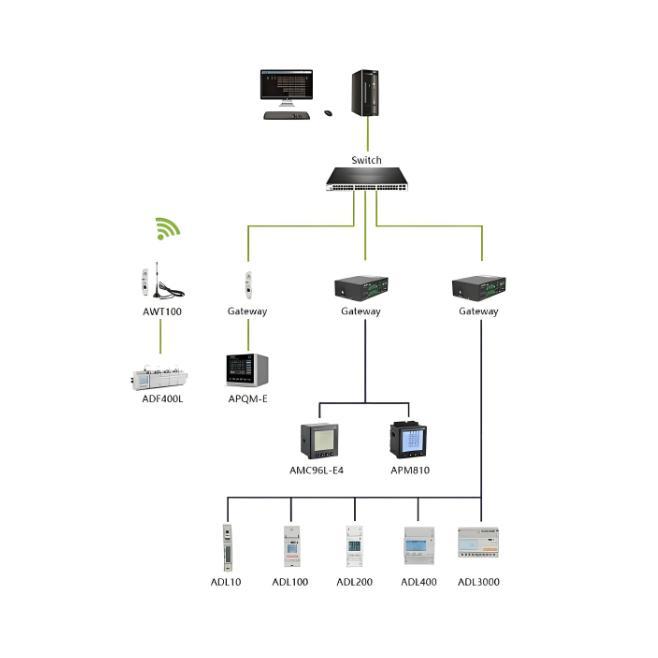 Solución Integrada de Monitorización Intelixente de Potencia e Xestión da Eficiencia EnerxéticaVisión xeralEsta solución ten como obxectivo proporcionar un sistema inteligente de monitorización de enerxía eléctrica (Sistema de Xestión de Potencia, PMS) centrado na optimización de extremo a extremo dos recursos de enerxía. A través da establecemento dun marco de xestión en bucle pechado de "monitorización-análise-decisión-execución", axuda ás empresas a transitar dende simplemente "usar a electricidade" a "xestionar a electricidade" de xeito intelixente, logrando así os obxectivos de usoRW Energy09/28/2025
 -
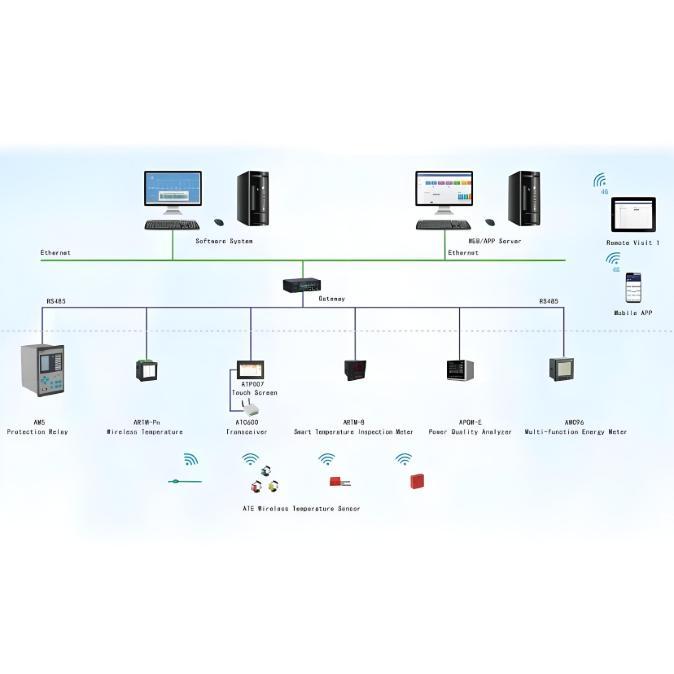 Unha nova solución modular de monitorización para sistemas de xeración de enerxía fotovoltaica e almacenamento1. Introdución e contexto de investigación1.1 Estado actual da industria solarComo unha das fontes renovables máis abundantes, o desenvolvemento e a utilización da enerxía solar converteuse nun elemento central na transición energética global. Nos últimos anos, impulsada por políticas a nivel mundial, a industria fotovoltaica (PV) experimentou un crecemento explosivo. As estatísticas indican que a industria PV de China experimentou un aumento asombroso de 168 veces durante o período do "DécimRW Energy09/28/2025