• Product
  • Suppliers
  • Manufacturers
  • Solutions
  • Free tools
  • Knowledges
  • Experts
  • Communities
Search


Applications of 10kV Feeder Voltage Regulators
Echo
Echo
Field: Transformer Analysis
China

Rural power grids are characterized by numerous nodes, wide coverage, and long transmission lines. Meanwhile, the electrical load in rural areas shows strong seasonality. These features lead to high line losses on 10 kV rural feeders, and during peak load periods, the voltage at the end of the line drops too low, causing user equipment to malfunction.

Currently, there are three common voltage regulation methods for rural power grids:

  • Upgrading the power grid :Requires substantial investment.

  • Adjusting the on - load tap - changer of the main transformer :Takes the substation bus voltage as the reference. However, frequent adjustments affect the safe operation of the main transformer and cannot ensure stable line voltage.

  • Switching shunt capacitors :Reduces voltage drop caused by reactive power when the grid has large inductive loads, but the voltage regulation range is narrow.

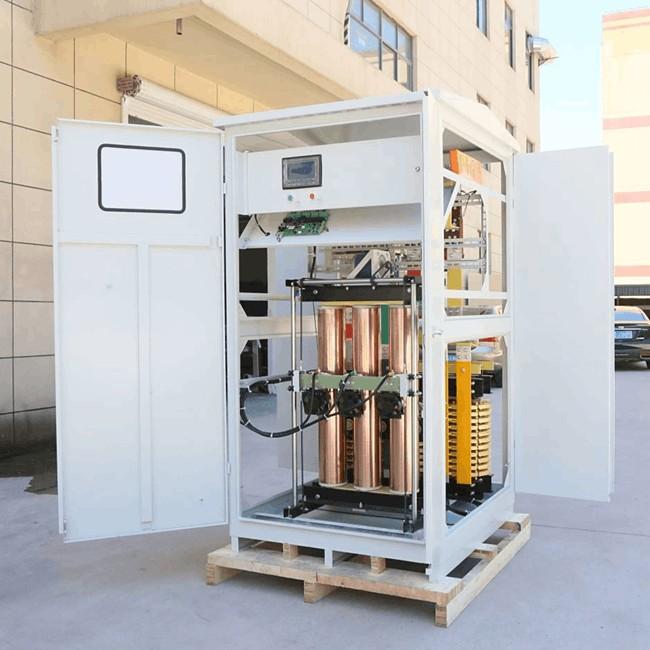
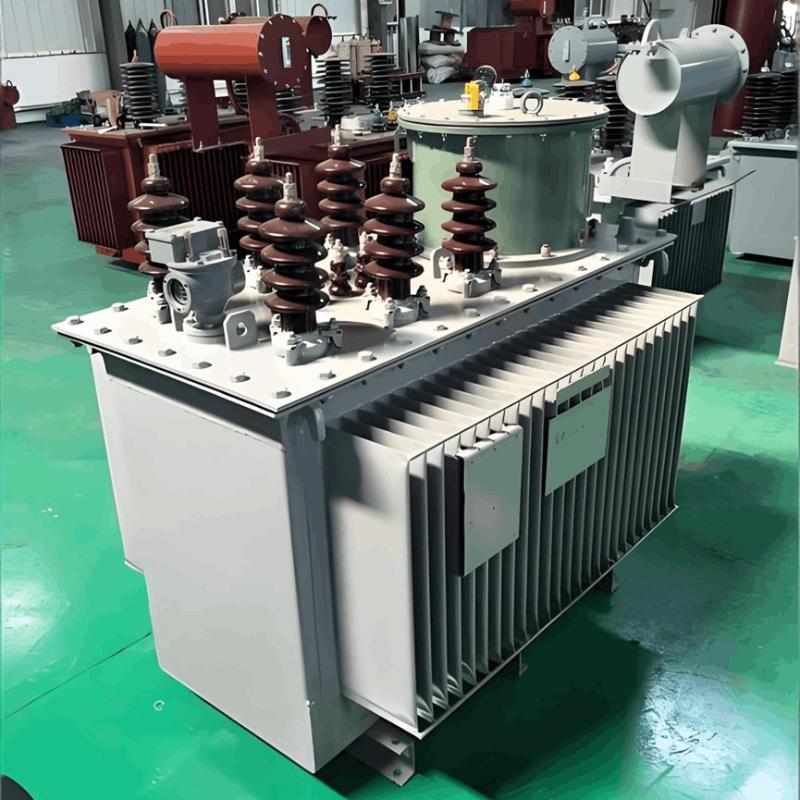
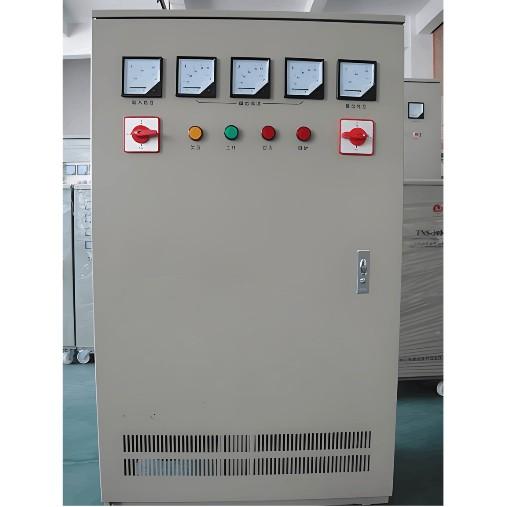
After final discussion, it was decided to adopt a new - type voltage regulation device — the 10 kV feeder voltage regulator (SVR), which effectively improved the voltage quality of the rural power grid.And through the comparison of measures to improve voltage quality in the following table, it can be seen that using feeder voltage regulators is currently the most effective way to enhance the voltage quality of rural 10 kV lines.

Application Example

Taking the 10 kV Tuanjie Line of a certain substation as an example, the installation process of the SVR is as follows:

  • Identify the critical point where voltage drops exceed acceptable limits.

  • Select SVR capacity based on the maximum load at the critical point.

  • Determine voltage regulation range according to the measured voltage drop.

  • Choose installation location prioritizing accessibility for maintenance.

Calculation Method

Line Parameters:

  • Length: 20 km

  • Conductor: LGJ - 50

  • Resistivity: R₀ = 0.65 Ω/km

  • Reactance: X₀ = 0.4 Ω/km

  • Transformer Capacity: S = 2000 kVA

  • Power Factor: cosφ = 0.8

  • Rated Voltage: Ue = 10 kV

Step 1: Calculate Line Impedance

  • Resistance: R = R₀ × L = 0.65 × 20 = 13 Ω

  • Reactance: X = X₀ × L = 0.4 × 20 = 8 Ω

  • Active Power: P = S × cosφ = 2000 × 0.8 = 1600 kW

  • Reactive Power: Q = S × sinφ = 2000 × 0.6 = 1200 kvar

Step 2: Voltage Drop Calculation
ΔU = (PR + QX)/U = (1600×13 + 1200×8)/10 = 3.04 kV

Step 3: SVR Sizing

  • Installation Location: 10 km from the source (critical point with measured voltage 9.019 kV).

  • Load at Critical Point: P = 1200 kW, cosφ = 0.8 → S = 1200/0.8 = 1500 kVA.

  • Selected SVR Capacity: 2000 kVA.

Step 4: Voltage Regulation Range

  • Input Voltage: U₁ = 9 kV (measured)

  • Target Output Voltage: U₂ = 10.5 kV

  • Required Regulation Range: 0~+20%.

Step 5: Loss Reduction Calculation
Post - installation:

  • Remaining Line Length: L₁ = 20 km - 10 km = 10 km

  • Power Loss Reduction:
    ΔP = R₀ × L₁ × (S²/U₁² - S²/U₂²)
    = 0.65 × 10 × (1500²/9² - 1500²/10.5²)
    = 63.9 kW

  • Net Reduction (after SVR loss): 63.9 kW - 4.4 kW = 59.5 kW

Economic Benefits:

  • Annual Energy Savings: 59.5 kW × 24 h × 30 days × 4 months ≈ 450,000 kWh

  • Cost Savings: 450,000 kWh × ¥0.33/kWh ≈ ¥60,000

  • Revenue Increase: ¥80,000 annually

  • Payback Period: <1 year

This demonstrates that SVRs are the most effective and economical solution for improving rural voltage quality.
 

Give a tip and encourage the author!
Recommended
Differences Between Linear Regulators, Switching Regulators, and Series Regulators
1.Linear Regulators vs. Switching RegulatorsA linear regulator requires an input voltage higher than its output voltage. It handles the difference between input and output voltages—known as the dropout voltage—by varying the impedance of its internal regulating element (such as a transistor).Think of a linear regulator as a precise “voltage control expert.” When faced with excessive input voltage, it decisively “acts” by “cutting off” the portion exceeding the desired output level, ensuring the
Edwiin
12/02/2025
Role of Three-Phase Voltage Regulator in Power Systems
Three-phase voltage regulators play a crucial role in power systems. As electrical devices capable of controlling the magnitude ofthree-phase voltage,they effectively maintain the stability and safety of the entire power system while enhancing equipment reliability and operational efficiency. Below, the editor from explains the main functions of three-phase voltage regulators in power systems as follows: Voltage Stabilization: Three-phase voltage regulators ensure that voltage remains within a s
Echo
12/02/2025
When to Use a Three-Phase Automatic Voltage Stabilizer?
When to Use a Three-Phase Automatic Voltage Stabilizer?A three-phase automatic voltage stabilizer is suitable for scenarios requiring stable three-phase voltage supply to ensure normal equipment operation, extend service life, and improve production efficiency. Below are typical situations that require the use of a three-phase automatic voltage stabilizer, along with analysis: Significant Grid Voltage FluctuationsScenario: Industrial zones, rural power grids, or remote areas where grid voltage f
Echo
12/01/2025
Three-Phase Voltage Regulator Selection: 5 Key Factors
In the field of power equipment, three-phase voltage stabilizers play a crucial role in protecting electrical devices from damage caused by voltage fluctuations. Selecting the right three-phase voltage stabilizer is essential to ensure stable operation of equipment. So, how should one choose a three-phase voltage stabilizer? The following factors should be considered: Load RequirementsWhen selecting a three-phase voltage stabilizer, it is essential to clearly understand the total power demand of
Edwiin
12/01/2025
Send inquiry
Download
Get the IEE Business Application
Use the IEE-Business app to find equipment, obtain solutions, connect with experts, and participate in industry collaboration anytime, anywhere—fully supporting the development of your power projects and business.