Separate vs Unified Regulation in Automatic Voltage Regulators
During the operation of power and electrical equipment, voltage stability is crucial. As a key device, the automatic voltage regulator (stabilizer) can effectively regulate voltage to ensure that equipment operates under appropriate voltage conditions. In the application of automatic voltage regulators (stabilizers), "individual-phase regulation" (separate regulation) and "three-phase unified regulation" (common regulation) are two common control modes. Understanding the differences between these two regulation modes is essential for the proper selection and application of automatic voltage regulators and for ensuring stable operation of power systems. Below, we introduce the differences between separate regulation and unified regulation in automatic voltage regulators (stabilizers).
Features of Automatic Voltage Regulators
Automatic voltage regulators are primarily used to stabilize the input voltage for various types of equipment. They are widely applicable in factories, rural areas, scientific research facilities, production assembly lines, construction machinery, precision instruments, machine tools, medical equipment, hotels, sports venues, cinemas and theaters, elevators, radio stations, computer rooms, and any location requiring a stable AC power supply.
Automatic voltage regulators offer high voltage regulation accuracy, no waveform distortion, no phase shift, fast response time, high efficiency, high power factor, and the ability to operate continuously. They can handle resistive, capacitive, and inductive loads.
To accommodate locations with unbalanced grid voltages or unbalanced loads, three-phase separate-regulation automatic voltage regulators have been specially designed and manufactured.
Differences Between Separate Regulation and Unified Regulation
A separate-regulation stabilizer consists of three independent control circuits, three sets of motor-driven mechanisms, and three sets of voltage regulators (compensating-type regulators with compensation transformers). Each phase operates as an independent unit, with its feedback signal derived from its own phase output voltage. The electrical and magnetic circuits are self-contained and do not interfere with the other two phases. Regulation accuracy is adjustable within 1% to 5%.
A unified-regulation stabilizer consists of one control circuit, one set of motor-driven mechanism, and one set of voltage regulator (compensating-type with compensation transformer). The feedback signal is taken from the average or composite of the three-phase output voltages, and the electrical and magnetic circuits are integrated across all three phases. Regulation accuracy is also adjustable within 1% to 5%, typically set at around 3%. This type requires a relatively balanced grid voltage and load condition.
In summary, in practical applications, either separate regulation or unified regulation can be selected based on specific requirements. The above is an introduction to the differences between separate and unified regulation in automatic voltage regulators (stabilizers). We hope this information is helpful.
-
IEC Standard voltage regulator control compliant for Industrial Manufacturing Industry

-
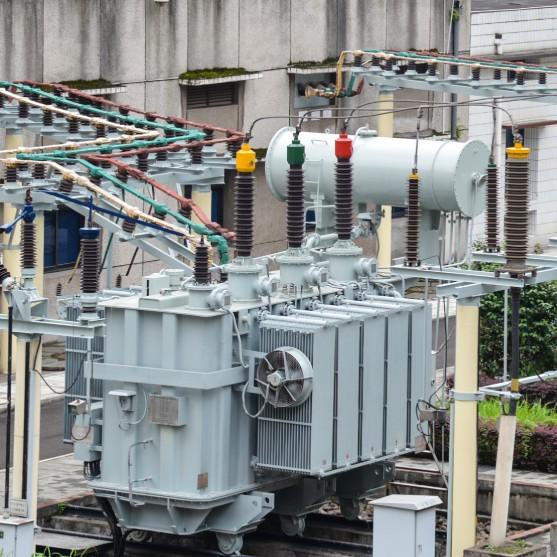
Automatic Tap - Changing Voltage Regulator – 7.62 kV 11kV 13.8 kV 14.4 kV 19.92 kV 34.5 kV, IEEE compliant for Power Industry

-
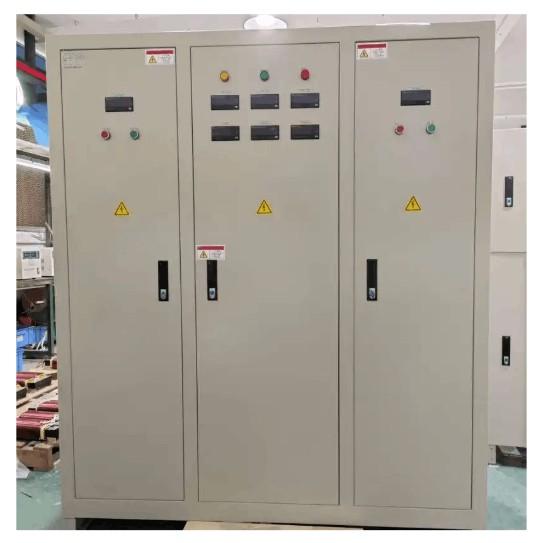
30-800kVA 3-Phase AC Power Voltage Stabilizer

-
6kV 6.35kV 7.62kV 13.8kV Overhead Line Single Phase Automatic Step Voltage Regulator