• Product
  • Suppliers
  • Manufacturers
  • Solutions
  • Free tools
  • Knowledges
  • Experts
  • Communities
Search


Chinese String Inverter TS330KTL-HV-C1 Obtains UK G99 COC Certificate

Baker
Baker
Field: News
Engineer
4-6Year
Canada

The UK grid operator has further tightened certification requirements for inverters, raising the market entry threshold by mandating that grid-connection certificates must be of the COC (Certificate of Conformity) type.

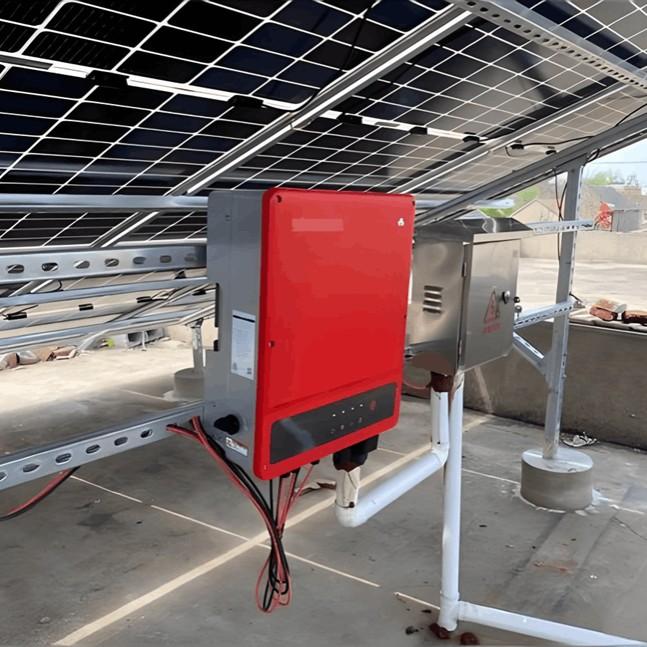
The company’s self-developed string inverter, featuring a high-safety design and grid-friendly performance, has successfully passed all required tests. The product fully complies with the technical requirements for four distinct grid-connection categories—Type A, Type B, Type C, and Type D—covering various voltage levels and power capacities. This achievement demonstrates the inverter’s outstanding performance, reliable quality, and excellent grid compatibility.
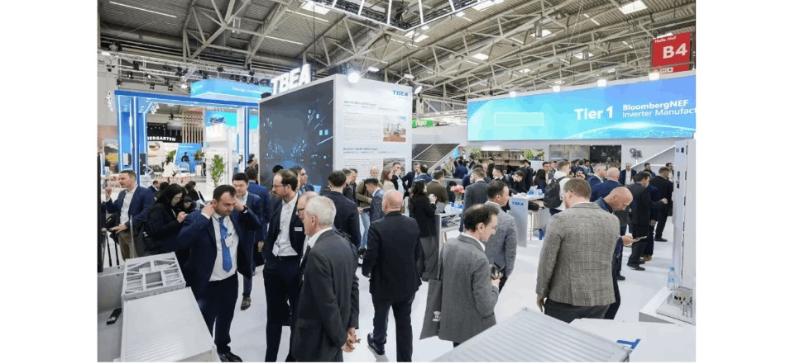
String Inverter.jpg

The TS330KTL-HV-C1 inverter incorporates advanced inverter technology and intelligent control algorithms, offering high conversion efficiency and low failure rates. It effectively enhances the power generation efficiency and stability of photovoltaic systems. During grid-connection testing, it excelled in multiple stringent evaluations, including grid connection characteristics, fault ride-through capability, and power quality, thereby securing its qualification for the UK market.

Looking ahead, Chinese inverter manufacturers will continue to uphold the principles of technological innovation and superior quality, constantly improving product performance and reliability to meet global market challenges. They remain committed to delivering higher-quality, more efficient products and services to customers worldwide, supporting the global energy transition and sustainable development.
Give a tip and encourage the author!
Recommended
Chinese Protection Relay Earns IEC 61850 Ed2.1 Level-A Certification
Recently, the NSR-3611 low-voltage protection and control device and the NSD500M high-voltage measurement and control device—both developed by a Chinese protection and control equipment manufacturer—successfully passed the IEC 61850 Ed2.1 Server Level-A certification test conducted by DNV (Det Norske Veritas). The devices have been awarded the international Level-A certification by the Utilities Communication Architecture International Users Group (UCAIug). This milestone marks the manufacturer
Baker
12/02/2025
China Develops Largest 750kV 140Mvar Stepped-Controlled Reactor
Chinese reactor manufacturer successfully completed all tests in one go for the nation’s largest-capacity 750 kV, 140 Mvar stepped-controlled shunt reactor developed for the Turpan–Bazhou–Kuche II Circuit 750 kV transmission and transformation project. The successful completion of these tests marks a new breakthrough in the core manufacturing technology of 750 kV reactors by the Chinese manufacturer, pioneers a new field for 750 kV stepped-controlled shunt reactors in China, and lays a solid fou
Baker
12/01/2025
How to Resolve the Islanding Lockout of Grid-Connected Inverters
How to Resolve the Islanding Lockout of Grid-Connected InvertersResolving the islanding lockout of a grid-connected inverter usually refers to situations where, despite the inverter appearing to have a normal connection to the grid, the system still fails to establish an effective connection with the grid. Below are general steps to address this issue: Check inverter settings: Verify the inverter’s configuration parameters to ensure they comply with local grid requirements and regulations, inclu
Echo
11/07/2025
What Are the Common Inverter Fault Symptoms and Inspection Methods? A Complete Guide
Common inverter faults mainly include overcurrent, short circuit, ground fault, overvoltage, undervoltage, phase loss, overheating, overload, CPU malfunction, and communication errors. Modern inverters are equipped with comprehensive self-diagnostic, protection, and alarm functions. When any of these faults occurs, the inverter will immediately trigger an alarm or shut down automatically for protection, displaying a fault code or fault type. In most cases, the fault cause can be quickly identifi
Felix Spark
11/04/2025
Related Products
Send inquiry
Download
Get the IEE Business Application
Use the IEE-Business app to find equipment, obtain solutions, connect with experts, and participate in industry collaboration anytime, anywhere—fully supporting the development of your power projects and business.