1. Project Background
1.1 Regional Overview
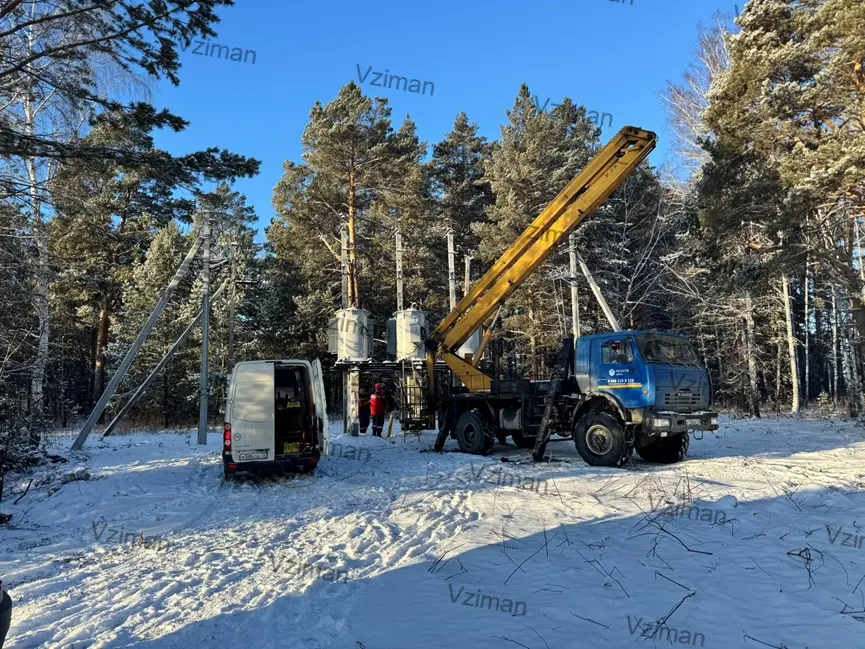
Altai Krai is located in the south of Western Siberia, Russia, bordering Kazakhstan. The region has a continental climate characterized by long, harsh winters, with minimum temperatures reaching -45°C and snow cover lasting more than five months annually. The local population is predominantly agricultural, widely dispersed across rural areas. The existing distribution network consists mainly of radial 10 kV overhead lines with large supply radii and aging infrastructure.
The scope of this upgrade project is summarized below:
|
Item
|
Data
|
|
Administrative villages covered
|
78
|
|
Population served
|
Approx. 45,000
|
|
Supply area
|
Approx. 95 km²
|
|
10 kV lines constructed / upgraded
|
180 km
|
|
Voltage regulators deployed
|
29 units
|
1.2 Key Challenges
Prior to the upgrade, the 10 kV distribution network in this region presented the following significant issues:
- Severe undervoltage at line ends: The large supply radius of radial lines caused pronounced voltage drops during peak load periods. Voltage deviations at certain terminal nodes exceeded the ±5% limit specified in GOST 32144, disrupting normal operation of agricultural equipment and household appliances.
- Frequent voltage fluctuations: Alternating load patterns between the agricultural irrigation season and winter heating demand caused significant load flow variations, making stable voltage quality difficult to maintain.
- Long lines, multiple branches, difficult manual inspection: The combination of low population density and extreme winter conditions made traditional manual voltage regulation too slow to respond in real time.
- Demanding environmental requirements: Extreme cold, heavy snowfall, and ice loading imposed stringent requirements on the mechanical structure, insulation performance, and sealing integrity of the equipment.
2. Technical Specifications
2.1 Main Technical Parameters
|
Parameter
|
Specification
|
|
Model
|
RVR
|
|
Mounting method
|
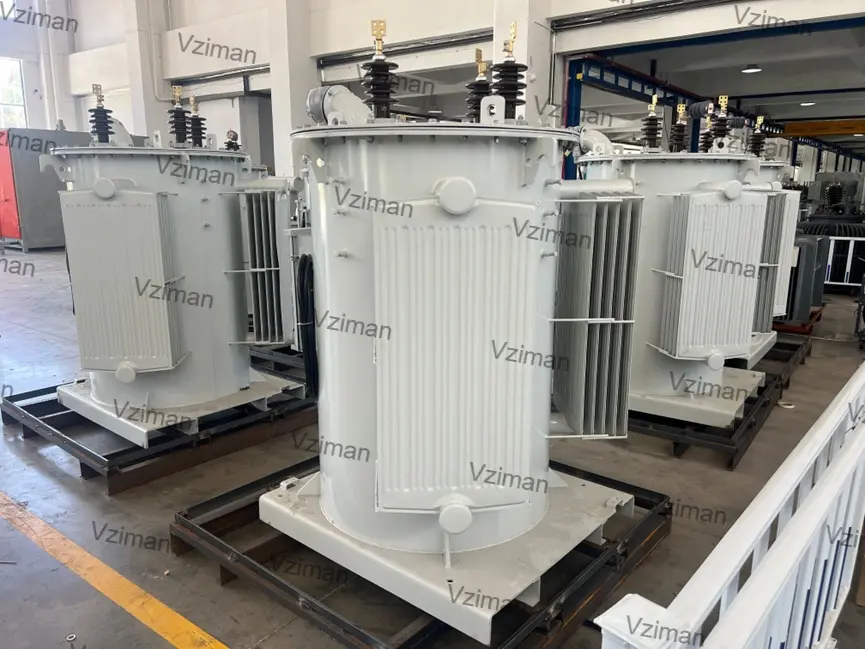
Pole-mounted (double-pole crossarm)
|
|
System voltage
|
10 kV
|
|
Rated capacity
|
300 kVA
|
|
Rated load current
|
300 A
|
|
Power-frequency withstand voltage
|
32 kV
|
|
Current transformer ratio
|
400 A
|
|
Voltage regulation range
|
±10%
|
|
Regulation method
|
On-load automatic
|
|
Number of steps
|
16 steps (step size: 1.25% per step)
|
|
Protection degree
|
IP55
|
|
Minimum operating temperature
|
-45°C
|
|
Applicable standards
|
GOST, TR CU, EAC
|
2.2 Certification and Standards Compliance
Prior to delivery, the equipment completed the following certification and standards verification:
- EAC Certification (Eurasian Conformity): Satisfies the mandatory market access requirements for Russia and the Eurasian Economic Union.
- GOST Standards: Electrical performance, insulation withstand voltage, and temperature rise comply with the applicable GOST technical specifications.
- TR CU Technical Regulations: Complies with the relevant Eurasian Economic Union technical regulations on electrical equipment and electromagnetic compatibility.
3. Key Components and Manufacturing
3.1 Key Components
|
Component
|
Design Features
|
|
On-load tap changer
|
Maintenance-free design; supports switching under load; mechanical service life meets long-term operation requirements
|
|
Windings and core
|
High-grade silicon steel laminations and enameled wire; low-loss design to minimize long-term energy consumption
|
|
Sealed enclosure
|
Fully welded sealed structure; IP55 protection against snow ingress, ice, and condensation
|
|
Current transformer
|
400 A ratio; provides current sampling for protection coordination
|
|
Automatic controller
|
Built-in voltage sensing and regulation logic; responds to line voltage changes and executes tap switching in real time
|
|
Cold-weather treatment
|
Key mechanical components use low-temperature-rated materials; seals use -45°C-rated compounds to prevent cold-weather embrittlement
|
3.2 Cold-Weather Design
The equipment incorporates the following specific enhancements to withstand the extreme -45°C operating conditions of Altai Krai:
- The enclosure shell is fabricated from low-temperature-rated steel plate; all welds are fully sealed to prevent meltwater ingress and subsequent ice expansion damage.
- All exposed fasteners and terminal connections are hot-dip galvanized for corrosion protection while maintaining reliable electrical conductivity at low temperatures.
- Gaskets and sealing rings use low-temperature rubber compounds to maintain effective sealing under extreme cold.
- Controller electronics and secondary components have been verified through low-temperature aging tests to confirm stable operation at -45°C.
4. Testing
4.1 Type Tests
In accordance with GOST and relevant IEC standards, the following type tests were completed:
- Lightning impulse withstand voltage test
- Switching impulse withstand voltage test
- Short-circuit withstand capability test
- Temperature rise test
- Low-temperature environmental adaptability test (-45°C)
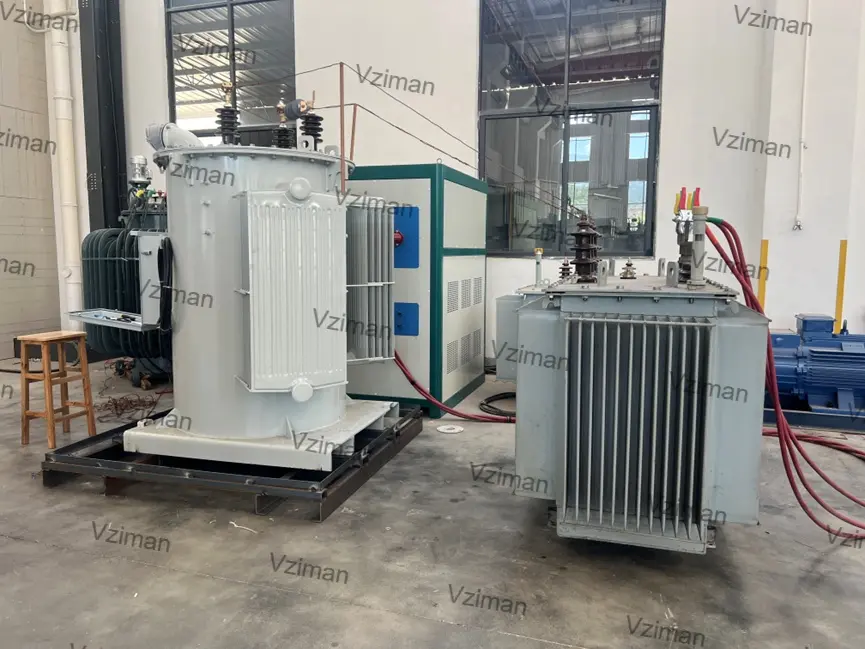
4.2 Routine Tests
Every unit underwent the following routine tests prior to delivery:
|
Test Item
|
Description
|
|
Power-frequency withstand voltage test
|
Verifies integrity of main and auxiliary insulation
|
|
Turns ratio and polarity measurement
|
Confirms correct ratio at each tap position
|
|
No-load loss and no-load current measurement
|
Validates core performance
|
|
Load loss and short-circuit impedance measurement
|
Validates winding performance
|
|
On-load tap changer operation test
|
Verifies accurate switching at all tap positions without failure
|
|
Automatic controller functional test
|
Verifies voltage detection and automatic regulation logic
|
|
Sealing inspection
|
Confirms no leakage at enclosure and fittings
|
5. Packaging and Transportation
5.1 Packaging
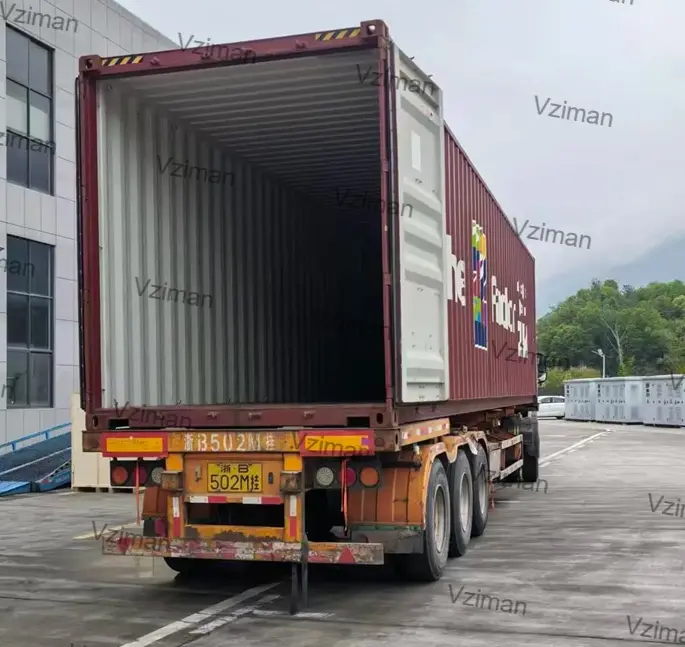
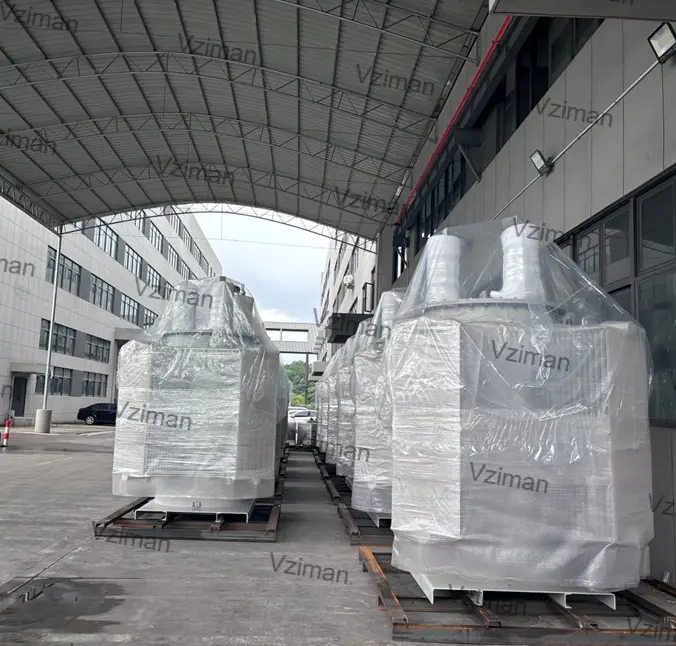
- Each voltage regulator is secured on a wooden pallet, wrapped in moisture-barrier film, and enclosed in a wooden crate to withstand long-distance sea and overland transit.
- Interior cushioning material is used to protect against vibration damage during transport.
- Each unit ships with installation drawings, an operations manual (Russian language), factory test report, and certificate of conformity.
5.2 Transportation
- Route: China → Russia (via overland border crossing, then onward to Altai Krai).
- Shipment status was monitored throughout transit to ensure equipment arrived at the installation site in undamaged condition.
6. Installation and Summary
6.1 Installation
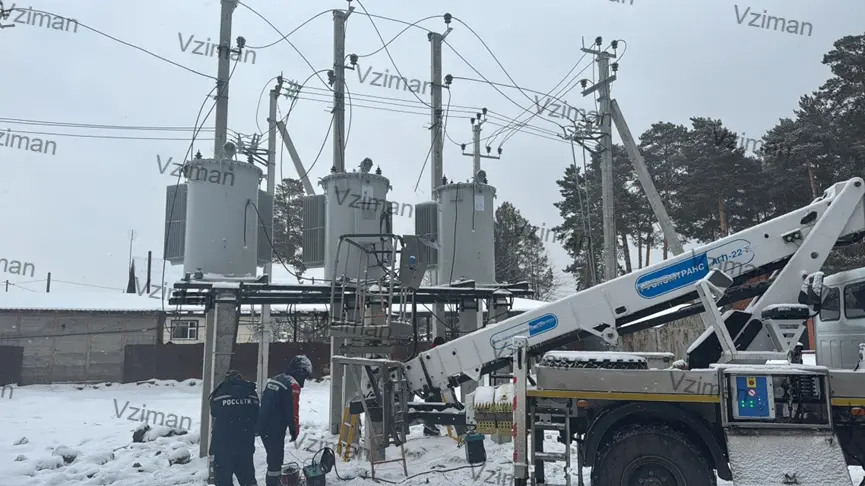
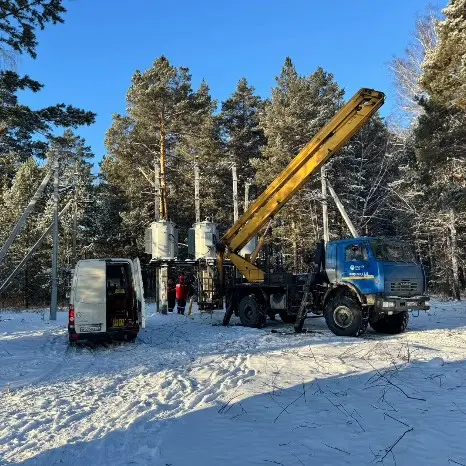
- Units were installed using a double-pole crossarm pole-mounted configuration, compatible with standard 10 kV overhead line pole structures.
- The installation team provided on-site technical support, working alongside the local construction contractor to complete equipment positioning, primary wiring, secondary wiring, and controller parameter commissioning.
- The 29 units were deployed according to a line-segmentation strategy: along the 180 km 10 kV network, placement priority was given to nodes with the greatest voltage drop based on voltage distribution analysis, with an average installation spacing of approximately 6.2 km, achieving effective voltage compensation across the entire line. Post-commissioning monitoring data show that the terminal node at the far end of the line — approximately 38 km from the source substation — recorded a voltage of 8.3 kV (deviation: -17%) before the upgrade, which has since risen and stabilized at approximately 9.8 kV (deviation within -2%), successfully entering the ±5% compliant range required by GOST 32144.
- Following installation, each unit was energized and commissioned on site to confirm normal operation of the automatic voltage regulation function.
6.2 Project Summary
This upgrade project was delivered in November 2025. The 29 uints RVR on-load automatic voltage regulators are now deployed at key nodes along the distribution lines serving 78 administrative villages in Altai Krai, covering approximately 45,000 residents across an area of approximately 95 km².
Since commissioning, the equipment has contributed to:
- Improved terminal voltage quality: The automatic regulation function responds in real time to load variations, keeping terminal voltage deviations within a controlled range in support of GOST 32144 power quality requirements.
- Enhanced supply reliability: Reduced incidence of equipment malfunctions and power quality complaints attributable to chronic undervoltage.
- Reduced dependence on manual intervention: On-load automatic regulation eliminates the need for manual tap adjustments — a particular advantage during extreme cold and heavy snowfall conditions, reducing the frequency of maintenance personnel dispatches in hazardous weather.
- Operation in harsh climatic conditions: The fully sealed, cold-weather-rated design supports stable operation at temperatures down to -45°C under snow loading and icing conditions.
7. Lifecycle Services
|
Service Phase
|
Content
|
|
Pre-delivery
|
Factory acceptance support; factory test reports; Russian-language technical documentation
|
|
Installation and commissioning
|
On-site technical support; controller parameter setting; energization and functional verification
|
|
Warranty period
|
Technical response and fault handling support throughout the warranty period
|
|
Long-term operational support
|
Spare parts supply; remote technical consultation; operational data analysis support
|
The full lifecycle design of the equipment takes into account the limited maintenance resources typical of rural distribution networks in Russia, with a priority on maintenance-free or low-maintenance configurations to reduce the total cost of ownership.
This document is a project application case record. Technical parameters are subject to the official factory documentation.








 Login
Login