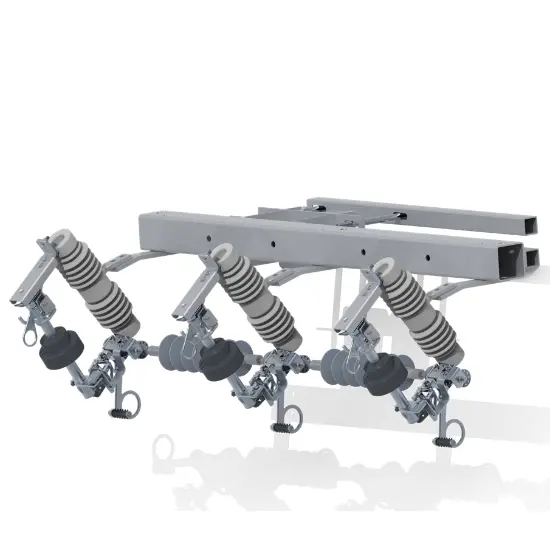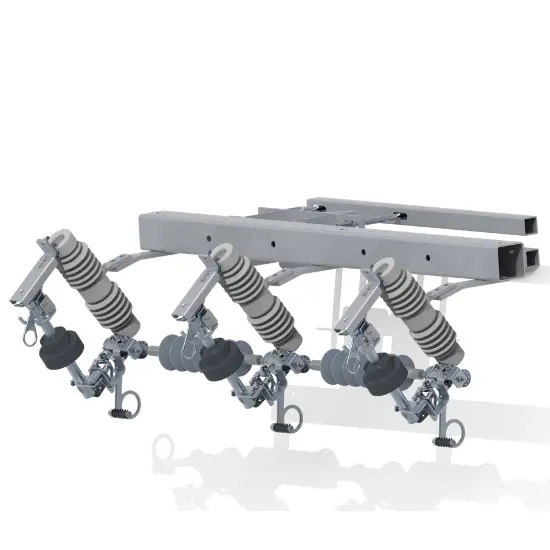
| Brand | Rw Energy |
| Series | RDK |
| Rated voltage | 15kV |
| Rated frequency | 60 Hz / 50 Hz (Selectable) |
| Rated continuous current | 300A |
| Current accuracy | ±5% |
| Pickup (programmable) | 16–480 A( 7 gears) |
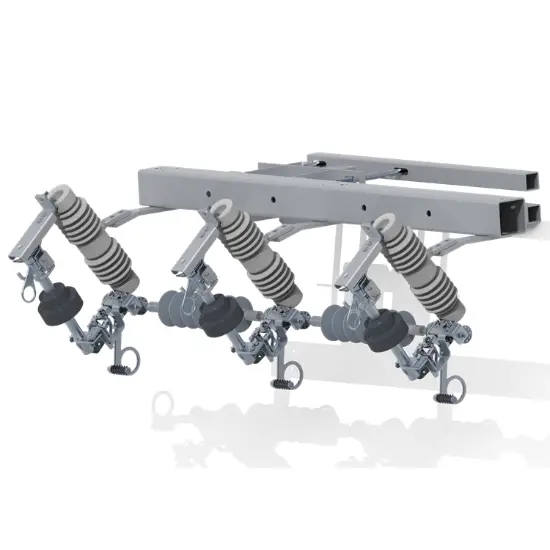
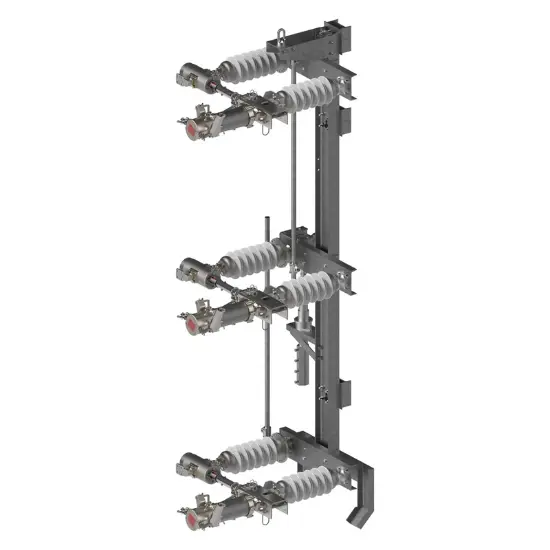
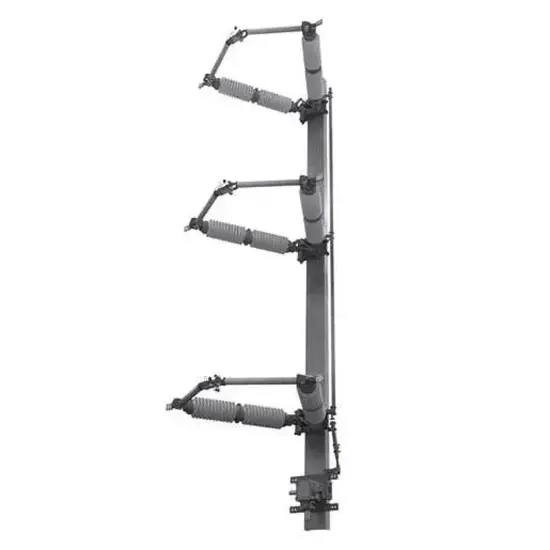
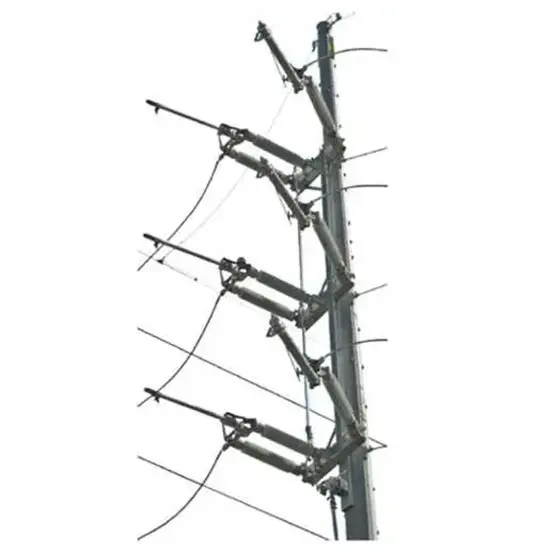
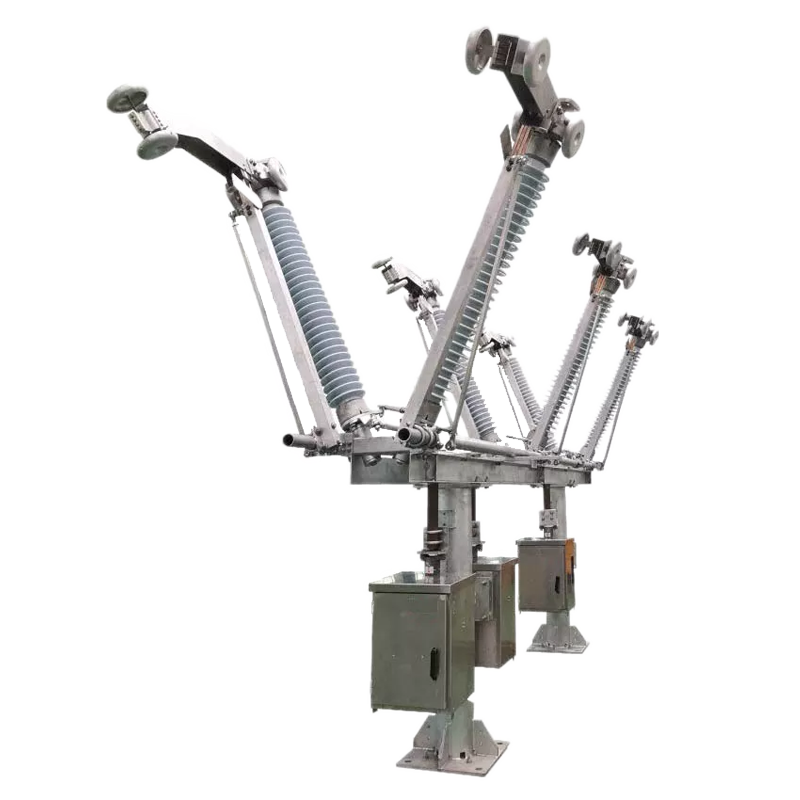
The RDK-15/300, developed by Zhejiang Rockwell Energy for domestic and overseas 15 kV, 50/60 Hz distribution systems, coordinates with reclosers or autoreclosing breakers to confine outages to the faulted segment . Because it distinguishes transient from permanent faults by counting fault-current events, it acts only on permanent faults — transient faults reset automatically after the programmable memory time (30–300 s) (p.3). Because its electronic controller is powered by line-current induction instead of an external auxiliary supply, it needs no PT, no batteries and no routine maintenance — main-circuit resistance ≤300 μΩ, current measurement accuracy ±5% .
| Parameter | Value |
| Rated voltage | 15 kV |
| Rated frequency | 60 Hz / 50 Hz (Selectable) |
| Rated continuous current | 300 A |
| Minimum line current | 10 A |
| Current accuracy | ±5% |
| Main-circuit resistance | ≤300 μΩ |
| Pickup (programmable) | 16–480 A(7 gears) |
| Counts (programmable) | 1 / 2 / 3 / 4 |
| Reset (memory) time | 30–300 s( 1 s) |
| Momentary rating | 12 kA |
| Surge withstand | 65 kA |
| Ambient temperature | -40 ℃ ~ +60 ℃ |
| Altitude / Wind pressure | ≤2,000 m / ≤700 Pa |
| USB port | IP68 |
| Event log | 100 records, Excel export |
1.On long main lines with multiple branches, faults risk tripping the substation breaker and blacking out the whole feeder. Installed at branch/segment points, the RDK-15/300 resets automatically on transient faults and drops out load-free on permanent ones, isolating only the faulted branch .
2.With a 1-fast-3-slow substation recloser and sectionalizers set F1=3, F2/F3/F5=2, F4/F6=1 counts, any of 7 line segments is isolated on fault and the recloser restores the other six
3.Requiring no communication channel and no external supply, it fits remote lines without 4G or a master station, supporting local (non-communication) feeder automation
1.After closing by hookstick, counting starts once line current exceeds pickup .
2.When the upstream recloser trips and the line de-energizes — because the sectionalizer drops out only when load-free, its contacts fall safely to create a visible isolation gap.
3.After the programmed counts (1–4), the controller energizes the mechanism coil, releasing the pre-charged detent; the section drops out and the recloser restores healthy sections .
4.Transient faults never reach the count threshold — because the counter resets after the memory time (30–300 s), no crew visit is needed.
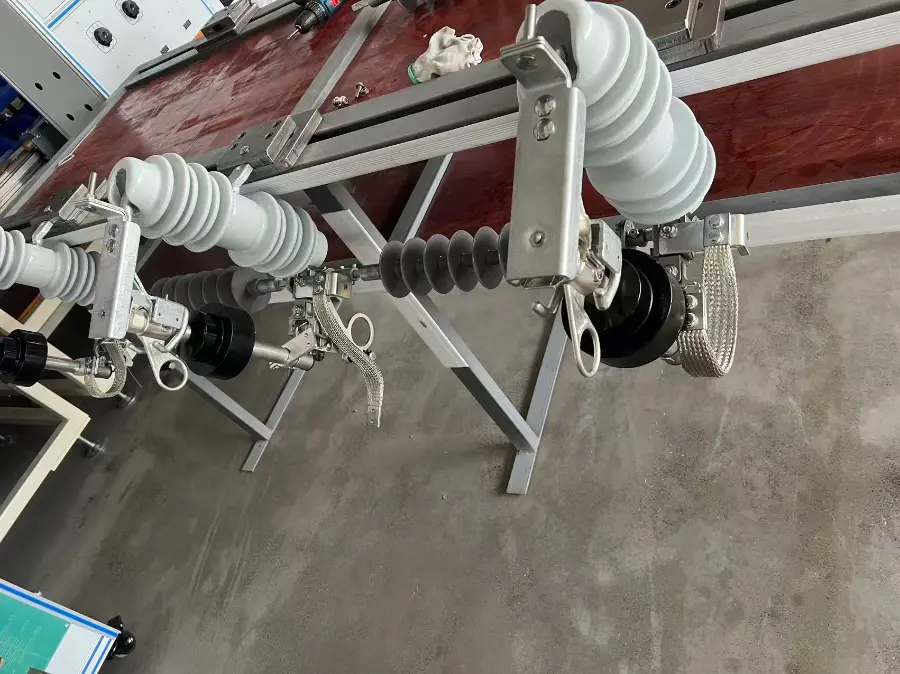
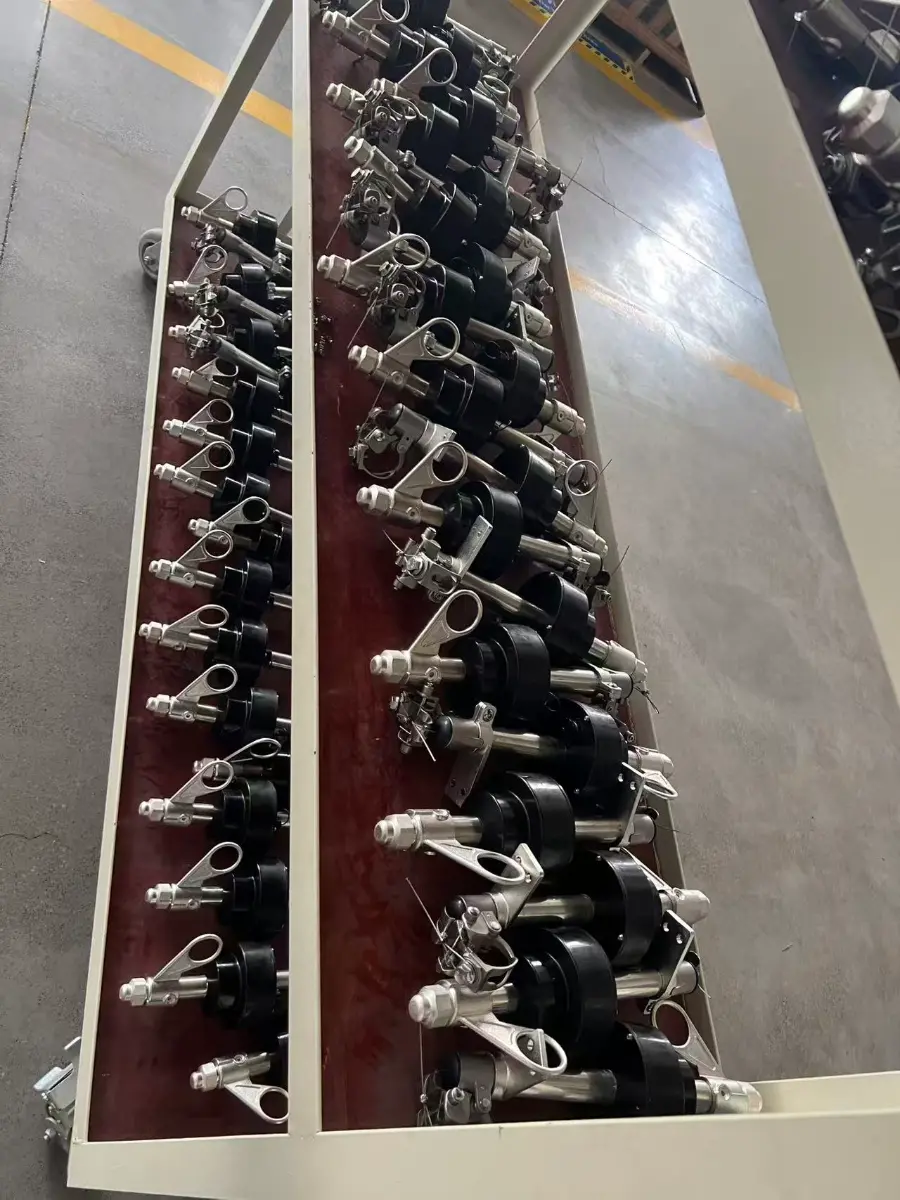
FAQ — 15 kV Drop-Out Sectionalizer (RDK-15/300)
Five questions engineers ask before applying a 15 kV drop-out sectionalizer on an 11 kV or 15 kV rural feeder.
Yes — 15 kV is the insulation class, and the unit operates on an 11 kV system without derating, because the binding constraint is current, not voltage. The value on a long rural radial feeder comes from sectionalising the line, not from protecting the whole feeder. The practical placement rule on our projects is one unit where a branch leaves the trunk and carries enough connected load to justify isolating it, plus a further unit on any branch longer than about 5 km, so a permanent fault removes a few kilometres of line rather than the entire branch. The true ceiling is not cost but count logic: every unit must be assigned a count of recloser trip operations − 1 or fewer, so a recloser configured as one fast plus three delayed trips can supervise at most three counting positions in series (counts 1, 2 and 3). Beyond three, coordination — not hardware — becomes the limiting factor.
This is the classic light-loading trap, and it has two separate thresholds. The measurement floor is 10 A on the RDK-15/300: below that the controller is blind, so a branch sitting at 12 A is uncomfortably close to the edge and a 6 A branch cannot be supervised at all. The self-power floor is separate: the controller charges from line current above 5 A sustained for at least 15 s, and continues to operate while at least 3 A flows — there is no battery and no external auxiliary supply to fall back on. The correct engineering check is therefore the seasonal minimum current, never the annual average. If the minimum load falls below the sensing floor, the honest options are to move the unit upstream to a section that never drops below 10 A, or to accept that this branch cannot be sectionalised. The setting window must also close: the actuating current is programmable from 16 A to 480 A, which is ample for a 12 A branch with a 3 kA fault, but on extremely long and lightly loaded spurs the ratio between load current and fault current can collapse until no valid setting exists.
The sectionalizer never acts while fault current is flowing. It counts each fault-current pulse that exceeds its actuating setting; when the upstream recloser trips, the line loses load current, and only in that de-energised interval — with the preset count already satisfied — does the controller energise the release and drop the conducting assembly out. Three coordination rules make this safe. First, the sectionalizer's actuating current is set at 80 % or less of the recloser's pickup, absorbing its own ±5 % measurement error and the current-transformer error. Second, the count is set to recloser trip operations − 1; if it is set one step too high, the recloser reaches lockout before the sectionalizer isolates anything, and the whole feeder stays down. Third, counted operations must use the recloser's delayed curve (> 0.5 s) so the fault-current pulse lasts long enough to be registered. The memory time, programmable from 30 s to 300 s, must exceed the total duration of the reclose sequence so the count is not wiped mid-cycle. A transient fault that clears before the count completes produces no drop-out at all — the unit resets itself and stays closed.
A drop-out sectionalizer is specified by short-time withstand, never by an interrupting rating, because it does not clear fault current; it must carry that current for as long as the upstream recloser needs to clear it, and survive the thermal and electromagnetic duty. On Rockwell Energy's RDK-15/300, the verified short-time withstand is 8.6 kA symmetrical for 15 cycles at 60 Hz, 4 kA for 1 s and 3.2 kA for 3 s, with 12 kA asymmetrical transient withstand and 65 kA surge withstand. A 12.5 kA prospective fault level is therefore not compared with a "breaking rating" — it is checked against these withstand values together with the recloser's actual clearing time. Where the fault level rises, what matters is that clearing occurs inside the verified withstand window. For any application above the verified short-time value, the applied rating is confirmed project by project before a quotation is issued. In a tender, the correct entry is short-time withstand current with its duration — never an interrupting current.
The failure modes that matter in monsoon conditions are water ingress, surface tracking and vermin nesting. The design answer here is structural: the controller has no communication antenna and no external auxiliary cable, which removes the two most common water and vermin entry paths on pole-top automated equipment, and the USB configuration port is sealed to IP68, so setting changes do not leave the enclosure vulnerable. Practically, three habits protect the unit. Do not open the enclosure in the field except for a parameter change, and re-seal immediately afterwards. Treat vermin intrusion as an inspection item, not an assumption — nests at cable entries and inside enclosures are a frequent cause of phase-to-earth faults on rural networks. And after a flood event, verify condition before re-energising, using the event log, which stores up to 100 records including the last trip current, the maximum and minimum measured current and the cycle count, to confirm whether the unit operated as designed. That record is also the evidence most utilities want after a storm season.









 Login