• Product
  • Suppliers
  • Manufacturers
  • Solutions
  • Free tools
  • Knowledges
  • Experts
  • Communities
Search


What’s the difference in the circuit breaker for air - insulated vs gas - insulated?

ABB
Field: Manufacturing
China

Insulation Performance:

  • Air - insulated Circuit Breakers: They use air as the insulating medium. The insulation performance of air is relatively limited. In harsh environments such as high humidity and high pollution, the insulation performance is easily affected. They are suitable for medium - and low - voltage applications.

  • Gas - insulated Circuit Breakers: Commonly, gases such as sulfur hexafluoride (SF6) are used. They have excellent insulation performance and can withstand higher voltages, making them suitable for high - voltage scenarios. For example, under the same pressure, the insulation strength of SF6 gas is more than three times that of air.

Arc - Extinguishing Ability:

  • Air - insulated Circuit Breakers: Arc - extinguishing mainly relies on compressed air blowing to cool the arc, and the arc - extinguishing ability is relatively weak.

  • Gas - insulated Circuit Breakers: For SF6 circuit breakers, SF6 gas has a strong arc - extinguishing ability. It can quickly extinguish the arc, and the breaking capacity is strong.

Structure and Volume:

  • Air - insulated Circuit Breakers: The structure is relatively simple. However, to ensure the insulation distance, the volume is usually large.

  • Gas - insulated Circuit Breakers: Due to the good insulation performance of the gas, the required insulation space is small, so the structure is more compact and the volume is smaller.

Environmental Adaptability:

  • Air - insulated Circuit Breakers: They are relatively sensitive to environmental humidity, pollution, etc. In harsh environments, additional protective measures are required to ensure performance. However, they also have an advantage in environmental adaptability and can operate under a variety of environmental conditions.

  • Gas - insulated Circuit Breakers: SF6 and other gas - insulated circuit breakers need to be used in a dry and clean environment to maintain the stability of the gas performance. However, dry - air - insulated switchgear that has emerged in recent years has improved environmental adaptability to a certain extent.

Maintenance and Cost:

  • Air - insulated Circuit Breakers: The manufacturing cost is relatively low, but the contact wear is relatively fast, and the service life is relatively short. The contacts need to be replaced regularly.

  • Gas - insulated Circuit Breakers: The price of SF6 gas is high, and special storage and handling equipment are required, resulting in high initial costs. Regular inspections of gas pressure, leakage, etc. are also needed, so the maintenance cost is relatively high. However, the service life is long, and the long - term comprehensive cost may be reduced due to less maintenance.

Give a tip and encourage the author!
Recommended
How to Monitor Partial Discharge in RMUs Safely?
Insulation degradation in power equipment is generally caused by multiple factors. During operation, insulation materials (such as epoxy resin and cable terminations) gradually deteriorate due to thermal, electrical, and mechanical stresses, leading to the formation of voids or cracks. Alternatively, contamination and moisture—such as dust or salt deposition or high-humidity environments—can increase surface conductivity, triggering corona discharge or surface tracking. Additionally, lightning s
Oliver Watts
12/09/2025
Smart RMU for Distribution Automation & Grid Control
Intelligent complete sets of electrical switchgear and intelligent controller products are essential components in the manufacturing of intelligent ring main units (RMUs). The intelligent integration of complete switchgear combines advanced manufacturing technologies with information technology, effectively enhancing the power grid’s capabilities in state awareness, data analysis, decision-making, control, and learning, thereby fully embodying the digital, networked, and intelligent development
Echo
12/09/2025
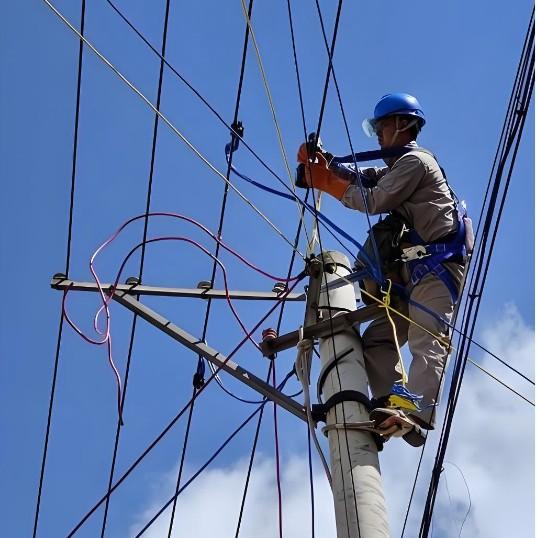
Low-Voltage Distribution Lines and Power Distribution Requirements for Construction Sites
Low-voltage distribution lines refer to the circuits that, through a distribution transformer, step down the high voltage of 10 kV to the 380/220 V level—i.e., the low-voltage lines running from the substation to the end-use equipment.Low-voltage distribution lines should be considered during the design phase of substation wiring configurations. In factories, for workshops with relatively high power demand, dedicated workshop substations are often installed, where transformers supply power direc
James
12/09/2025
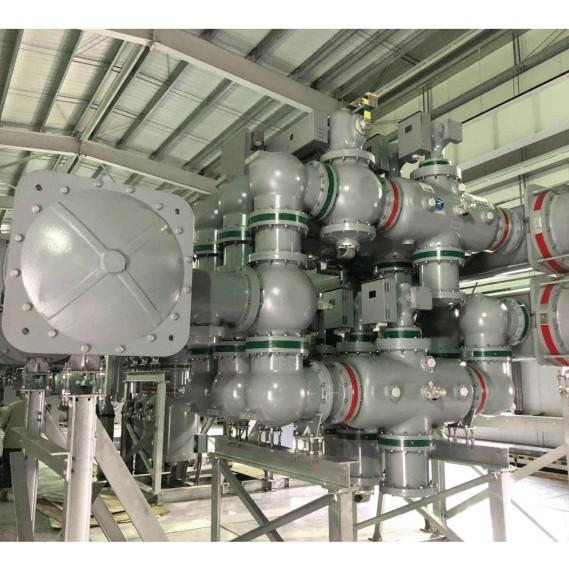
GIS Dual Grounding & Direct Grounding: State Grid 2018 Anti-Accident Measures
1. Regarding GIS, how should the requirement in Clause 14.1.1.4 of the State Grid’s "Eighteen Anti-Accident Measures" (2018 Edition) be understood?14.1.1.4: The neutral point of a transformer shall be connected to two different sides of the main mesh of the grounding grid via two grounding down conductors, and each grounding down conductor shall meet the thermal stability verification requirements. Main equipment and equipment structures shall each have two grounding down conductors connected to
Echo
12/05/2025
Related Products
Send inquiry
Download
Get the IEE Business Application
Use the IEE-Business app to find equipment, obtain solutions, connect with experts, and participate in industry collaboration anytime, anywhere—fully supporting the development of your power projects and business.